The domestication of Atlantic salmon through years of fish farming has led to farmed Atlantic salmon developing smaller eyes according to a new piece of research published in the journal Evolutionary Applications (https://doi.org/10.1111/eva.13297) Info source: Bangor University / media release Over 15 generations of breeding salmon in captivity for food, farmed fish have developed smaller eyes than wild salmon. This could have negative consequences for any farmed salmon who escape...
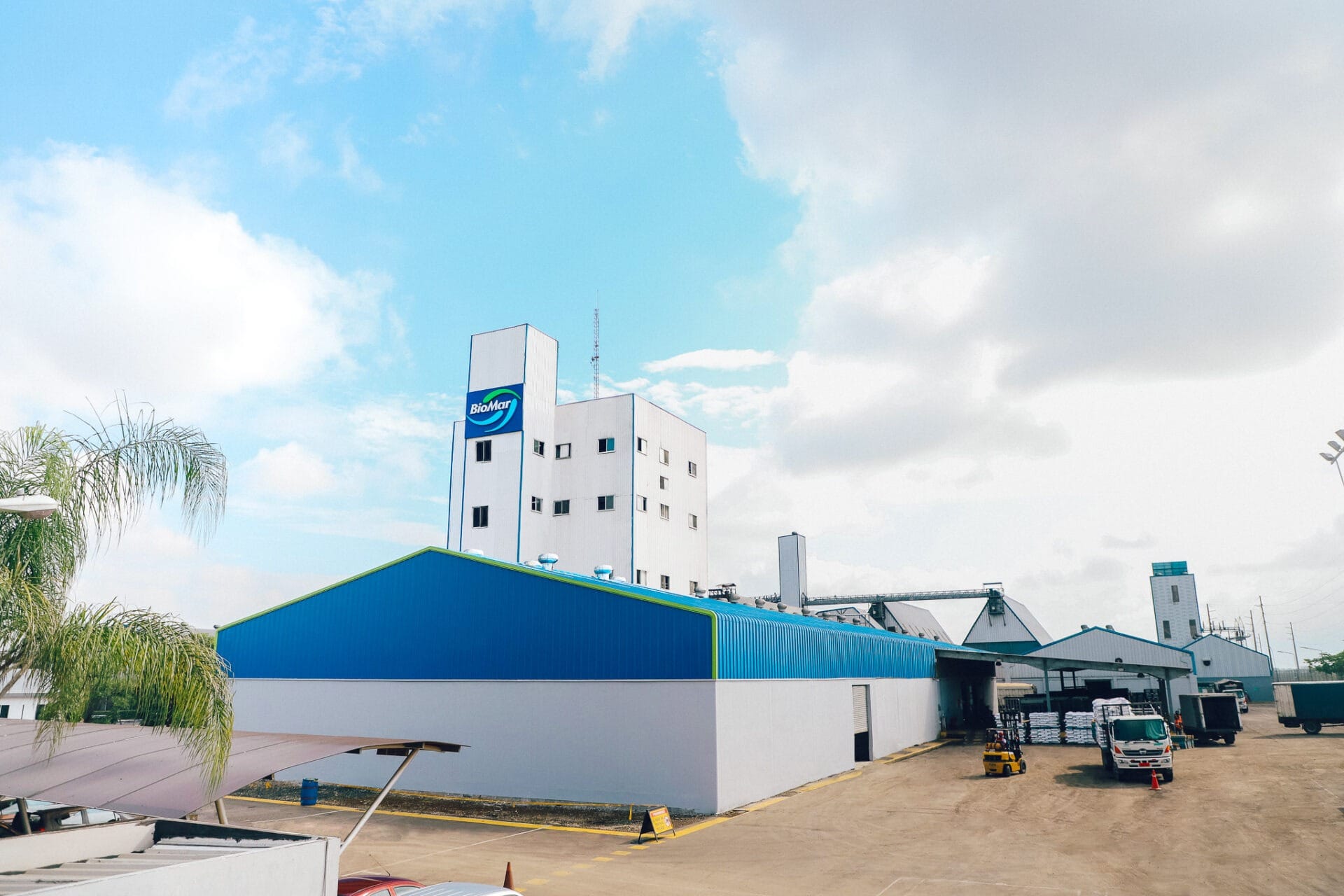
BioMar Group recently announces an ambitious plan for an expansion of the capacity for extruded feed in Ecuador. The two-phased installations will bring a total of four new lines with a combined capacity of 200 000 tons at BioMar’s facilities in Guayaquil. Info source: BioMar / press release BioMar announces a comprehensive investment plan for the business unit in Ecuador,...
By Stephen G. Newman Ph.D. * President and CEO, AquaInTech Inc. The second decade of the 21st century has been challenging for most of us. A rapidly mutating RNA virus (SARS-CoV-2) has been wreaking havoc on the global economy. Supply chains are damaged, and getting many things done in a timely manner is, at best, challenging. Attempts to keep the...
By: The fishmonger * The Fishmonger has been engaging in a number of virtual events recently. It is amazing how the lockdowns, curfews, lack of travel, etc. have enabled us to expand our horizons through virtual technology, and the Fishmonger encourages you all to engage. So much great information is available. That technology has no boundaries. This can be a...
by Aquafeed.com By Suzi Dominy* Feed is key to the advance of RAS production Recirculating Aquaculture Systems (RAS) are not new and still represent a small segment of aquaculture production, but it’s a rapidly trending technology and the industry’s hot topic. Drivers for its future growth are its apparent low environmental impact and the proximity to market for high-value species,...
Today with a relatively low budget, using digital marketing, and through influencers, powerful messages can be sent to the seafood market, showing the environmental danger for the world to continue consuming seafood that does not have a certificate of ecological and social sustainability. Despite all the efforts made by NGOs, certifying companies, private certifiers, and activists promoting sustainable production practices...
Based on Machine Learning Methods By: Fudi Chen, Yishuai Du, Tianlong Qiu, Zhe Xu, Li Zhou, Jianping Xu, Ming Sun, Ye Li, and Jianming Sun * An intelligent variable-flow RAS can rapidly remove suspended solids and reduce ammonia and nitrite generation from the source. The primary purpose of the present study was to develop the circulating pump- drum filter linkage...
By: Daniel Schar, EiliY. Klein, Ramanan Laxminarayan, Marius Gilbert, and Thomas P. Van Boeckel * Several countries have experienced dramatic reductions in antimicrobial use rates following the introduction of vaccination and improved management and husbandry programs, serving as important antimicrobial stewardship models. Aquatic animals represent 17% of animal protein consumed globally, and for over 40% of the world’s population, fish...
In the recently released ABARES Statistics Report 2020, Aquaculture is now confirmed as the largest sector of the Australian primary seafood industry, revealing that the sector grew 10 percent in 2019-20. Of course, while the industry has been disrupted due to the COVID-19 pandemic, the total Australian fishery and aquaculture GVP in 2019–20 decreased slightly by 2 percent to $3.15...
By: Bilal Ahamad Paray, Mohamed F. El- Basuini, Mahmoud Alagawany, Moham- med Fahad Albeshr, Mohammad Abul Farah and Mahmoud A. O. Dawood * "Several studies have found that aquatic animals’ performances showed improvements as a direct result of using yucca as feed or water additives. Dietary yucca increases protein metabolism in the fish body, with a possible reduction in ammonia...
By: Aquaculture Magazine * The future of aquaculture production fits in a container, uses state of the art technology, and was born and raised in Oaxaca, Mexico. This is the story of Shrimpbox, Atarraya Inc.’s most ambitious project, which promises to transform an entire industry and satisfy the hunger of an overpopulated world. For the US market ($40 bn a...
By: Por: Anna D. Wilkinson and David L. Meeker *North American Renderers Association (NARA) The sustainability benefits of rendering can be accurately tracked and are more highly valued as our environment faces threats of climate change and reduced landfill space. Render is the act of processing and cooking undesired, or uneaten live stock and poultry meat that remains after a...