
Editorial Staff | Aquaculture Magazine, with information from VASEP
Source: Vietnam Association of Seafood Exporters and Producers (VASEP). Attendance and conclusions are reported by the organizers.
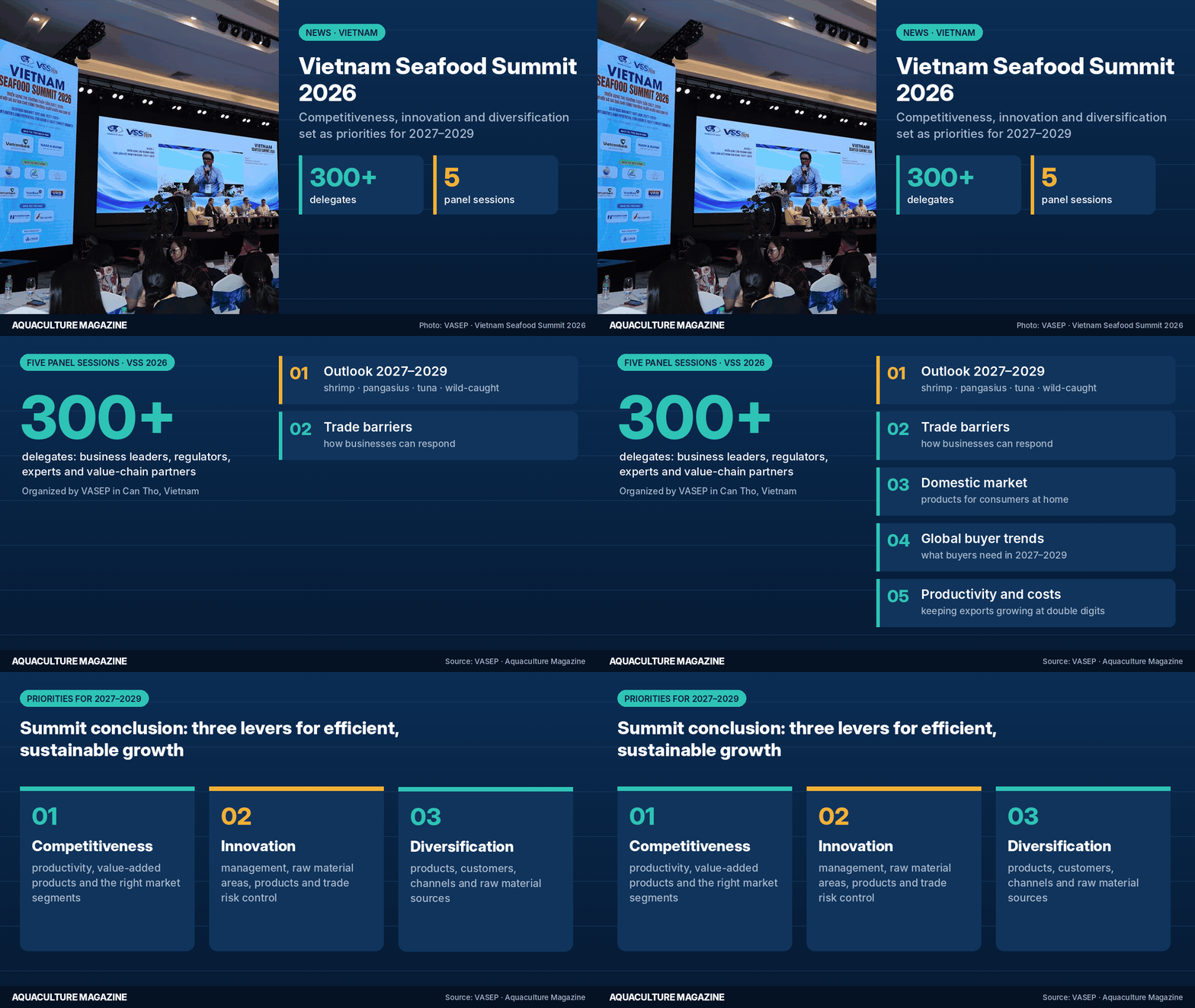
More than 300 delegates met in Can Tho over five panel sessions and concluded that competitiveness, innovation and diversification will determine how Vietnam’s seafood industry grows in 2027–2029.
The Vietnam Association of Seafood Exporters and Producers (VASEP) held the Vietnam Seafood Summit 2026 (VSS 2026) in November in Can Tho, Vietnam. The summit brought together more than 300 delegates, including business leaders, government regulators, experts and partners from across the seafood value chain. Over five panel sessions, participants reviewed opportunities and challenges and discussed practical ways to sustain growth and make Vietnam’s seafood industry more competitive in 2027–2029.
According to VASEP, the event responded to the needs of Vietnamese producers, who must cut production costs, secure raw materials, add value, manage trade risks, keep up with increasingly diverse consumer demand and raise export revenue. “Global trade remains volatile, competition is getting tougher and market access requirements keep changing. Against this backdrop, Vietnam’s seafood industry needs to change the way it grows,” the organizers said.
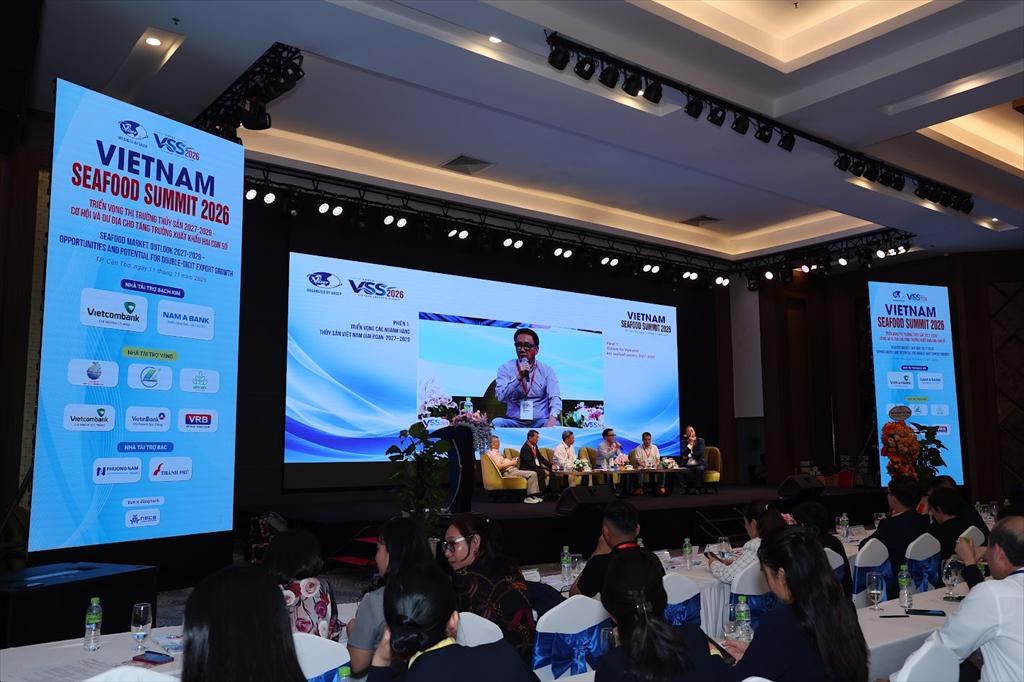
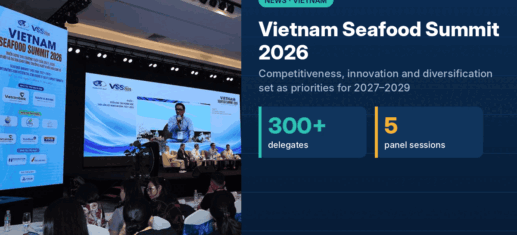
Figure 1. Vietnam Seafood Summit 2026 in Can Tho. Source: VASEP.
Shrimp, pangasius and wild-caught seafood face different pressures
The summit opened with a session on the outlook and development direction of Vietnam’s seafood industry for 2027–2029, focused on four key sectors: shrimp, pangasius, tuna and wild-caught seafood. Businesses agreed that the market still offers room for growth, but that competitive advantages are shifting.
For shrimp, participants pointed to cost pressure from Ecuador and India, and said producers need to choose the right market segments, raise productivity and develop value-added products. For pangasius, the key directions are organizing farming areas around market demand and diversifying products. Wild-caught seafood businesses were most concerned with legal sourcing of raw materials, traceability and stable supply.
Competitiveness, innovation and diversification as priorities for 2027–2029
VASEP organized VSS 2026 as a forum for dialogue that connected seafood processors and exporters with regulators, experts, suppliers, distributors, certification bodies and financial partners. The participants concluded that, in 2027–2029, competitiveness, innovation and diversification will be essential for the industry to seize market opportunities, cope with volatility and achieve efficient, sustainable growth.
The summit took a whole-value-chain approach, covering raw material production, processing, export, distribution, consumption and finance. According to the organizers, one common thread ran through all five sessions: the industry’s room for growth does not lie only in producing more or finding more orders, but also in changing how production works, improving efficiency and creating more value from existing resources.
The industry’s room for growth depends not only on producing more, but on changing how production works and creating more value from the resources it already has.
Innovation, participants said, covers more than machinery and technology: it also includes management, the organization of raw material areas, product development, customer engagement and trade risk control. Diversification goes beyond new export markets to include products, customer segments, distribution channels and raw material sources. Value-chain linkage was seen as essential to cut costs, reduce losses, improve quality and protect the long-term interests of farmers, processors and other supply chain partners.
Trade barriers, the domestic market and what buyers need
The second session covered trade barriers and how businesses can respond. The third focused on the domestic market: Vietnamese seafood companies have large processing and export capacity, but still have room to develop products for consumers at home.
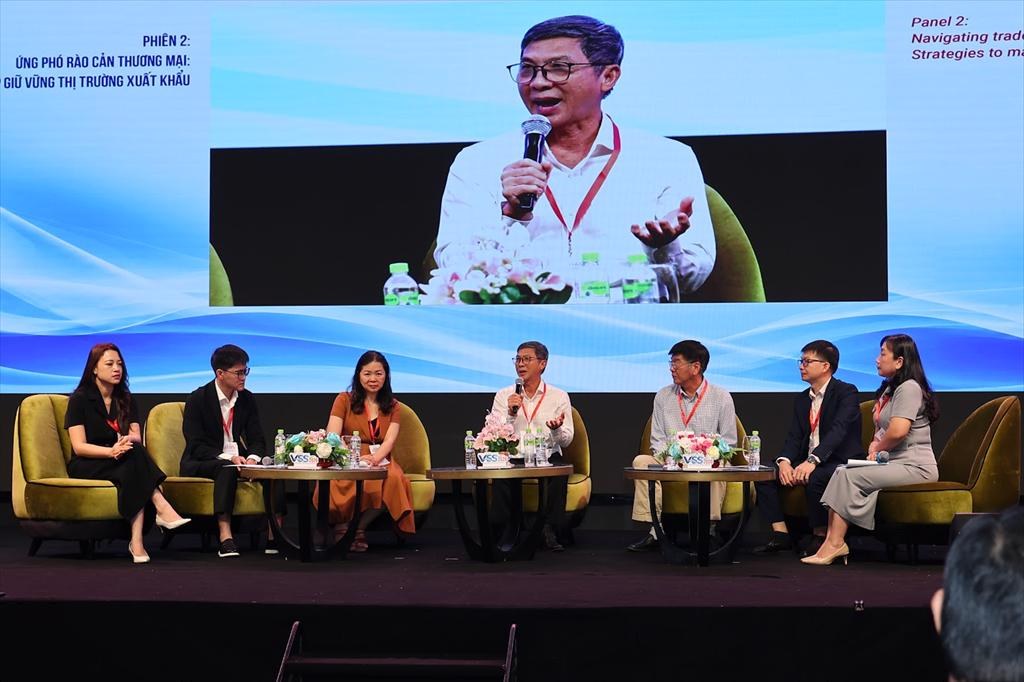
Figure 2. The second panel of VSS 2026 addressed trade barriers and export markets. Source: VASEP.
The fourth session, “Global Seafood Market Trends: What Do Buyers Need in 2027–2029?”, included perspectives from FAO, from the Chinese market and from companies involved in international trade. Its key message was that businesses need to develop what the market actually needs, rather than selling what they happen to have, while building long-term partnerships with buyers.
The fifth and final session looked at ways to raise productivity, cut costs and keep seafood exports growing at double digits. Starting from specific problems in the shrimp and pangasius chains, speakers proposed raising farming success rates, improving seed quality, managing feed and the farming environment more effectively, digitalizing raw material areas, getting more value from by-products and making sustainability certifications easier to obtain. Aquaculture Magazine has previously covered the Vietnamese pangasius industry’s growth signals and Vietnam’s shrimp exports.
Frequently asked questions
What was the Vietnam Seafood Summit 2026?
A summit organized by the Vietnam Association of Seafood Exporters and Producers (VASEP) in Can Tho, Vietnam, which brought together more than 300 delegates from across the seafood value chain over five panel sessions.
What priorities did VSS 2026 set for 2027–2029?
Participants concluded that competitiveness, innovation and diversification will be essential for Vietnam’s seafood industry to seize market opportunities, cope with volatility and achieve efficient, sustainable growth in 2027–2029.
Which sectors and topics did the five sessions cover?
The sessions covered the outlook for shrimp, pangasius, tuna and wild-caught seafood; trade barriers; the domestic market; global buyer trends for 2027–2029; and ways to raise productivity, cut costs and keep exports growing at double digits.
Sources and Methodology
Content type: news based on information released by VASEP, prepared by a contributor to Aquaculture Magazine. Note on the data: the number of delegates and the conclusions of the sessions are reported by the organizers and were not independently verified by Aquaculture Magazine. The information released does not include export figures, targets or production volumes for 2027–2029. Images: photos courtesy of VASEP; featured image is an animated graphic by Aquaculture Magazine built only with data from this article.
Aquaculture Magazine covers technology, production and business news for the global aquaculture industry.