
* By Lallemand Animal Nutrition
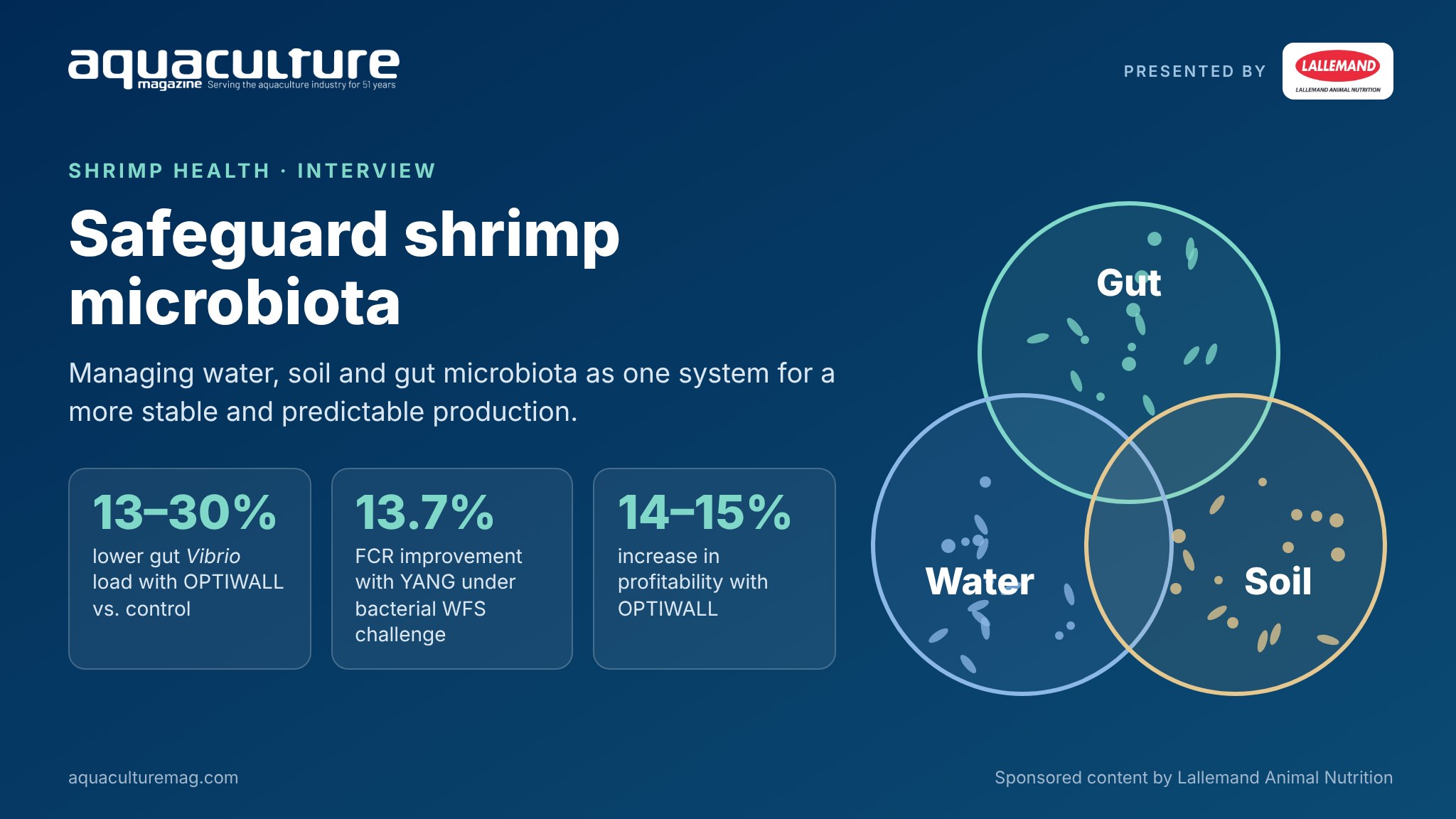
Shrimp microbiota, together with environmental microbiota, function as a key biological system regulating immunity, digestion, nutrient cycling and water quality. By simultaneously managing water, soil and gut microbiota, producers can create a more stable and predictable production system.
Aquaculture Magazine: Shrimp ponds are increasingly viewed as ecosystems rather than simply production units. Why has this perspective gained importance?
Lallemand: The modern shrimp pond is a complex ecosystem where shrimp, water and sediment are closely interconnected. Every farmer knows that production performance depends on nutrition, genetic or farm management for example. But we sometimes underestimate the importance of managing microbial communities present at different levels in the system.
These microbial communities contribute to nutrient digestion, immune regulation, organic matter degradation, nitrogen cycling and overall pond stability. As a result, microbiota management is increasingly recognized as an important component of sustainable and predictable shrimp production.
Aquaculture Magazine: The microbiota is sometimes described as functioning like an additional organ. To what extent is this comparison valid?
Lallemand: While the microbiota is not an anatomical organ, it performs several essential functions that are critical to shrimp health and farm performance.
Within the shrimp, the intestinal microbiota supports digestion, nutrient utilization, immune interactions, and helps maintain intestinal integrity. At the same time, microorganisms in water and sediment contribute to water quality, organic matter degradation and ecological balance.
Because of its central role in both animal physiology and environmental stability, the different microbiota can be viewed as vital biological components of the production system.
Aquaculture Magazine: How are the microbiota of the shrimp, water and sediment connected?
Lallemand: Each compartment hosts specific microbial populations, which are “relatively independent”. As an example: the development of some bacteria in water doesn’t mean that it will develop in the gut. But changes in one area can quickly have a strong indirect impact on the microbial composition of the others.
Environmental factors such as salinity, temperature, dissolved oxygen, organic load, alkalinity, and water exchange rates all affect microbial balance. A change in water microbial composition could lead to toxic compound production (ex. Nitrite) or lower control of algal bloom development or lower organic matter recycling etc. Shrimp-related factors including developmental stage, feeding practices, molting cycles, physiological stress and immune status will impact gut microbiota, which could impair its key functionality or open the door to opportunistic bacteria development.
Maintaining equilibrium across all three compartments is therefore essential for overall system stability.
Aquaculture Magazine: Why is Vibrio not always a problem per se, but often a good indicator of microbiota’s dynamics?
Lallemand: Vibrios are well-known among shrimp farmers for their pathogenicity. But not all Vibrio species are harmful. However, they are usually considered as highly opportunistic and can rapidly increase when ecological conditions become favorable. One particular favorable condition is a highly variable microbiota composition.
For this reason, elevated Vibrio abundance is often considered an indicator of microbial instability. When microbial balance is disrupted, diversity often tends to decrease, beneficial microorganisms become less competitive, and opportunistic bacteria may gain an advantage.
Rather than focusing only on Vibrio itself, it is important to consider what its abundance may reveal about the overall microbial status of the system.
Aquaculture Magazine: What typically causes microbiota instability in shrimp production?
Lallemand: Many factors can contribute. Environmental fluctuations, temperature changes, heavy rainfall, low dissolved oxygen, salinity shifts, organic matter accumulation and physiological stress can all affect microbial balance in the environment and/or in shrimp.
Management practices may also influence microbiota composition. When equilibrium is disrupted, restoring stability can become more challenging and may require greater intervention.
This is why preventive microbiota management is generally considered more effective than corrective approaches.
Maintaining microbial equilibrium across water, soil and shrimp compartments is therefore essential for overall system stability.
Aquaculture Magazine: What does a preventive microbiota management strategy look like on farm, and how can producers support the shrimp microbiota directly?
Lallemand: The objective is to establish beneficial microbial communities as early as possible and help maintain them throughout the production cycle, both in the production environment and within the shrimp gut. A stable microbiota is generally associated with more stable environment parameters, stronger ecological competition against undesirable microorganisms, improved nutrient utilization, enhanced intestinal barrier function and greater resilience to environmental stressors.
To support this balance in the gut, producers can implement microbial solutions, including probiotics, yeast derivatives, and postbiotics. Depending on the solution, mechanisms may involve competitive exclusion of undesirable microorganisms, modulation of microbiota composition, support of intestinal health and interaction with immune responses. In the environment, bioremediation bacteria are important tools to integrate in global management practices to reach as early as possible a mature, functional and stable microbial composition.
In practice, this strategy may include the targeted use of in-feed microbial additives during identified risk periods, the continuous use of cost-effective nutritional solutions to support microbiota stability over the long term, and the application of bioremediation products throughout the production cycle to promote a balanced microbial ecosystem.
Ultimately, prevention focuses on maintaining biological balance before significant microbial disruption occurs, helping preserve gut and environmental stability, particularly during periods of increased stress.
Aquaculture Magazine: What role does environmental management play on microbial balance?
Lallemand: Environmental management is a key component of any preventive program.
Bioremediation can be a valuable tool within a broader management strategy, but it should not be viewed as a standalone solution. Maintaining pond stability requires a combination of good management practices, including adequate oxygen management, appropriate feeding strategies, regular monitoring of water and soil quality, well-managed water exchange when required, and proper pond bottom management.
Between production cycles, additional measures such as pond drying, the use of oxidizing agents when appropriate, and mechanical sludge removal may also be necessary to reduce organic load and prepare the system for the next crop. The relative importance of each practice will depend on the farming system, stocking density and local environmental conditions.
Within this framework, microbial solutions used in bioremediation can contribute to organic matter degradation, sludge management and nitrogen cycling within the pond ecosystem. By supporting ecological balance in both water and sediment, these approaches may help create more stable farming conditions over time. The selection of bacterial strains capable of rapidly colonizing or influencing available ecological niches is also important, as it can contribute to maintaining a balanced microbial environment and limiting opportunities for undesirable microorganisms to proliferate.
Overall, bioremediation is most effective when integrated into a comprehensive pond management program that combines water quality management, oxygen control, feeding practices, water exchange management and pond bottom maintenance. It should be considered as one component of a preventive strategy rather than the sole solution for environmental and microbial control.
Prevention focuses on maintaining biological balance before significant microbial disruption occurs, helping preserve gut and environmental stability.
Aquaculture Magazine: Have you observed practical benefits from microbiota management in commercial conditions?
Lallemand: Yes. Across multiple trials conducted under commercial and experimental conditions, microbiota-focused programs have been associated with improvements in several production indicators.
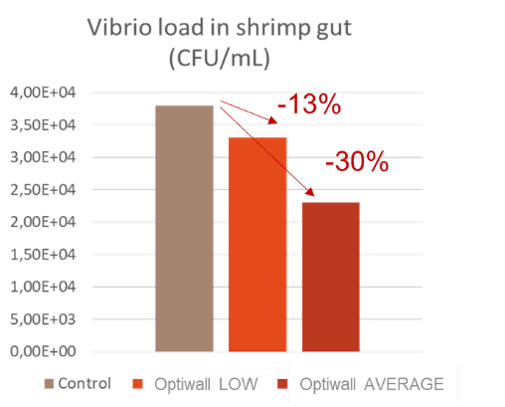
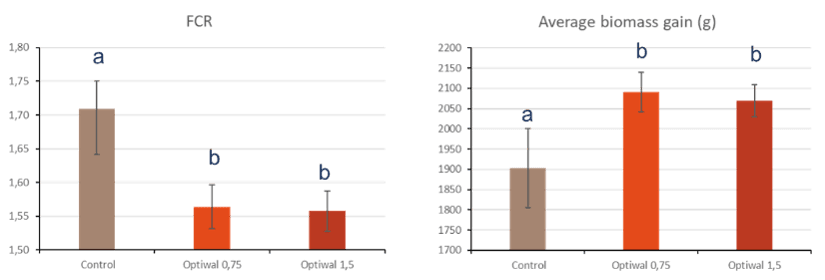
A 60-day farm-like trial in Mexico with L. vannamei demonstrated that OPTIWALL supplementation significantly reduced gut Vibrio load by 13% to 30% compared with the control. This microbial improvement was accompanied by higher final body weight, better survival, and increased biomass production. Shrimp fed OPTIWALL also showed a lower FCR, confirming enhanced feed efficiency and growth performance. Overall, these benefits translated into a 14-15% increase in profitability, with only a limited increase in feed cost.
Aquaculture Magazine: What about disease-related challenges?
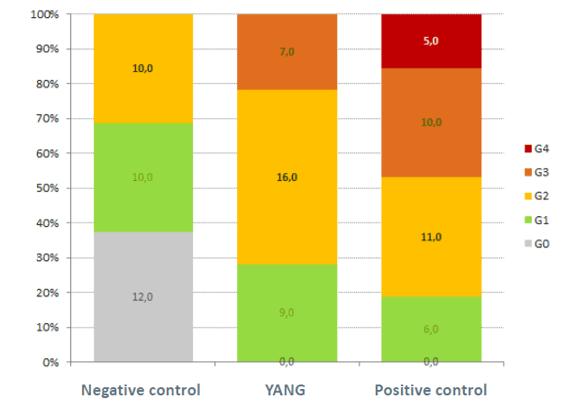
Lallemand: A 30-day trial in Vietnam with L. vannamei juveniles challenged with bacterial WFS showed that YANG reduced gut Vibrio abundance and intestinal lesion severity. These benefits translated into a 13.7% improvement in FCR, demonstrating better feed efficiency under opportunistic bacteria pressure. Overall, the results suggest that stabilizing gut microbiota enhances shrimp resilience and performance during WFS/vibriosis challenges.
Aquaculture Magazine: Why is early-life microbiota management so important?
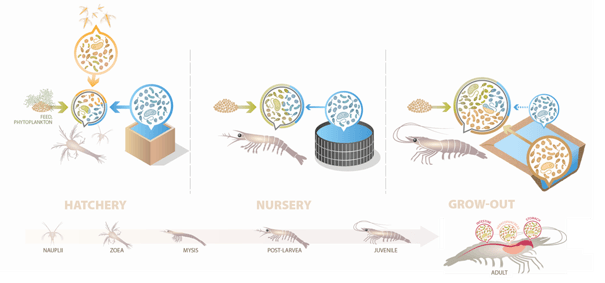
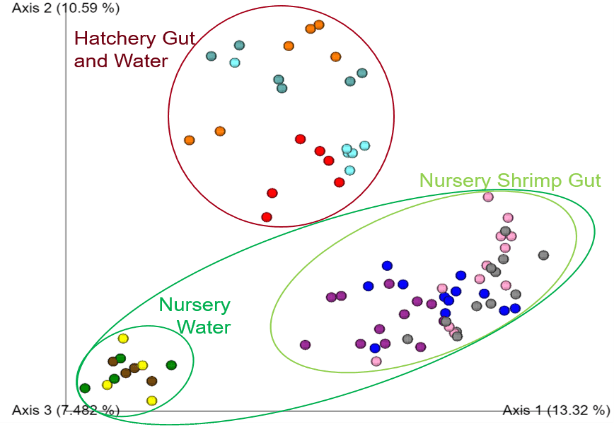
Lallemand: During the earliest production stages, shrimp immunity development is still ongoing, making a balanced microbiota essential for host protection. At this stage, the microbiota acts as the shrimp’s primary line of defense against opportunistic and pathogenic microorganisms, while also contributing to digestive and physiological functions as well as immune priming.
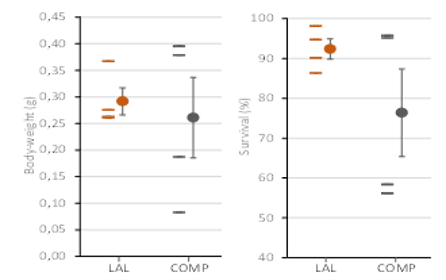
Studies conducted during the larval and nursery phases showed that early microbial management can influence both shrimp and water microbial populations. Shrimp receiving the Lallemand microbial package (LAL) demonstrated improvements in body weight, survival, and consistency between production units.
One particularly interesting observation was the improved predictability and robustness of shrimp performance, highlighting the long-term value of establishing a beneficial microbial community early in production.
Aquaculture Magazine: What is the main takeaway for shrimp producers?
Lallemand: Shrimp microbiota, together with environmental microbiota, function as a key biological system regulating immunity, digestion, nutrient cycling and water quality. Because these ecosystems are highly dynamic, disturbances such as changes in salinity, temperature or organic load can rapidly trigger dysbiosis, favoring opportunistic bacteria such as Vibrio.
Proactive microbiota management can combine bacterial environmental solutions and gut-targeted micro-organism based additives to maintain microbial balance and support host resilience. By simultaneously managing water, soil and gut microbiota, producers can create a more stable and predictable production system.
Consistent results include lower Vibrio loads, improved growth and FCR, enhanced survival and robustness, and increased profitability.
For more information about Lallemand Animal Nutrition solutions for shrimp aquaculture, visit: www.lallemandanimalnutrition.com