


The emergence of Artificial Intelligence is driving a profound structural transformation that leaves no room for a passive stance within the industry. To understand how the use of data, digital infrastructure, and systemic integration are indispensable for leading the sector into the future, it is essential to analyze the point of noreturn toward Smart Aquaculture by combining FAO guidelines with the Aquaculture 4.0 approach.
* By Antonio Garza de Yta
Transforming our thought processes and behaviors, and embracing novel approaches that deviate from long-standing practices, stands as one of the most significant challenges of our era. The advent of artificial intelligence is not a gradual process; it is a paradigm shift. It is transforming entire systems at a pace that leaves no room for passivity.
The issue at hand is not one of whether we wish to adapt, but rather the speed at which we implement these changes. In that sense, most have already taken the first step, but those who haven’t yet must accelerate their efforts, as remaining static is tantamount to regression. It is important to note that this change no longer differentiates between large and small organizations; all entities are being evaluated using a new standard.
The advent of artificial intelligence is a paradigm shift transforming entire systems at a pace that leaves no room for passivity. This change no longer differentiates between large and small organizations; all entities are being evaluated using a new standard.
In this context, the FAO has been the subject of frequent criticism, much of it focused on an alleged lack of agility or a vision rooted in the past. However, a thorough review of the proposal for the Global Conference on Smart Agriculture reveals a different approach. The conversation is progressing as it should—toward implementation, not just rhetoric. In a sector that has traditionally been resistant to change, this is a significant achievement.
The FAO Global Conference (July 1–3, 2026) is based on a clear premise: data, digitalization, and technologies such as artificial intelligence, the Internet of Things, and precision agriculture are no longer mere addons; they are the operational foundation of modern agrifood systems. The focus should be on the technology’s potential to enhance decision-making, optimize resource utilization, and address the challenges of productivity, sustainability, and climate variability in a systematic manner.
Data, digitalization, and technologies such as artificial intelligence, the Internet of Things, and precision agriculture are the operational foundation of modern agri-food systems. The focus remains on enhancing decision-making, optimizing resource utilization, and systematically addressing climate variability.
In practice, the discussion shifts from isolated solutions to a focus on systems. Digital infrastructure, data governance, extension services, and investment models are all interconnected. This approach aligns directly with the discussions held in Aquaculture 4.0, where infrastructure, data, and integration were identified as the pillars for transforming our operations and, above all, forging trust with external stakeholders. It is important to note that inclusion is not merely a matter of policy; it is an essential structural requirement. Small-scale producers, young people, and women are not on the sidelines of this transition — they are at its very heart. True scale is unattainable without them.
It was a privilege to take part in this forum as a speaker. The event’s importance, as well as the opportunity it presents to observe how other sectors are addressing similar challenges and how aquaculture can accelerate its adoption and scaling up, made it particularly noteworthy. It is not always a lack of technology; it is often a lack of alignment and execution.
The discussion shifts from isolated solutions to a focus on integrated systems. This approach aligns directly with Aquaculture 4.0, where digital infrastructure, data governance, and integration were identified as the pillars for transforming operations and forging trust.
In contrast, I would like to share my experience at the recent WAS global event in Singapore. Beyond individual efforts, the event high-lighted a model that is clearly falling behind. While this format may have been effective 20 years ago, it no longer aligns with the industry’s current dynamics, whether in terms of content, structure, or the value it offers to participants. This is particularly concerning when we consider that WAS continues to have one of the world’s most extensive professional networks — an asset that is currently underutilized compared to other events that have better understood where the sector is headed and how to harness that energy.
Inclusion is an essential structural requirement in this digital transition. Small-scale producers, young people, and women are not on the sidelines — they are at its very heart. True industrial scale is completely unattainable without them.
I have full confidence in the new leadership team of Foluke Areola and Luis Andrés González Agraz, as they have the vision and capacity to drive the necessary structural changes. This will not be a superficial adjustment; rather, it will be a fundamental shift in mindset. As an industry, it is essential that we support this process, not through criticism but through active participation.
Ultimately, this decision does not hinge on a question of whether to implement change. The objective is to reach the destination first, to execute efficiently, and to avoid being left behind. Aquaculture is a rapidly expanding industry. The only question is which side you will be on.
Observing how other sectors address similar challenges reveals how aquaculture can accelerate its adoption and scaling up. The core challenge is not always a lack of technology; it is often a critical lack of strategic alignment and execution.
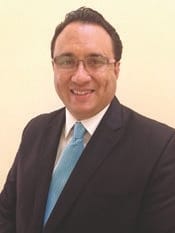
* Antonio Garza de Yta is Vice President of the International Center for Strategic Studies in Aquaculture (CIDEEA), President of Aquaculture Without Frontiers (AwF), Past President of the World Aquaculture Society (WAS), Former Secretary of Fisheries and Aquaculture of Tamaulipas, Mexico, and Creator of the Certification for Aquaculture Professionals (CAP) Program with Auburn University.

One thought on “Smart Aquaculture: The Point of No Return”
Thanks to AI and inclusion of all