
* By FishProf
FishProf noticed something quietly confronting in the global conversations emerging from Davos 2026: capital markets are beginning to treat food securitynotasasocialissue,butasamatter of economic and geopolitical stability. Food is being repriced — not because it is scarce today, but because systems that deliver it are fragile, inefficient, and poorly governed. This shift should ring alarm bells in many countries, but I use my country, Australia, as the example.
Australia is an island continent, surrounded by productive oceans, with one of the world’s largest Exclusive Economic Zones. It is similar in land mass to the United States yet supports a population of just 28 million compared to over 300 million in the US. Australia has more water resources than France, a nation of over 70 million people, and yet Australia imports more than 70% of the seafood it consumes.
FishProf believes this is not a production problem. It is a policy, governance, and vision failure.
Davos Reframes Food as Strategic Infrastructure
One of the strongest messages from Davos 2026 was that food systems are no longer viewed simply as marketdriven supply chains. They are now being reframed as strategic infrastructure, akin to energy, transport, or telecommunications.
Capital markets have noticed that food price volatility fuels inflation, undermines political stability, and directly impacts public health outcomes. Traditional tools — interest rates, subsidies, trade agreements — cannot stabilize food systems that are structurally misaligned.
FishProf noticed that aquaculture fits squarely within this new framing — yet in Australia, it continues to be treated as a niche sector burdened by fragmented regulation and inconsistent political support.
Australia by the numbers
» Land mass: ~7.7 million km² (similar to the USA).
» Population: ~28 million.
» Exclusive Economic Zone: ~8.2 million km² (one of the world’s largest).
» Seafood imports: 70–75% of seafood consumed in Australia.
» Exports: Predominantly high-value species (rock lobster, abalone, tuna).
Australia’s Seafood Dependence: A National Blind Spot
Australia’s reliance on imported seafood is often justified as a consumer preference or price issue. That explanation does not hold up.
FishProf noticed that Australia exports premium seafood — rock lobster, abalone, tuna — while importing lower-cost, everyday fish to feed its population. This is not inherently wrong, but it exposes a system optimized for trade value rather than food security.
At Davos, the warning was clear: countries that outsource their food resilience are exposing themselves to geopolitical, climate, and market shocks.
FishProf believes Australia has done exactly that with seafood.

FishProf believes that if Australia treated seafood production as essential infrastructure — not a regulatory risk — capital, innovation, and scale would follow.
From “How Do We Stop You?” to “How Do We Help You?”
A recurring frustration across Australian aquaculture is regulatory culture. FishProf noticed that too often the starting question for regulators is: “How do we stop this from going wrong?”
rather than:
“How do we help this succeed responsibly?”
This mindset manifests as:
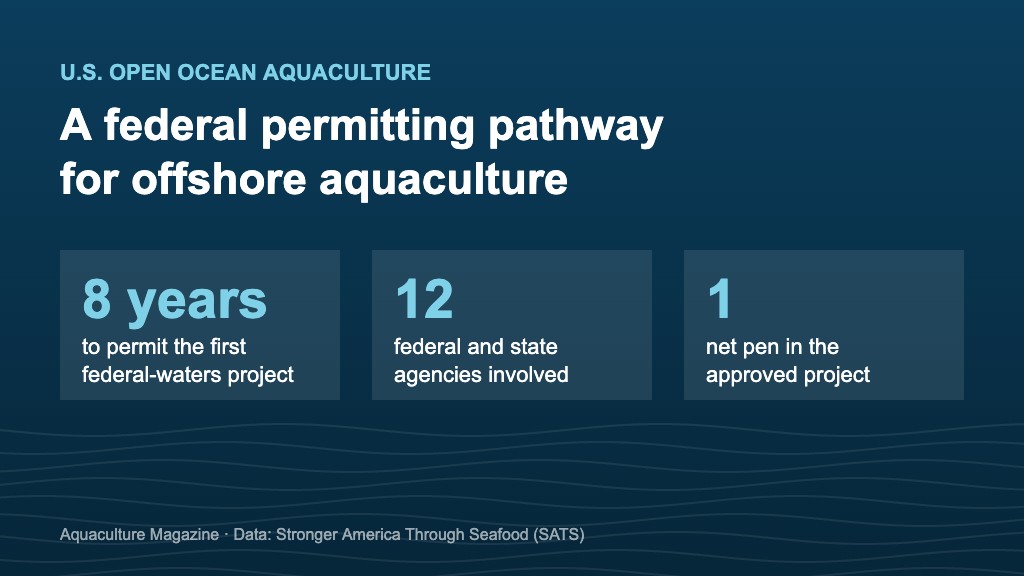
» Layered approvals across federal, state, and local levels.
» Lengthy timeframes that deter private investment.
» High compliance costs that favor incumbents over innovators.
At Davos, food system leaders acknowledged that excessive complexity, even when well-intentioned, undermines resilience by discouraging new production capacity.
FishProf believes Australia’s topheavy bureaucracy has become a hidden tax on domestic seafood production.
Feed Conversion Ratios (approximate)
» Beef: 6 – 10 kg feed per 1 kg weight gain.
» Pork: 3 – 4 kg.
» Chicken: 1.6 – 2 kg.
» Farmed fish (average): 1.1 – 1.5 kg.
» Shellfish: 0 kg (no formulated feed).
R&D Choices: Who Are We Really Feeding?
Australia invests heavily in aquaculture R&D, yet the direction of that investment raises uncomfortable questions.
FishProf noticed a strong focus on high-value carnivorous species. For example, millions of dollars invested in species such as pompano aimed largely at premium or export markets. Meanwhile, relatively little attention is paid to scalable, affordable, herbivorous or omnivorous species that could feed Australians every week.
Rabbitfish is one example. Hardy, fast-growing, herbivorous, and well suited to integrated systems, yet largely absent from national R&D priorities. As I write this, I notice a Northern Territory University advertising for a PhD to investigate this subject. On one hand this is good news as it means Rabbit Fish is on the R&D menu, but it is also bad news in that we are taking the slow train to get to the station.
FishProf believes this reflects a deeper problem: R&D is often aligned to commercial upside rather than national nutrition and food security outcomes.
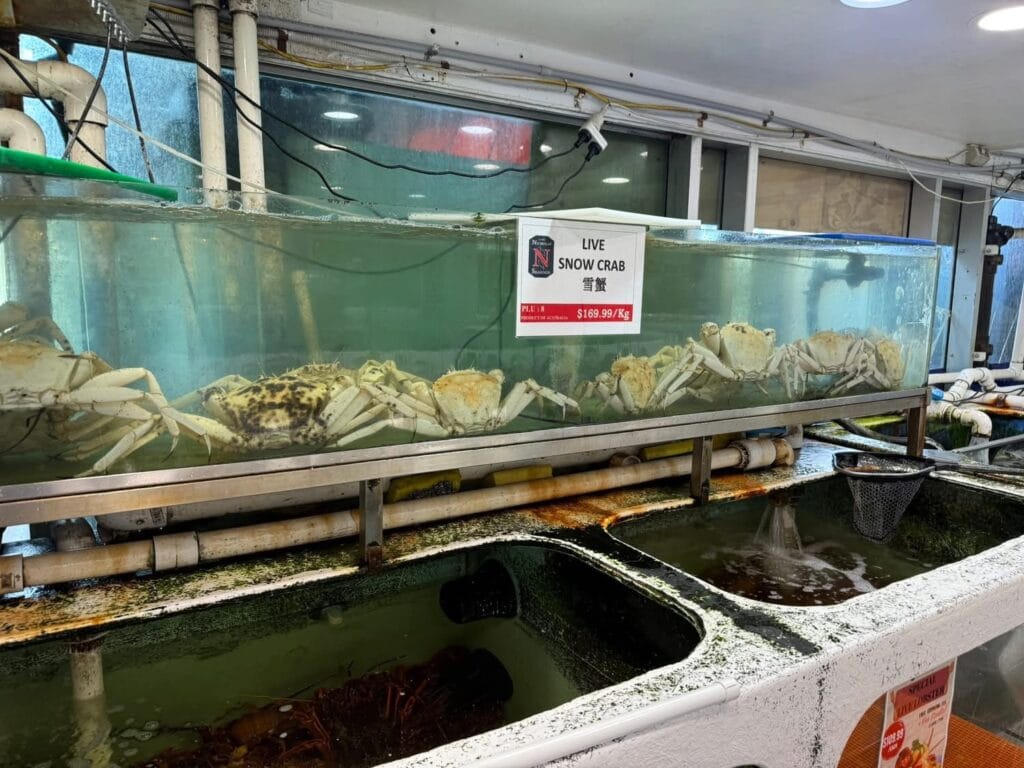
FishProf noticed that Australia has everything it needs to be a seafood-secure nation — except the will to align policy, science, and vision
Seaweed and Seagrass: The Missed Multipliers
At Davos, food systems were discussed not as single commodities but as interconnected platforms — where nutrition, climate mitigation, and economic resilience intersect.
Australia has world-class research capability in seaweed and seagrass — yet commercial deployment remains limited.
FishProf noticed that seaweed farming could:
» Support low-trophic aquaculture species.
» Reduce nutrient loads and improve water quality.
» Create new food, feed, and bioproduct streams.
» Strengthen coastal and regional economies.
FishProf noticed that Australia exports premium seafood — rock lobster, abalone, tuna — while importing lower-cost, everyday fish to feed its population. This is not inherently wrong, but it exposes a system optimized for trade value rather than food security.
Integrated systems combining herbivorous fish, shellfish, and seaweed are globally recognized as resilient and efficient — yet policy settings in Australia rarely encourage this kind of systems thinking.
FishProf believes Australia’s failure is not scientific — it is structural.
Sarah Holmyard, Offshore Shellfish UK, made a comment about attending the North Atlantic Seafood Forum recently highlighting her disappointment that such an insightful, well-run event was lacking a vision towards ‘space regenerative aquaculture’.
Sarah commented “If we are serious about feeding the future sustainably, regenerative aquaculture should not be a fringe topic. It delivers lowcarbon protein, enhances marine environments, and builds resilience in coastal communities. Put simply, it is one of the most powerful tools we have — yet it still isn’t talked about enough. Seafood is evolving quickly, and the choices we prioritize today will shape the sector for decades to come. Are we moving fast enough to support the solutions that can truly scale sustainable food production?”
Any industry/government or event planner should heed Sarah’s words.
Why shellfish matter
Shellfish such as oysters, mussels, clams, and scallops are among the most efficient animal protein sources on the planet.
» No external feed required.
» Filter plankton and nutrients naturally from the water.
» Improve water quality by removing excess nutrients.
» Low greenhouse gas footprint compared to terrestrial livestock.
Where Is the Australian Blue Economy Vision?
Davos reinforced that countries making progress are those with cohesive national visions, where policy, finance, and regulation move in the same direction.
Australia talks about the blue economy — but rarely acts like it believes in one.
FishProf noticed that responsibility for aquaculture is scattered across portfolios: agriculture, environment, trade, industry, regional development — often working in silos.
The result?
» No clear national seafood selfsufficiency targets.
» No nutritional outcomes linked to aquaculture policy.
» No coordinated investment framework to scale production.
FishProf believes Australia doesn’t lack opportunity — it lacks alignment.
Food, Health, and Well-Being: The Missing Link
A major Davos theme was the convergence of food and health. Food is no longer just calories — it is preventative healthcare.
Seafood is one of the most nutrient-dense foods available, yet Australia’s dietary guidelines and food security strategies rarely link aquaculture expansion with public health outcomes.
FishProf noticed rising rates of diet-related chronic disease alongside declining seafood consumption in some demographics.
FishProf believes aquaculture should be framed as part of the health system — delivering:
» Omega-3s for cardiovascular health.
» Micronutrients critical for child development.
» Affordable protein for ageing populations.
This reframing would change how success is measured — from tons and export value to health and well-being delivered per capita.
Seaweed farming can:
» Absorb carbon and nutrients.
» Support integrated multi- trophic aquaculture (IMTA).
» Provide food, feed, fertiliser and bio-products.
» Create regional and Indigenous employment.
Global context
» Seaweed represents over 30% of global aquaculture volume.
» Australia produces less than 1%, despite vast suitable coastlines.
Learning from Davos: Capital Will Follow Clarity
The Davos message is blunt: capital will flow to food systems that demonstrate stability, scale, and strategic intent.
Australia currently sends mixed signals.
FishProf noticed that investors see opportunity in Australian aquaculture — but also see regulatory drag, policy inconsistency, and unclear national priorities.
FishProf believes that if Australia treated seafood production as essential infrastructure — not a regulatory risk — capital, innovation, and scale would follow.
Capital markets have noticed that food price volatility fuels infiation, undermines political stability, and directly impacts public health outcomes. Traditional tools — interest rates, subsidies, trade agreements — cannot stabilize food systems that are structurally misaligned.

FishProf’s Take: What Needs to Change
If Australia is serious about food security, aquaculture must move from the margins to the mainstream.
FishProf believes Australia must:
- Set national seafood self-sufficiency goals.
- Shift regulatory culture from control to collaboration.
- Rebalance R&D toward low-trophic, affordable species that do not need expensive feeds.
- Integrate seaweed and multi-trophic systems into policy.
- Align aquaculture with health, nutrition, and regional development outcomes.
Food, Health, and Well- Being – Seafood’s health advantages
» High-quality protein.
» Omega-3 fatty acids (heart and brain health).
» Micronutrients often missing in modern diets.
» Lower saturated fat than most land meats.
Global context
» Seaweed represents over 30% of global aquaculture volume.
» Australia produces less than 1%, despite vast suitable coastlines.
Final Thought
Davos 2026 made one thing clear: food is being repriced because the old system no longer works.
FishProf noticed that Australia has everything it needs to be a seafood-secure nation — except the will to align policy, science, and vision.
FishProf believes the question is no longer “Can Australia feed it self from the sea?” It is “WHY AREN´T WE CHOOSING TO?

References and sources consulted by the author on the elaboration of this article are available under previous request to our editorial staff.