By: The fishmonger * Providing food for a growing global population within planetary ecological limits is a major challenge without naysayers and negativity, especially in these difficult pandemic days. So, with that background, it is essential we do not get depressed on the journey, so to assist, here are two pieces of positive seafood news that we all need to...
Tech Guru By: Amy Stone * No matter how well a system is designed or installed, there will always be times when water quality will have challenges. It is critical to be able to test the water to understand the actual challenge. In our last column, we discussed oxygen meters and the available styles. Keeping with the theme, we will...
Por: Salvador Meza * RAS systems that use renewable energies such as wind, solar, or geothermal are outlined to ensure aquaculture's environmental and financial sustainability. Not so much because of an increase in production per unit area, but because of the decrease in resources waste from the feed not consumed in cages and ponds. In a world that is getting...
By: Sarah Cornelisse * Effectively responding to communications is imperative for cultivating a positive consumer experience. Social media carries with it an expectation regarding responsiveness that you need to be aware of; however, in general, the quicker you respond, the more favorably you will be viewed. Customer service is a crucial facet of social media marketing. Social media is consumers’ most...
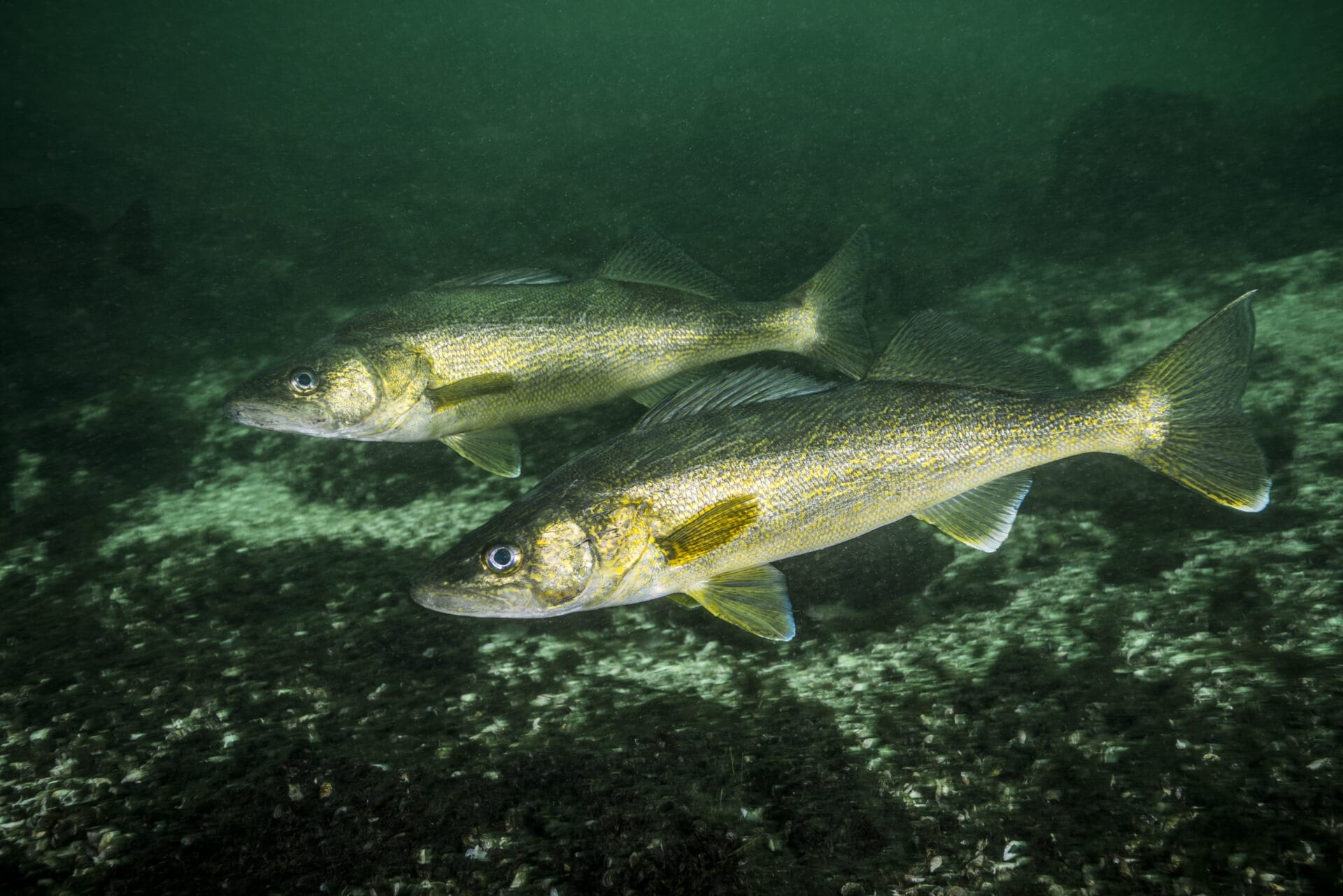
By: Greg Fischer and Emma Wiermaa * For over 15 years, the University of Wisconsin-Stevens Point Northern Aquaculture Demonstration Facility (UWSP NADF) has experienced substantial success raising both walleye and hybrid walleye (saugeye) in indoor, intensive systems for research and demonstration of food-fish production. Although most walleye fillets are imported into the United States from Canada, this well-known species in...
Modern aquaculture is changing and adapting rapidly. The sector is in its infancy compared to other areas of agriculture; however, this provides the opportunity to adjust quickly when necessary. Climate change is forcing the global food industry to find ways to be more sustainable, and the aquaculture industry has spent many years campaigning for change to ensure longevity and sustainability...
With the implementation of the ISO 12099 standard for near-infrared spectroscopy (NIR), updated and expanded calibrations for feed raw materials and feeds, along with new functionalities in AMINONIR® Portable, Evonik now offers its customers in the feed industry an even more comprehensive service. Information source: Evonik / press release In addition to feed additives, such as amino acids, and concepts...
*By: Christos Palaiokostas, Department of Animal Breeding and Genetics, Swedish University of Agricultural Sciences, Uppsala, Sweden * The ability to predict disease resistance using genomic information in aquaculture species has attracted considerable research efforts. In the current study, various Machine Learning (ML) models were evaluated in terms of their efficiency in detecting disease-resistant animals through their genomic profile. Advancements in...
By: Linnea K. Andersen, Jason Abernathy, David L. Berlinsky, Greg Bolton, Matthew M. Booker, Russell J. Borski, Travis Brown, David Cerino, Michael Ciaramella, Robert W. Clark, Michael O. Frinsko, S. Adam Fuller, Steve Gabel, Bartholomew W. Green, Eric Herbst, Ronald G. Hodson, Michael Hopper, Linas W. Kenter, Frank Lopez, Andrew S. McGinty, Barry Nash, Matthew Parker, Stacey Pigg, Steve Rawles,...
By: David F . Willer, Samuel F urse & David C . Aldridge * The use of live algae is driving excessive and unsustainable energy and resource use in bivalve production. Since the 1990s, the bivalve aquaculture industry has been seeking non-live alternative feeds to reduce its need for antibiotics. FAO and EU sustainable aquaculture policies identify urgent and immediate...
By: Richard S. Cottrell, Marc Metian, Halley E. Froehlich, Julia L. Blanchard, Nis Sand Jacobsen, Peter B. McIntyre, Kirsty L. Nash, David R. Williams, Lex Bouwman, Jessica A. Gephart, Caitlin D. Kuempel, Daniel D. Moran, Max Troell and Benjamin S. Halpern * In this review article developed by a group of specialists from 19 Research Centers and universities located in 9...
By: Alberto Asiain, Natalie Cuellar, Vicente Camporredondo, Juan Reta, David Montaño, Diego Platas, Soledad Delgadillo * FISH AND SHRIMP FARMING PRODUCTIVITY BIOAQUA® P is a 100% natural phytogenic ingredient made by milling, pulverizing, and standardizing the stems of the Yucca schidigera plant. It is used as a feed ingredient to reduce ammonia levels in the water of production ponds. A study was conducted...