By Aquaculture Magazine Editorial Team
Shrimp farming faces the challenge of increasing productivity while reducing environmental impacts. This study demonstrates that production model and farming technology strongly influence economic, ecological, and social performance, highlighting integrated multitrophic aquaculture and recirculating systems as the most promising strategies for achieving long-term sustainability, resource efficiency, and resilient shrimp production.
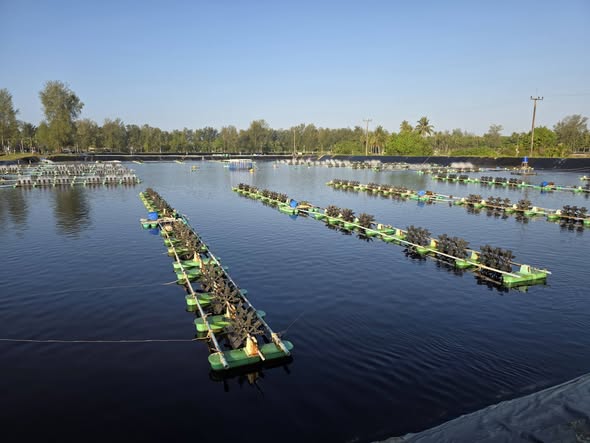
Shrimp farming plays a vital role in global aquaculture by supplying high-quality protein, strengthening food security, supporting local economies, and generating income for millions of producers. As one of the fastest-growing sectors of aquaculture, shrimp production has expanded rapidly in recent decades. However, this growth has also increased concerns regarding environmental impacts, resource consumption, and the long-term sustainability of farming practices. Consequently, developing production systems that combine economic efficiency with environmental responsibility has become a major priority for the industry.
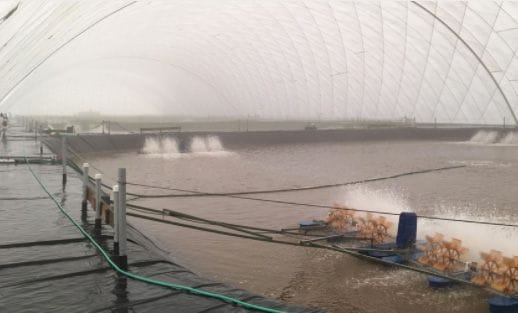
Several shrimp farming models have been developed to address these challenges. Indor Super Intensive Culture (ISIC) achieves very high production through intensive water management but requires substantial water use, continuous aeration, and high energy consumption. Indoor Super Intensive Recirculating Culture (ISIRC) reduces water consumption and pollution by recycling and treating culture water through mechanical, biological, and chemical filtration processes.
Pond Integrated Multi-Trophic Aquaculture (PIMTA) achieves the highest overall sustainability score among shrimp farming models. By integrating multi-species production, it optimizes nutrient recycling, lowers pollution, enhances microbial diversity, and reduces long-term operational risks.
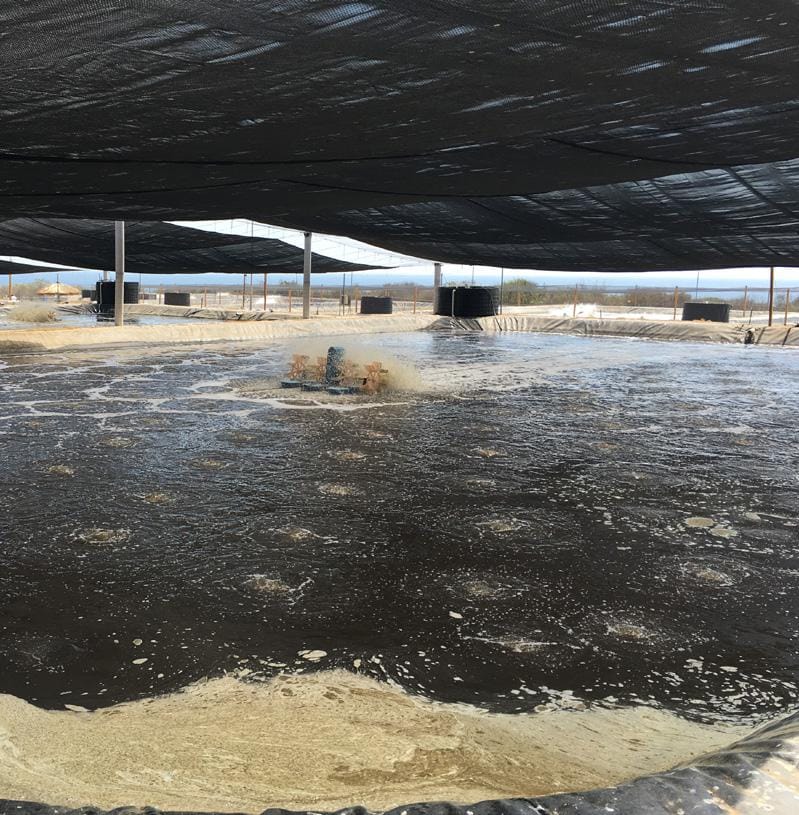
Meanwhile, Indoor Super Intensive Biofloc Culture (ISIBC) enhances water quality by adding carbon sources that stimulate beneficial microbial communities, converting waste nutrients into microbial protein that can be reused as natural feed. Traditional systems such as Pond Monoculture (PMC) remain widely used because of their low investment costs, whereas Pond Integrated Multi-Trophic Aquaculture (PIMTA) combines multiple aquatic species to recycle nutrients, improve resource efficiency, reduce waste, and increase farm profitability.
Despite the diversity of available production systems, comparing their overall sustainability remains difficult. Most previous studies have focused on individual aspects such as economic, ecological, and social benefits remain limited. Existing assessment methods often rely on subjective scoring or fail to capture the relative contribution of different sustainability indicators. To address these limitations, this study applies a systematic review and meta-analysis to quantitatively compare the comprehensive benefits of different shrimp farming models, providing a more objective framework for evaluating sustainability and supporting the future development of environmentally responsible and economically viable aquaculture systems.
Materials and Methods
A systematic literature was conducted using the Web of Science, Scopus, and Google Scholar databases with keywords related to intensive aquaculture, shrimp farming, water quality, bioeconomy, social benefits, and integrated benefits. From 439 retrieved publications, 136 studies met the selection criteria and were included in the meta-analysis after data screening and extraction. Comprehensive, economic, ecological, and social benefits were treated as qualitative indicators.
Indicator selection was based on previous studies evaluating economic efficiency, production costs, profitability, water quality, environmental impacts, and sustainability. Economic indicators included fixed and variable costs and cost-benefit performance, whereas ecological indicators considered water quality parameters, nutrient pollution, carbon emissions, microbial diversity, and microplastic contamination. Social benefits, including employment generation and income creation, were incorporated alongside environmental and economic indicators to provide a comprehensive assessment of the sustainability of different shrimp farming models.
Results
The meta-analysis revealed significant differences in the economic, ecological, and social performance of the shrimp farming models evaluated. Comparisons among ISIC systems showed that the ISIC_Exchange and ISIC_Unknown models performed similarly, suggesting that many undefined ISIC systems likely rely on conventional water-exchange practices (Figure 1a). Compared with ISIC recirculation, the ISIC_Exchange model exhibited significantly lower ecological performance but higher social benefits, while economic performance remained similar (Figure 1b).
Relative to ISIC_Biofloc, ISIC_Exchange achieved better ecological performance but lower economic benefits, whereas social benefits showed no significant differences (Figure 1c). Compared with traditional PMC and PIMTA systems, ISIC_ Exchange generally showed lower ecological performance while maintaining similar economic and social outcomes (Figures 1d-e).
Indoor Super Intensive Recirculating Culture (ISIRC) consistently delivers superior ecological performance over traditional water-exchange methods. Biological filtration processes effectively treat culture water, remove nitrogenous wastes, and reduce pollutant discharge into local ecosystems.
The ISIC Unknown model followed similar trends displaying lower ecological performance than ISIC_Recirculation, PMC, and PIMTA, as well as lower economic performance than ISIC_Biofloc, although most social indicators did not differ significantly (Figures 1f-i). In contrast, ISIC_Recirculation consistently demonstrated superior ecological performance compared with ISIC_Biofloc and PMC, together with improved social benefits over Biofloc systems, while economic differences remained limited (Figures 1j-l).
Among intensive production systems, ISIC_Biofloc produced the highest economic benefits, outperforming both PMC and PIMTA, but its ecological performance was significantly lower than those systems. Likewise, PIMTA consistently exhibited the highest ecological performance among all farming models, significantly surpassing PMC (Figure 1o).
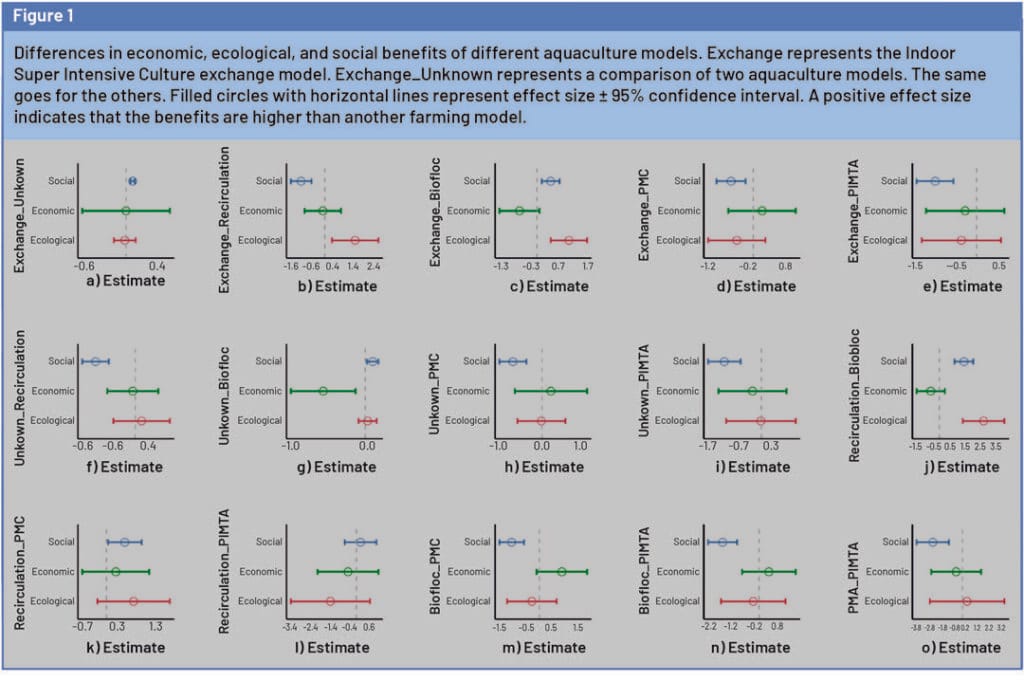
Overall, the analysis confirmed that farming model selection has a significant influence on the comprehensive sustainability of shrimp production, although substantial variability among studies indicates that local conditions strongly affect outcomes (Figure 1). Several key indicators were identified as major drivers of sustainability differences. Ecological performance was primarily influenced by total solids (TS), microbial diversity (Simpson index), ammonia nitrogen (NH₃-N), and microplastic contamination (MPS). Social performance was largely determined by food production capacity, while land rent was identified as the economic indicator with the greatest influence on overall benefits.
Comparisons among production technologies further highlighted important differences. The PIMTA model achieved the highest overall sustainability score, followed by ISIC Recirculation, whereas conventional ISIC systems, biofloc technology, and traditional production methods showed lower comprehensive benefit scores. However, when comparing intensive, semiintensive, and extensive pond systems, intensive farming generated greater pollutant emissions but achieved higher overall benefits due to substantially greater shrimp yields.
Indoor Super Intensive Biofloc Culture (ISIBC) yields high economic returns by converting waste nutrients into consumable microbial protein. However, its overall ecological performance remains significantly lower than multi-trophic and recirculating farming systems.
Finally, the study evaluated how environmental variables modify sustainability performance. Survival rate (SR), pH, and dissolved oxygen (DO) significantly influenced the comprehensive benefits of different farming models. Sustainability improved as survival increase up to approximately 68.4% after which additional gains became less influential. Higher pH values reduced differences among production systems, whereas higher dissolved oxygen concentrations increased the performance differences between farming models. Together, these findings demonstrate that both farming technology and water quality conditions play critical roles in determining the overall sustainability of shrimp aquaculture.
Discussion
The study compares shrimp farming models and technologies to determine which provide the greatest overall economic, ecological, and social benefits. Among the production models, PIMTA achieve the highest comprehensive performance due to its balanced profitability, environmental sustainability, and resilience.
By integrating multiple species such as shrimp, shellfish, and other aquatic organisms, PIMTA improves nutrient recycling, reduces pollution, enhances microbial diversity, promotes carbon sequestration, and lowers production risks. Although intensive systems may generate high short-term profits, PIMTA offers superior long-term sustainability.
Key ecological drivers influencing sustainability scores include total solids, ammonia nitrogen, microbial diversity, and microplastic contamination. Additionally, water quality parameters like dissolved oxygen, pH, and survival rates strongly modify overall farming benefits.
The ISIC model ranked second, providing strong economic returns through high-density production but suffering from higher nutrient emissions, wastewater generation, and environmental impacts. The PMC model, based on traditional monoculture, showed the lowest overall performance.
Among farming technologies, biological hierarchy technology delivered the best results by efficiently recycling nutrients, improving ecological balance, and increasing profitability. Recirculating Aquaculture Systems (RAS) also performed well because they effectively reduce pollutants and maintain water quality through biological filtration, although their high energy demand increases carbon emissions. In contrast, water exchange systems, traditional farming and biofloc technology demonstrated lower comprehensive benefits due to greater pollutant emissions, high energy requirements, carbon outputs, and operational costs.
Land rent and feed costs are primary economic drivers impacting farm profitability. On the social level, food production capacity directly governs community benefits, balancing financial returns with local food security goals.
Comparisons within intensive systems showed that recirculation technology provides better ecological performance than water exchange, while water exchange contributes more to social benefits through higher production. Biofloc systems can improve shrimp survival and profitability but still face environmental and operational challenges.
The study also identifies key factors influencing overall performance, including feed costs, electricity consumption, product conformity, total solids, microbial diversity, survival rate, dissolved oxygen, and pH. Future improvements should focus on optimizing multispecies farming, reducing carbon emissions, improving wastewater treatment, adopting renewable energy, and integrating advanced ecological technologies. Overall, the findings indicate that combining environmental sustainability with economic efficiency is essential for achieving long-term resilience and sustainable shrimp aquaculture.
Future improvements should focus on optimizing multi-species farming, reducing carbon emissions, improving wastewater treatment, adopting renewable energy, and integrating advanced ecological technologies.
Conclusion
The study concludes that the PIM-TA model using biological hierarchy technology provides the highest overall economic, ecological, and social benefits, followed by the ISIC recirculation system, while the traditional PMC model performs the worst. Among intensive systems, recirculation offers the best environmental performance, whereas water exchange contributes more to social benefits. Feed, energy use, product compliance, microbial diversity, and water quality are key factors influencing outcomes. Dynamic models that predict water quality and disease risk could optimize farming strategies, improve efficiency, and support the long-term sustainability and resilience of shrimp aquaculture.
This is a summarized version developed by the editorial team of Aquaculture Magazine based on the review article titled “ANALYSIS OF SUSTAINABILITY DIFFERENCES AMONG VARIOUS SHRIMP FARMING MODELS: A SYSTEMATIC REVIEW AND META ANALYSIS)” developed by: WANG, Y. – Ocean University of China, Chinese Academy of Fishery Sciences and Qingdao Marine Science and Technology Center; CHEN, Z., WANG, J., CHANG, Z., ZHANG, S., MENG, G. & LI, J. – Chinese Academy of Fishery Sciences and Qingdao Marine Science and Technology Center. The original article, including tables and figures, was published on JANUARY, 2026, through SCIENTIFIC REPORTS. The full version can be accessed online through this link: https://doi.org/10.1038/s41598-025-34072-6