* By Ph.D. Stephen Newman
As global aquaculture surpasses 100 million metric tons, the shift toward evolving production paradigms is no longer optional but essential for sustainability. This analysis explores how traditional methods are giving way to advanced technological frameworks, including precision genetic selection and automated husbandry. By redefining these core operational standards, the industry can ensure long-term ecological balance while meeting the rising global demand for seafood.
Global aquaculture production has grown exponentially over the last 5 decades. In 1990, aquatic animal production was around 17 million MTs contrasted with 2022 farmed production of almost 95 million MTs. Today in 2026, it is over 100 million MTs with no end apparently in sight. Although not all sectors have grown at the same rate, bivalve culture, salmon, tilapia and shrimp farming are currently the leaders.
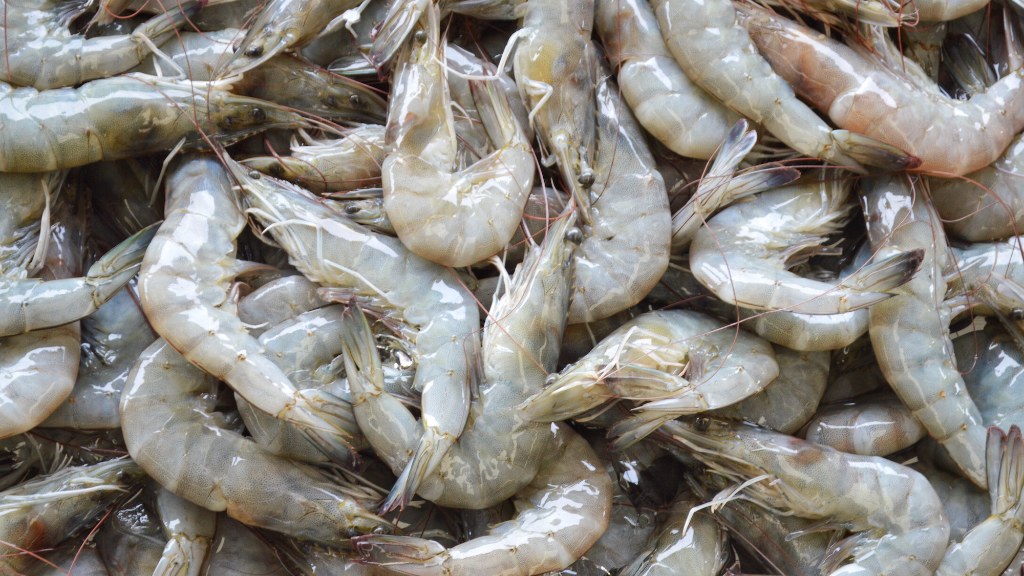
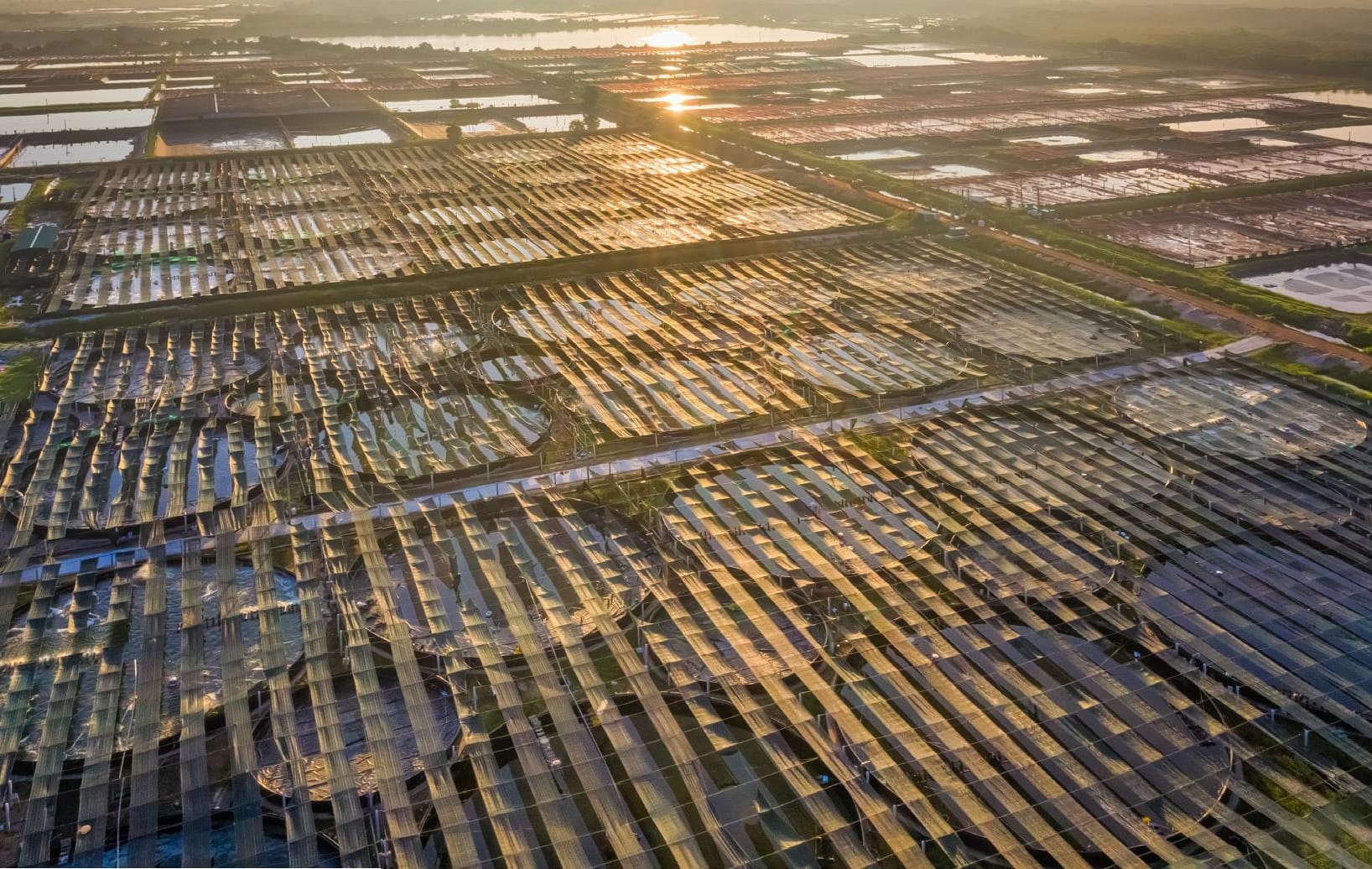
Focusing on shrimp farming, there are many countries where paradigms that are little changed from what would have been in use a hundred years ago are still the norm. The common example of this would be non-aerated gravity fed, stocked with wild seed, dirt ponds with hand feeding and harvesting via nets.
Technological advances are ensuring greater control and for some systems may ultimately lower overall costs, resulting in greater returns on investment (ROIs) and more consistency. Aeration, the use of automatic feeders and engineered feeds, as well as genetic selection of stress and pathogen tolerant lines, pond design and advanced animal husbandry are all elements of this.
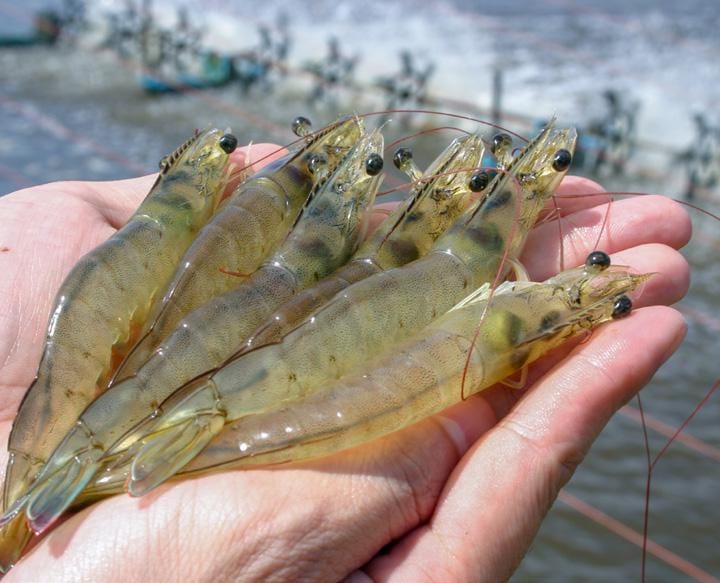
These advances, while not being adopted universally, I believe are largely inevitable in the long run to ensure sustainable production. Some will not agree although I think that ultimately the largest consumers, which will be those that are buying imported products, will want assurances regarding the manner in which the animals are being produced that include not just animal welfare but owner welfare as well.
Efficiency of farming is essential for shrimp to be priced as large volume consumed commodities. Sustainable, responsible aquaculture will reduce the pressure of a burgeoning human population on the wild fisheries, many of which, if not all, are at risk from over exploitation and environmental variability.
Advances in aeration, automatic feeders, and genetic selection for stress tolerance are transforming aquaculture paradigms. These elements ensure greater control, lowering costs and increasing ROIs for sustainable, large-scale production.
Environmental stewardship, ensuring that the impact on the environment is minimal and properly managed, is an essential element of sustainability. How best to approach this is not necessarily always straight forward and there are many disparate ideas as to what is needed. As Earth’s population continues to grow at what does not appear to be a sustainable pace, a continually changing environment along with the impact of human activities is squeezing and jeopardizing abundant food production on the land and in the sea.
There are challenges that humanity must deal with as a result of the complexities created by high population levels and the pressure this places on resource utilization. The concept that by altering an environment one can impact the need for a species to evolve or die is important. This can happen slowly or quickly.
A naturally occurring equilibrium in the aquatic microbiome is essential. Nonpathogenic Vibrio species stabilize the environment, helping control virulent strains and ensuring the balance necessary for successful monoculture systems.
Humanity has at best incomplete models of how all the pieces of what is a very complex jigsaw puzzle fit and act together. We are still unraveling the layers and while the progress in some areas is nothing short of astonishing, we are still far from having a comprehensive, cohesive model. AI could change this, but will it shape it positively?
In ecology there is a concept that as a population modifies its environment it can create changes that make it problematic for the environment to continue operating in a manner that ensures that a dependent population can thrive. There are innumerable examples where the outcome is extinction. Changes in the environment create a negative feedback loop that further weakens environmental integrity and displaces those animals, plants, bacteria, etc. that rely on the stability.
Even apparently minor disruptions in this chain can have dire impacts. There are some who believe that this is where humanity is headed unless some form of progressive change is not mandated and enforced. Not simple either.
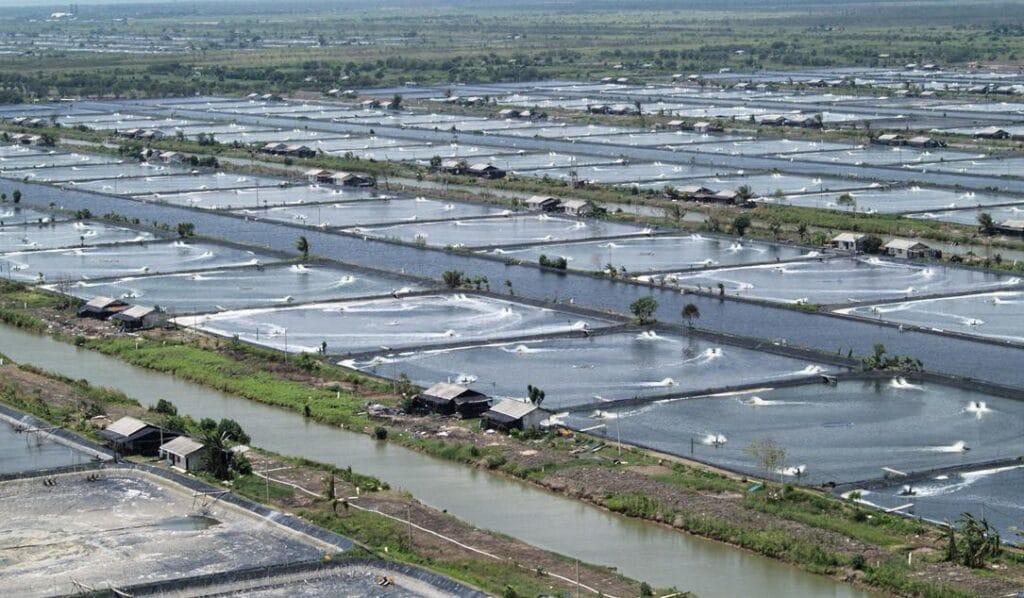
Aquaculture is an essential element of mitigating the impact of our activities on a renewable resource that is fragile (the fishery). Climate is not something that is always the same and human activities can, do and will impact this with a myriad of environmental impacts that are potentially detrimental.
Recognizing that aquaculture, when practiced in a responsible fashion must be a component of the long-term ability of sustainable production to result in positive impacts is critical. Resource depletion is an ever-present sword of Damocles. While there are steps being taken in the right direction, there is not a framework that is universal and that everyone will agree is sustainable. There must be constraints placed on how aquaculture outputs are produced that considers the limits placed on what sustainable methods demand. Not simple either.
Disease is a natural phenomenon. It is an “inconvenience” for humans that are impacted by it. Growing any organism in artificial environments will invariably face disease challenges. The normal balance that complex highly evolved ecosystems have is not there. The risks can be reduced and in some production paradigms, at a cost, appear to be able to be largely eliminated.
Efficiency is critical for shrimp to remain a high-volume commodity. Sustainable methods must balance environmental impact with the cost-effective production required for global market accessibility and food security.
For day-to-day production on a massive scale in open to the environment systems, generally felt to be essential to ensure that shrimp are a commodity that can be sold at a price point that encourages wide spread consumption, the challenges are different than for partially and totally closed systems.
I am of the opinion that the path to sustainability requires an indepth audit by cooperating, non-conflicting, third parties with no stake in the outcome of every phase of each component of the process. Only then can a full picture evolve. Some things are much important than others and what matters is that entire ecosystems are considered with risk benefits and overviews of a spectrum of economic, social and environmental impacts. Bias and capitalist overtones limit this. This is not a onetime thing but requires adapting to change.
The aquatic microbiome is highly complex and variable. Aquaculture has been impacted significantly by elements of this. Vibrios are universally seen as problematic along with a few other genera that also can cause great harm. There are a vocal few who advocate extreme control of the entire genus among others. In my opinion, elimination of any given genus of bacteria is a fool’s errand.
Bacteria are everywhere and as we slowly unravel the pieces of this huge jigsaw it becomes increasingly obvious that they are instrumental in success and not at the root of all failures. Taking a closer look at vibrios, the nonpathogenic vibrio species (of which there are well over a hundred) are important in stabilizing the microbiome which helps to control the levels of virulent strains and ensures a balance (Figure 1). The reality is that there is a naturally occurring equilibrium that the very nature of monoculture can disrupt.
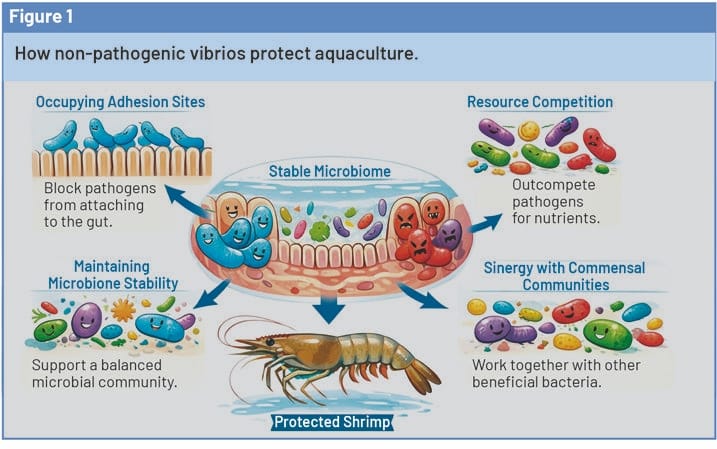
The Figure 1 demonstrates that the spectrum of vibrios present in a production system are critical for stability. Modifying the environment and how the animals are being produced can result in production systems where susceptibility is reduced to those few pathogens that are obligate. Obligate pathogens in this case being defined as specific strains of many different bacteria, fungi, viruses, etc. that will produce disease in healthy animals.
Typically, this is because of the production of virulence factors that overwhelm the ability of a healthy host to fight a given pathogen at the levels that are present in the production environment. Note that this is rarely an all or nothing phenomenon. There are examples where obligate pathogens only produce limited disease and even in some instances although animals are affected, they are able to survive without losses that reduce the value of the crop to the point where money is lost. Opportunistic pathogens abound in aquatic environments. They take advantage of weakened animals. In some instances, they even can become obligate pathogens.
Understanding factors that disrupt homeostasis is vital for sustainability. Minimizing sudden water quality changes and accumulated waste prevents immune responsiveness failure, protecting weak animals from opportunistic pathogen infections.
Stress reduction, understanding what factors negatively impact the homeostatic mechanisms needed for animals to thrive in the artificial environments we need to use to farm them economically, is essential if we are going to be able to truly consider what we are doing is sustainable. This is a fancy way of saying that when you do things that force the animal to use resources that you want geared towards converting food into biomass it comes at an expense. There are many examples of this.
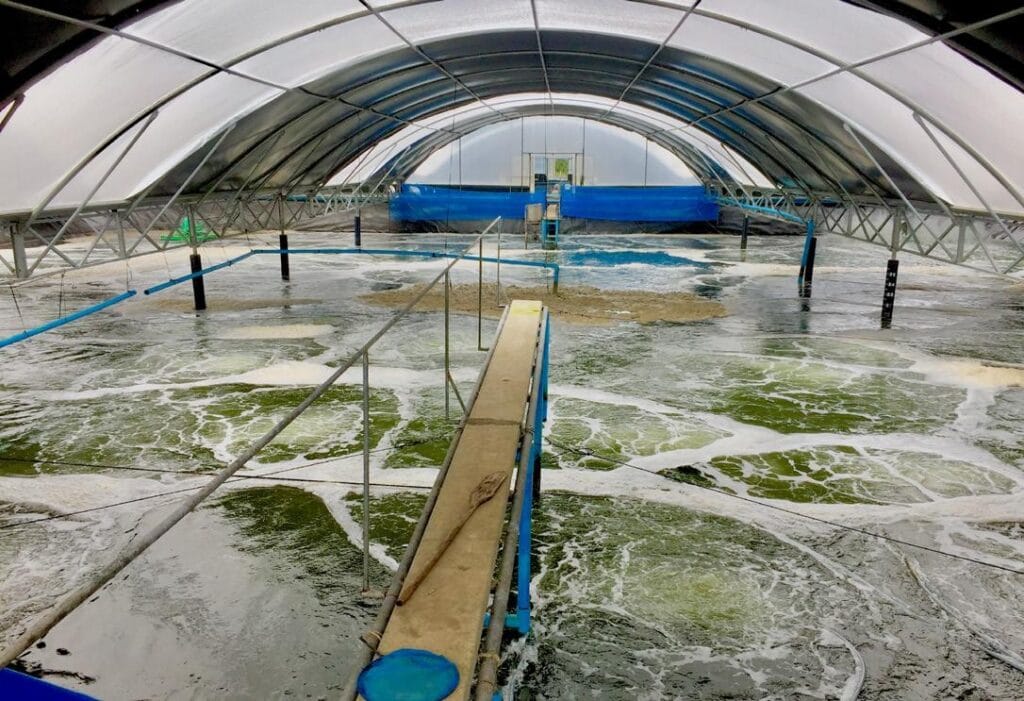
A few, sudden changes in salinity or certain other water quality parameters including temperature, low or no DO, inadequate water depth, large amount of accumulated waste streams from the process itself, etc. Weak animals are susceptible to infection with opportunistic pathogens, which can jump in when obligate pathogens set the stage or they overwhelm enfeebled immune responsiveness.
Exclusion is an important principle and properly operated brood-stock programs reduce the risk of known pathogen transmission. However, unfortunately, the firewalls in some of these facilities are often breached. Some are profiting from these breaches even though a very few changes are all that is needed to minimize these risks. Technological advances can minimize these. No tool will allow farmers to take short cuts with pathogen control and stress reduction and inevitably avoid negative consequences.
Successful aquaculture relies on robust biosecurity elements, including pathogen exclusion and judicious use of disinfectants. Maintaining these protocols avoids economic catastrophes and ensures long-term profitability as production tonnages increase globally.
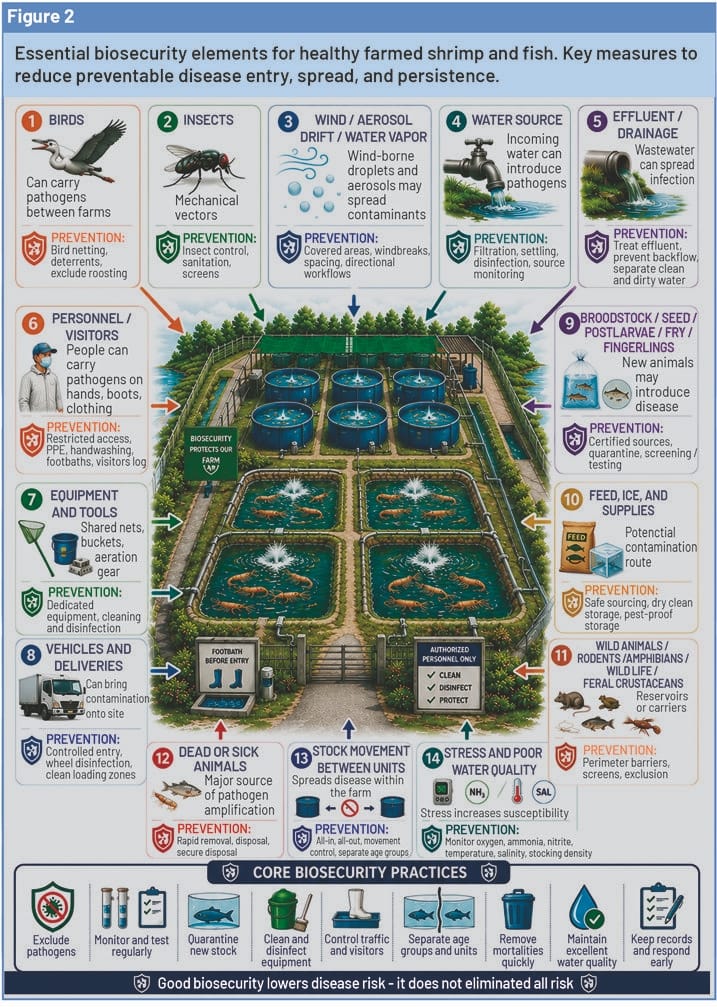
While populations might indeed be free of specific pathogens at the time that they are placed into hatchery systems these are rarely operated at the same level of biosecurity that a nucleus breeding facility would be. Insects, birds, the wind, water vapor, etc. are all able to enter these facilities even with tight biosecurity of personnel. Disinfectants play a role in this although much as with antibiotics they are best used judiciously when they are needed and work, leaving no discernable negative impacts.
The Figure 2, essential biosecurity elements for healthy farmed shrimp and fish, summarizes many of the various elements of biosecurity that are crucial for success, although they do not guarantee it. Failure to appreciate these can increase the odds of economic catastrophes. Profitability becomes elusive and the costs of ensuring that these elements are part of standard operating procedures results in taking short cuts which further increases the risk.
In summary, a cold hard non biased look is needed to ensure that sustainable elements of production are in place. These vary with the animal being produced, the environment it is being produced in and how things change as production systems mature. While some would argue that frameworks are in place, I see it as being a process that is evolving much as the production paradigms are. This will continue as the tonnage increases and both old and new challenges arise.

* Stephen G. Newman has a bachelor’s degree from the University of Maryland in Conservation and Resource Management (ecology) and a Ph.D. from the University of Miami, in Marine Microbiology. He has over 40 years of experience working within a range of topics and approaches on aquaculture such as water quality, animal health, biosecurity with special focus on shrimp and salmonids. He founded Aquaintech in 1996 and continues to be CEO of this company to the present day. It is heavily focused on providing consulting services around the world on microbial technologies and biosecurity issues.
sgnewm@aqua-in-tech.com
www.aqua-in-tech.com
www.bioremediationaquaculture.com