
The academy is expected to train at least 60 aquaculture extension professionals from Sea Grant programs, Land Grant universities, and federal agencies
Minnesota Sea Grant and Texas Sea Grant programs announced they will co-host the Aquaculture Leadership Academy in 2026 and 2027 and bring together aquaculture extension professionals from across the United States (US) for separate weeklong training sessions in each state focused on freshwater and marine aquaculture systems. Support for the academy comes from a USD 350,000 award administered by the Mississippi-Alabama Sea Grant.
Sea Grant’s Aquaculture Leadership Academy is designed to strengthen the national aquaculture workforce by helping early- and mid-career extension professionals build technical knowledge, leadership skills, and professional networks. Participants will engage directly with fish farmers, hatchery managers, seafood businesses, researchers, educators, and policy experts in both the Great Lakes and Gulf Coast regions.
“Minnesota may not be the first-place people think of when they hear the word aquaculture, but we have a growing and innovative industry that includes baitfish production, hatcheries, recirculating systems, aquaponics, and seafood businesses,” said Julia Grenn, Minnesota Sea Grant project lead and fisheries and aquaculture extension educator.
“This partnership with Texas Sea Grant allows participants to experience the diversity of aquaculture across the country while building relationships that will strengthen the industry nationwide,” she said.
Freshwater Aquaculture Systems
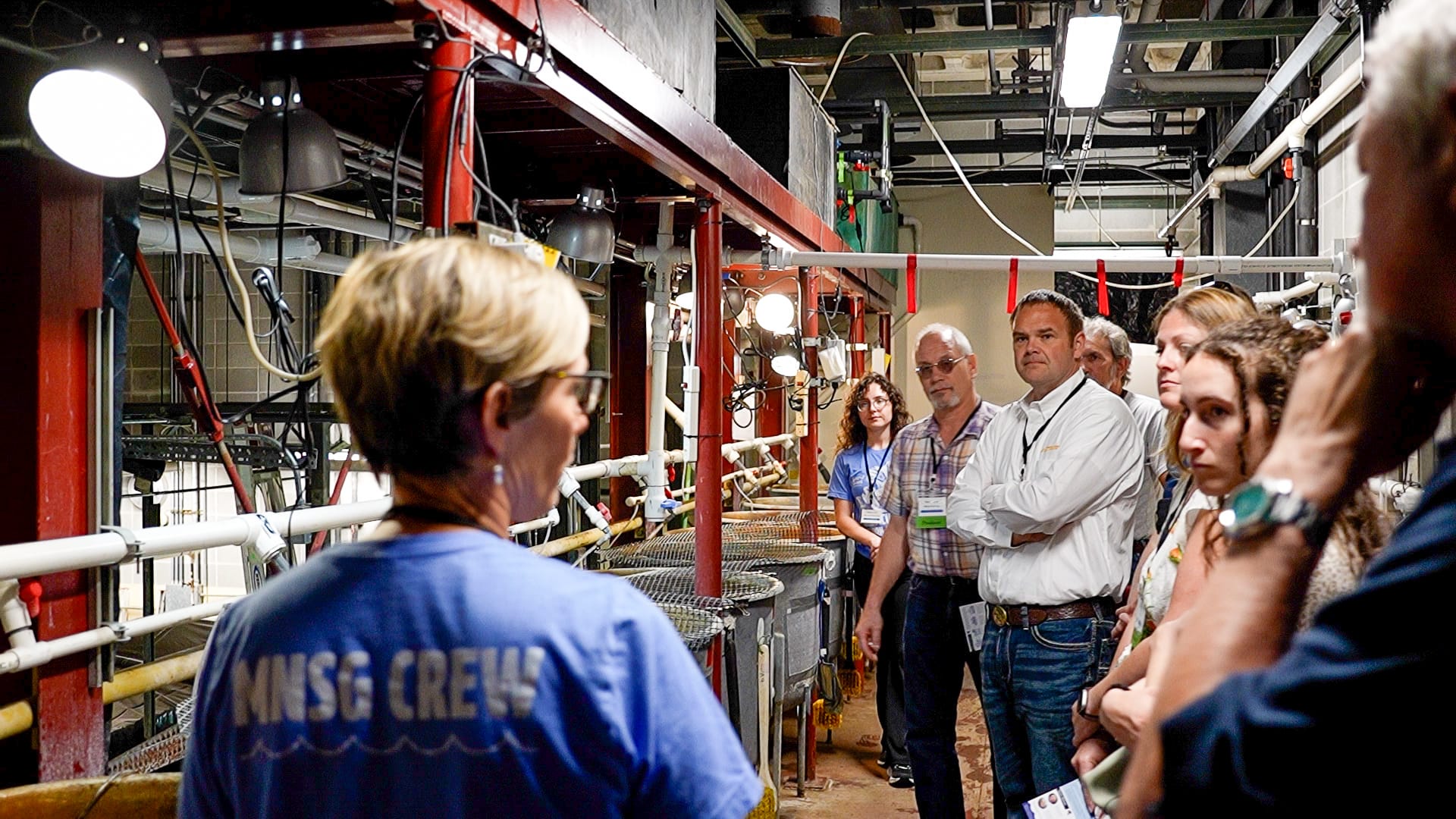
Programming in Minnesota will focus on freshwater aquaculture systems common in the Great Lakes region, including recirculating aquaculture systems, aquaponics, baitfish production, hatcheries, and seafood distribution. Participants will tour the Minnesota Sea Grant Aquaculture Lab at the University of Minnesota St. Paul campus, visit commercial aquaculture operations, learn about seafood processing and marketing, and take part in activities focused on extension education, communication, and leadership development.
Minnesota sessions will include tours and discussions with businesses and organizations including Minnesota Department of Natural Resources hatchery staff, commercial baitfish and aquaculture producers, seafood distributors, and University of Minnesota researchers. Participants also will receive training in media communication, graphic design, conflict resolution, aquaculture policy, and business development.
Saltwater Aquaculture
On the other hand, Texas Sea Grant will lead Gulf Coast programming focused on saltwater aquaculture, including oyster, shrimp, finfish, and seaweed production. Participants will tour hatcheries, seafood processing facilities, oyster farms, and marine research centers while learning about coastal aquaculture systems and seafood markets.
“Aquaculture’s future depends not only on what we grow in the water, but on the leaders we grow through collaboration, education, and shared experience across every region of the country,” said Texas Sea Grant Extension Director Chris Hale. “The Aquaculture Leadership Academy is building more than industry knowledge; it is building the relationships, leadership, and innovation needed to strengthen aquaculture communities across America. We are excited to welcome Extension professionals to Texas and Minnesota, yet even more so, we look forward to the impact these professionals will make after applying their knowledge and skills locally.”
Collaborative Strength
The project reflects the collaborative strength of the National Sea Grant network, which connects university-based programs across coastal and Great Lakes states to support research, education, and community engagement related to water resources and coastal economies. By combining the expertise of Great Lakes and Gulf Coast Sea Grant programs, the academy will expose participants to aquaculture systems and challenges that vary widely by region.
“This program demonstrates how Sea Grant programs work together across regions to solve problems and support emerging industries,” said Amy Schrank, Minnesota Sea Grant associate director, extension program leader and co-project lead. “Participants will leave with practical skills, new professional connections, and a broader understanding of how aquaculture supports communities and economies throughout the country.”
The academy is expected to train at least 60 aquaculture extension professionals from Sea Grant programs, Land Grant universities, and federal agencies. The long-term goal is to build a stronger national support network for aquaculture producers and coastal communities.
Minnesota Sea Grant has played a growing role in advancing aquaculture education and outreach in Minnesota and the Great Lakes region. Current efforts include leading the Great Lakes Aquaculture Collaborative, operating the Minnesota Sea Grant Aquaculture Lab in St. Paul, supporting aquaculture workforce development, conducting fish health and business training workshops, and developing resources like the FreshFishFinder.org website that connect consumers with regional seafood producers.