
By Aquaculture Magazine Editorial Team
As global aquaculture shifts toward ecological responsibility, Brazil’s nutritional strategies are evolving to reduce reliance on traditional fishmeal through the use of microalgae and plant-derived compounds. This articleexaminesrecentresearchonmacroalgaeandbioactivepeptides as pillars of a resilient production system. By prioritizing gut health and immune modulation, these advancements offer a sustainable framework for optimizing fish welfare and long-term environmental health.
Fish farming plays a central role in global aquaculture by generating employment, supporting economic growth, and enhancing food security.
As the sector expands, advances in aquafeed technology and the use of feed additives have become essential to improving fish growth, health and production efficiency.
Feed additives such as vitamins, minerals and amino acids ensure that diets meet the nutritional requirements of farmed fish, while growth promoters enhance performance and feed conversion. Functional additives including probiotics, prebiotics, phytobiotics and algae-based compounds. Strengthen the immune system, increase resistance to diseases, and improve survival rates. Some additives also reduce stress and enhance overall welfare, contributing to more stable production systems.
Enzymes play a role in improving digestion and nutrient absorption, reducing feed waste and increasing efficiency. Similarly, microalgae are promising alternatives to traditional fishmeal and fish oil, as they provide essential fatty acids, proteins, and bioactive compounds that support growth, immunity, and product quality.
Plant-derived compound, such as essential oils and herbal extracts, are increasingly used as natural alternatives to synthetic chemicals. These compounds improve growth, immune response, and disease resistance while promoting a healthier production environment.
Feed additives such as probiotics and phytobiotics are essential for modern aquaculture, strengthening the fish immune system and increasing resistance to pathogens. These functional compounds improve gut health and microbiota balance, leading to superior survival rates and more stable production environments.
Probiotics and prebiotics further enhance gut health and microbiota balance, leading to better nutrient utilization and increase resistance to pathogens. Their use has shown positive effects on survival, intestinal health, and immune responses in several fish species.
Overall, the development of functional and sustainable feeds is crucial for the future of aquaculture. Current research focuses on replacing conventional ingredients with natural and environmentally friendly alternatives, improving efficiency while reducing ecological impact. These innovations are particularly important in rapidly growing regions such as Brazil but are applicable to aquaculture systems worldwide.
Feed additives such as probiotics and phytobiotics are essential for modern aquaculture, strengthening the fish immune system and increasing resistance to pathogens. These functional compounds improve gut health and microbiota balance, leading to superior survival rates and more stable production environments.
Pivotal Roles of Feed in Fish Farming
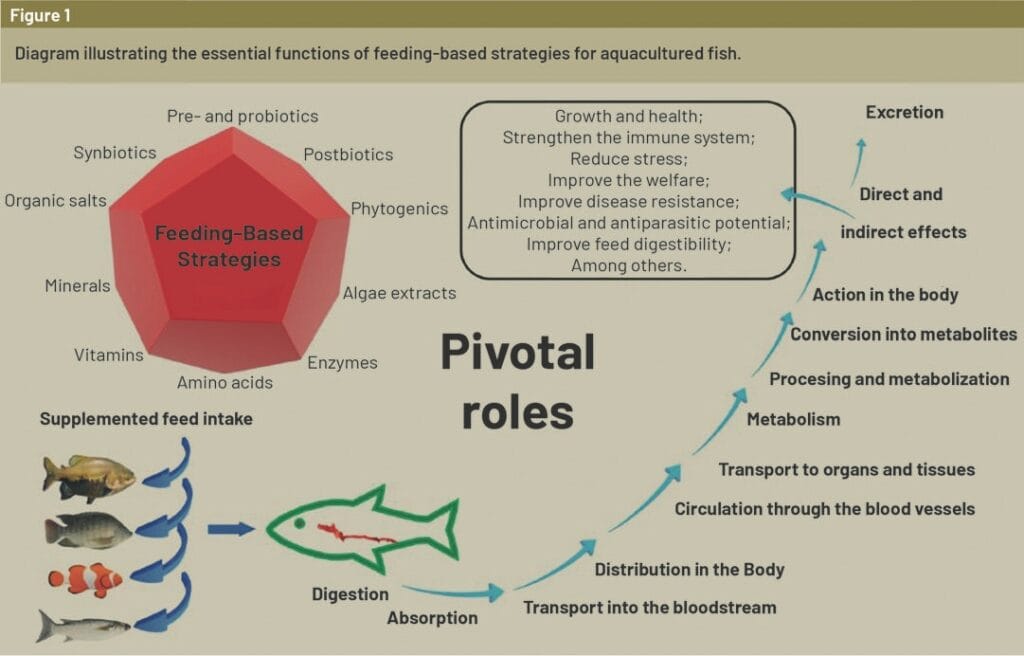
Feed additives are essential components in aquaculture, used to improve feed quality, enhance fish health, and optimize production performance (Figure 1). These additives are classified according to their functions and mechanisms of action, playing a key role in sustainable and efficient fish farming.
Improved digestibility and nutrient absorption
Feed additives such as digestive enzymes significantly enhance nutrient utilization by breaking down complex compounds like proteins, lipids, and carbohydrates. Enzymes including proteases, lipases, and carbohydrates improve digestion and compensate for limited endogenous enzyme production, particularly in juvenile fish. This leads to better feed efficiency, growth performance, and reduced waste.
For example, enzyme supplementation is species such as pirarucu improved growth and nutrient digestibility, while phytase enhances the utilization of plant-based ingredients. Similarly, protein hydrolysates from poultry liver and sardines have been shown to improve nutritional efficiency and productivity in various fish species.
Overall, improving digestibility results in optimized growth, lower feed costs, and reduced environmental impact, contributing to more sustainable aquaculture systems.
Increased immunity and health
Functional feed additives play a crucial role in enhancing fish immunity and overall health. Probiotics, such as Lactobacillus and Bacillus species, improve gut microbiota balance, nutrient absorption, and disease resistance by inhibiting pathogenic microorganisms and stimulating immune responses. Prebiotics further support beneficial bacteria, creating a favorable intestinal environment.
Immunomodulators, including essential fatty acids (EPA, DHA, and ARA), nucleotides. and plant extracts, regulate immune cell activity and improve resistance to infections. Organic acids contribute to pathogen control and improved digestion, while antioxidants such as vitamins A,D, and E, along with minerals like zinc and selenium, reduce oxidative stress andstrengthen immune function.
Bioactive peptides also enhance immune responses by activating immune cells and providing antimicrobial effects. Additionally, improve digestion through enzyme supplementation indirectly supports immune health by reducing physiological stress.
Exogenous enzymes like proteases and phytases significantly enhance nutrient utilization by breaking down complex dietary compounds. This technology compensates for limited endogenous enzyme production, particularly in juvenile fish, reducing feed waste and optimizing feed conversion ratios.
In summary, feed additives are fundamental to modern aquaculture, improving both nutritional efficiency and fish health. By enhancing digestion, boosting immunity and reducing environmental impact, they support more productive, resilient, and sustainable fish farming systems (Figure 1).
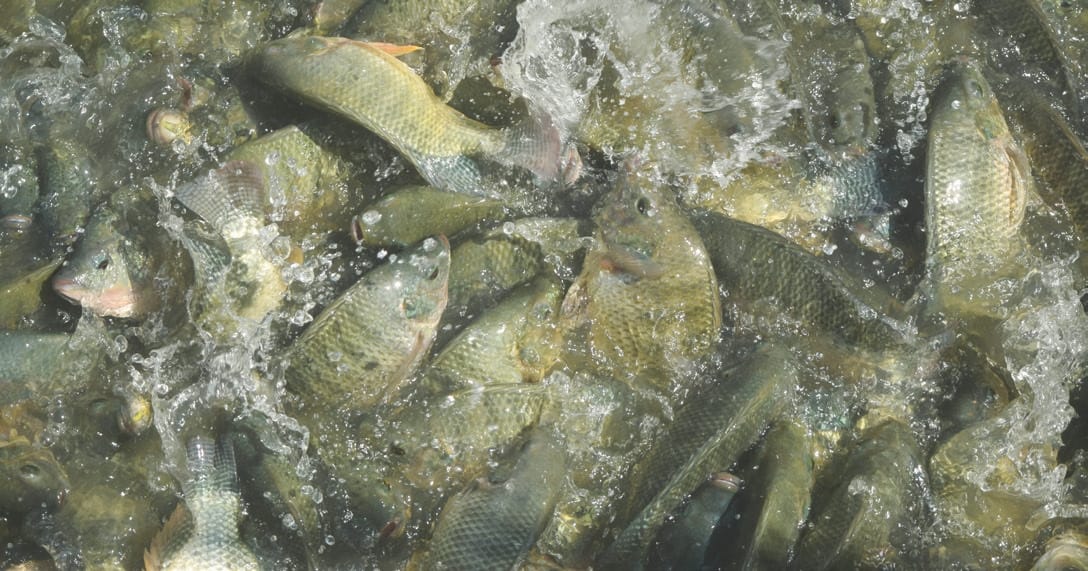
Macroalgae species, including Ulva and Gracilaria, are emerging as potent biotechnological tools due to their immunostimulant and growth-promoting properties. They serve as natural sources of carotenoids and essential amino acids, enhancing fillet quality and antioxidant responses in species like Nile tilapia.
NutritionalApproachesin Brazilian Marine Fish Farming
Nutritional strategies in Brazilian marine aquaculture have evolved to improve fish growth, health, and sustainability, particularly for economically important species such as mullet, snook, and sardines. Research shows that not all dietary additives are beneficial. For instance, guar gum and citrus pectin at higher inclusion levels negatively affected growth performance, nutrient composition, and feed intake in juvenile mullet, while also altering liver metabolism without improving communities. In contrast, citral supplementation enhanced growth, digestive enzyme activity, antioxidant responses, and survival in mullet and sardines, although it was not recommended for common snook.
Probiotics such as Bacillus subtilis demonstrated immunostimulant effects in snook, though without significant growth improvements. Organic salts, particularly sodium acetate, improved growth performance and reduced bacterial loads in fat snook, highlighting their potential as functional additives. Similarly, ascorbic acid supplementation improved reproductive parameters like sperm quality, even when growth was unaffected. Exogenous enzymes also showed promise by mitigating soybean mealinduced intestinal issues and enhancing nutrient utilization.
Macroalgae species, including Ulva and Gracilaria, are emerging as potent biotechnological tools due to their immunostimulant and growth-promoting properties. They serve as natural sources of carotenoids and essential amino acids, enhancing fillet quality and antioxidant responses in species like Nile tilapia.
Marine ornamental fish production presents additional challenges due to reliance on wild capture, raising sustainability concerns such as overfishing and habitat damage, and specialized dietary requirements. Experimental diets and additives play a key role in addressing these issues. Thyroid hormones have been shown to accelerate metamorphosis, improve survival, and enhance development in species like clownfish and barber goby, although excessive doses can cause deformities.
Probiotics and enriched live feeds improved growth and survival in seahorses, especially when combined with microalgae or copepods. Carotenoids such as astaxanthin significantly enhanced pigmentation and immune function, with natural sources proving more effective than synthetic ones. Exogenous enzymes like pancreatin improved digestion, intestinal development, and growth performance in both seahorses and clownfish larvae. Organic acids contributed to better intestinal morphology and nutrient absorption, although their long-term effects require further study.
Microalgae emerged as a critical nutritional component, improving survival, growth, and fatty acid composition in larvae, while also serving as a sustainable alternative to traditional feed ingredients. Additionally, micronutrients such as iodine were essential for preventing physiological disorders like goiter in certain species.
Overall, advances in nutritional strategies, including functional additives and alternative feed sources, are essential for improving aquaculture productivity and sustainability while reducing dependance on wild populations.
Recent research in Brazilian marine fish farming focuses on tailoring diets for economically vital species such as mullet and snook. Strategies involving organic salts and ascorbic acid have shown success in reducing bacterial loads and improving reproductive parameters, even under intensive culture conditions.
Recent Advances for Feeding in Brazilian Fish Farming
In recent years, macroalgae have gained attention as a functional feeding strategy in aquaculture due to their nutritional, immunostimulant, antiviral, antibacterial, and growth-promoting properties. Studies on species such as Ulva ohnoi, Sargassum filipendula, Undaria pinnatifida, Chaetomorpha clavate, and Kappaphycus alvarezii have demonstrated positive effects on the growth and immunity of Pacific white shrimp (Penaeus vannamei), suggesting similar potential benefits for fish. However, research on macroalgae use in fish diets remains limited in Brazil.
Costa and Miranda-Filho (2020) highlighted the importance of marine macroalgae as sources of carotenoids, which influence not only coloration but also growth, reproduction, and overall health in aquatic species. Experimental studies with fish show promising but nuanced results. For instance, Pontes et al. (2020) found that including 10% Ulva fasciate meal in juvenile Nile tilapia (Oreochromis niloticus) diets did not affect gastrointestinal transit, indicating it is a safe inclusion level. Similarly, Costa et al. (2013) reported improved feed conversion and carcass yield in tilapia when diets included 20 g Kg-1 of Ascophyllum nodosum.
In contrast, Mendonca et al. (2019) observed that while Gracilaria domingensis enhanced immune responses in juvenile mullet (Mugil liza) growth was negatively affected at inclusion levels above 10%. A 5% inclusion level was identified as optimal, improving immune competence without compromising growth. Fish fed macroalgae also showed increased levels of immune-related antibodies.
Macroalgae also influence physiological and biochemical parameters. Cian et al. (2019) found that Pyropia columbina improved antioxidant responses in juvenile pacu (Piaractus mesopotamicus), reducing oxidative stress markets without affecting growth. Meanwhile, Ulva fasciata supplementation in Seriola dordalis did not alter growth but improve fillet quality by increasing DHA and reducing linoleic acid content, along with changes in hematological parameters at higher inclusion levels.
Additionally, Ulva species may serve as natural sources of tryptophan phenylalanine, potentially reducing stress in fish farming systems (Calheiros et al., 2019). Overall, macroalgae show strong biotechnological potential as feed additives, enhancing fish health, immunity, and product quality, although further research is needed in Brazil.
Future outlook for nutrition and feeding in Brazilian fish farming
The future outlook for nutrition and feeding in Brazilian fish farming looks very promising. With the ongoing expansion of the Brazilian fish farming industry, there is anticipated to be a notable rise in research efforts and the introduction of new products to the market. The fish farming sector in Brazil is experiencing rapid growth, with investments being made in water resource management technologies and the development of specific diets for native species, which will help ensure the sector’s sustainability.
The future of Brazilian fish farming relies on incorporating sustainable ingredients like microalgae to replace traditional fishmeal. Investments in specific diets for native species and standardized feeding protocols are crucial for the sector’s long-term global competitiveness and ecological responsibility.
These prospects indicate a dynamic future with significant growth opportunities for fish farming in Brazil. Recent highlights of the Brazilian evolution in the search for sustainable alternatives for the aquafeed industry include feed additives such as citral, β-glucan-enriched complex, Ocimum basilicum essential oil, Bacillus spp and organic benzoic acid, propionic acid, Curcuma longa hydrolate and Lactobacillus plantarum, Inulin, Lippia sidoides essential oil, and Lactobacillus rhamnosus.
Despite the advancements in Brazilian research reported in this study, it is crucial to incorporate these advancements into the aquafeed industry to enhance the growth and sustainability of the sector. Quality ingredients are necessary for formulating fish diets, even though they can be costly. Proper selection of feed ingredients and additives is vital for the health and growth of fish. Nutrition for native species remains a challenge in the Brazilian aquaculture industry. Government support and targeted public policies for the fish feed sector could drive development and innovation. These challenges present obstacles, but also opportunities for innovation and expansion in the Brazilian fish feed industry.
This is a summarized version developed by the editorial team of Aquaculture Magazine based on the review article titled “PIVOTAL ROLES OF FISH NUTRITION AND FEEDING: RECENT ADVANCES AND FUTURE OUTLOOK FOR BRAZILIAN FISH FARMING” developed by:. Aline Brum, Caio Magnotti, Mônica Yumi Tsuzuki, Elen Monique de Oliveira Sousa, José Luiz Pedreira Mouriño, Maurício Laterça Martins. Rafael Garcia Lopes, Roberto Bianchini Derner and Marco Shizuo Owatari ─ Federal University of Santa Catarina. The original article was published on JANUARY, 2025, through FISHES. The full version, including tables and figures, can be accessed online through this link: https://doi.org/10.3390/fishes10020047