

Rosenstiel School Aquaculture Nutrition & Biotechnology Laboratory
* By Jorge Suarez, Julio Camperio and Daniel Benetti
Too often, decisions related to species selection, feed formulation, ingredient adoption, and investment in new technologies are driven by popularity, market trends, compelling narratives, or short-term availability, rather than by objective and comparable performance criteria.
This dynamic has created structural imbalances across the sector. Certain species, ingredients, and production systems receive disproportionate attention and investment, while others, often equally viable from a biological, nutritional, or economic standpoint, remain underdeveloped. Over time, these imbalances increase production risk, slow innovation, and limit the industry’s ability to grow in a resilient and sustainable way. For producers, this often translates into higher costs, inconsistent performance, and greater uncertainty at the farm level.
Addressing this challenge requires moving beyond trend-driven decisions and adopting integrated and balanced evaluation frameworks. These frameworks allow technologies, ingredients, and nutritional strategies to be assessed on equal terms using biologically relevant metrics. Nutrition and biotechnology play a critical role in this transition by providing tools that reduce uncertainty, improve comparability, and support more informed and scalable decision-making.
At the Rosenstiel School Aquaculture Nutrition & Biotechnology Laboratory, our work is centered on this objective: shifting aquaculture nutrition away from assumption based practices toward objective, integrated, and balanced evaluation. The goal is not to promote trends, but to provide clear criteria that help distinguish what is popular from what truly works under real production conditions.
Aquaculture Nutrition: A Persistent Black Box
Unlike terrestrial livestock industries such as poultry or swine, where production systems are highly standardized and feed intake can be accurately measured, aquaculture operates under inherently complex and variable conditions. In shrimp farming, animals are reared in turbid waters, interact continuously with sediments and microbial communities, and consume both formulated feeds and naturally available nutrients. In fish culture, whether freshwater or marine, environmental variability, water quality, and animal behavior further complicate intake estimation.
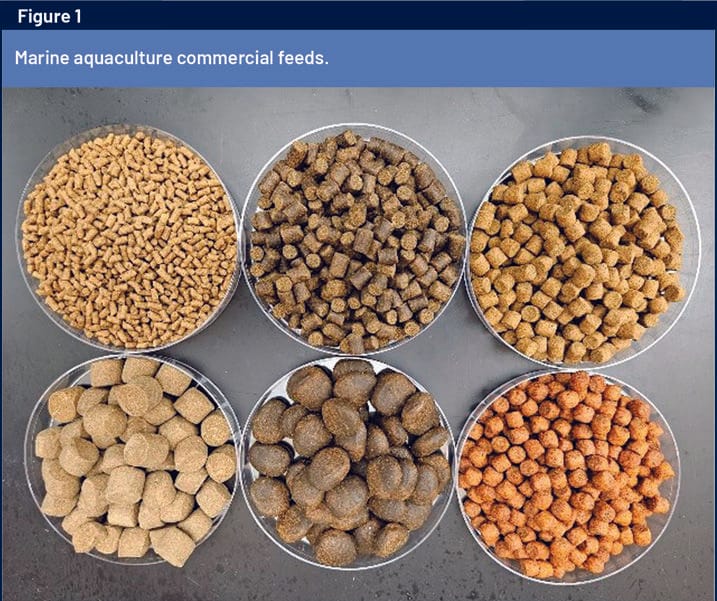
As a result, aquaculture nutrition often functions as a true black box. Feed is delivered, but actual intake and nutrient utilization are rarely measured directly and are instead inferred from models and assumptions. Despite this uncertainty, feed formulation and feeding management continue to rely largely on gross nutrient values, such as crude protein, gross energy, and total amino acids.
From a production perspective, this approach has clear limitations. Gross values provide little insight into what animals actually digest, absorb, and utilize. This makes it difficult to optimize feeding rates, improve feed conversion, reduce feed waste, and objectively compare commercial diets, directly impacting production costs and environmental performance.
From Gross Values to Digestible Performance
An integrated and balanced evaluation approach shifts the focus from how much nutrient is present in a feed to how efficiently that nutrient is digested, absorbed, and converted into growth and health under real farming conditions.
Historically, applying this concept in aquaculture has been constrained by methodology. Digestibility assessments often depend on inert markers such as chromic oxide or yttrium, which, while valid under controlled experimental conditions, are impractical for routine evaluation of commercial feeds as they are actually used in the field.
To overcome this limitation, one of the key areas of development has been the use of natural marker–based methodologies. These approaches allow apparent nutrient digestibility to be estimated without altering the feed or adding external markers, making evaluation more practical and scalable.
From an industry standpoint, this represents a meaningful shift:
» Commercial feeds can be compared using equivalent criteria.
» Feeding programs can be adjusted based on digestible nutrients rather than assumptions.
» Nutrient losses, water contamination, and feed waste can be reduced.
» Decision-making becomes more consistent across species and production systems.
More importantly, these tools help standardize nutritional evaluation, enabling different species, production systems, and regions to be assessed using the same objective framework, reducing risk and improving confidence in feeding strategies.
Ingredients, Innovation, and the Cost of Following Trends
Over the past decades, the aquaculture industry has made significant progress in diversifying feed ingredients, particularly through the partial replacement of fishmeal and fish oil. Improved plant ingredients, novel proteins, and alternative sources are now widely available.
However, innovation alone is not enough. The real challenge lies in how ingredients are positioned and used within formulations. In practice, fishmeal and fish oil continue to play strategic roles that must be managed carefully, much like salt and pepper in a recipe, where small inclusions can have a disproportionate impact on performance, palatability, and cost.
When ingredient adoption is driven primarily by popularity rather than by integrated functional evaluation, expectations can quickly outpace reality. This disconnect has led to inflated investments and, in some cases, major commercial failures. For producers, this often results in inconsistent performance and increased economic risk, particularly when new ingredients are adopted without a clear understanding of their functional role.
Black Soldier Fly Larvae: From Promise to Perspective
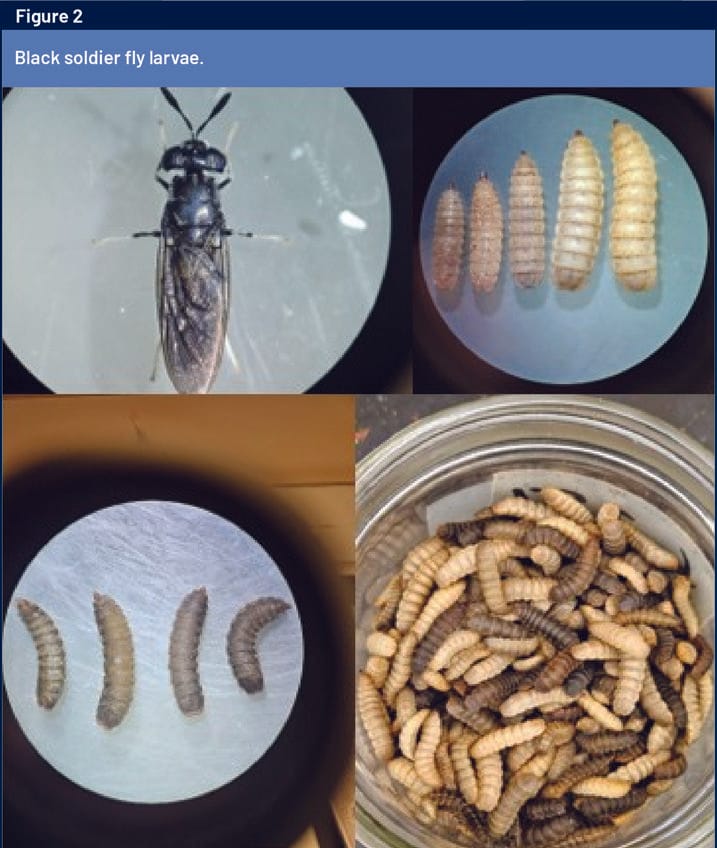
Black Soldier Fly Larvae (BSFL) provide a clear example of the gap between popularity and performance. Initially promoted as a direct replacement for fishmeal, BSFL gained traction through strong sustainability and circular economy narratives.
Closer analysis, however, reveals a different picture. The amino acid profile of BSFL protein more closely resembles that of plant-based proteins than fishmeal, with clear limitations in sulfur amino acids. Combined with relatively high production costs, these factors make direct fishmeal replacement both nutritionally and economically challenging.
This mismatch between expectation and reality has contributed to the failure of multiple industrial initiatives across different regions, where significant investments were made without comprehensive viability assessment. From an integrated and balanced evaluation perspective, BSFL are better understood not as a replacement ingredient, but as a functional ingredient with specific applications and benefits.
Unlocking Functional Value Through Biotechnology
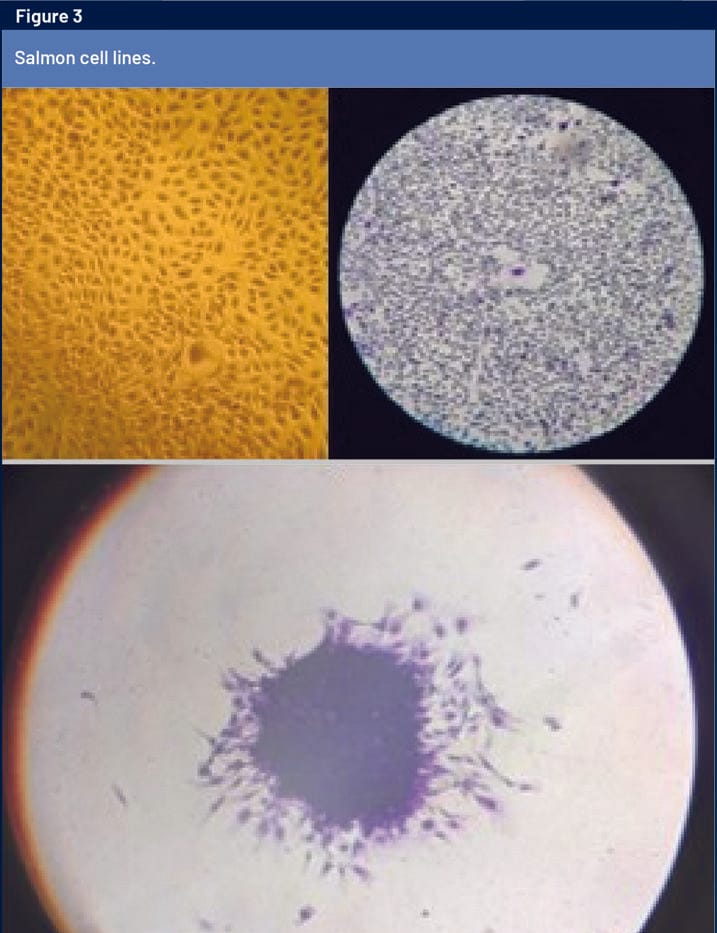
When evaluated from a functional standpoint, BSFL reveal high-value attributes. These organisms have evolved over millions of years in environments with high loads of pathogenic microorganisms, developing highly efficient survival mechanisms. These include the production of antimicrobial peptides, antioxidants, antiinflammatory compounds, and other biomolecules capable of modulating the microbiota, reducing bacterial load, and supporting gut health.
This functional value helps explain the adoption of BSFL in other sectors, such as pet nutrition. The use of cell line models and biotechnological tools allows for deeper characterization of these effects and their interactions with other feed components, reducing uncertainty and accelerating the transfer of knowledge from the laboratory to commercial applications.
Toward a More Inclusive and Balanced Aquaculture
Adopting integrated and balanced evaluation frameworks has clear implications for the future of aquaculture. This approach enables the industry to reduce dependence on short-term trends, optimize the use of ingredients and additives, support technology adoption across a wider range of species and regions, and improve production efficiency without compromising sustainability.
Rather than promoting one-sizefits-all solutions, this perspective encourages the industry to rethink how innovation is evaluated and adopted. In a sector as diverse as aquaculture, balance is not achieved by following trends, but by building shared criteria that allow solutions to be compared, adapted, and implemented effectively.
The future of aquaculture will not be shaped by the loudest trends, but by the most robust evaluation frameworks. Sustainable growth will depend less on what is popular today and more on what consistently delivers biological, economic, and environmental value over time. Ultimately, sustainable growth in regenerative aquaculture will depend less on what is popular today and more on what consistently delivers biological, economic, and environmental value over time.
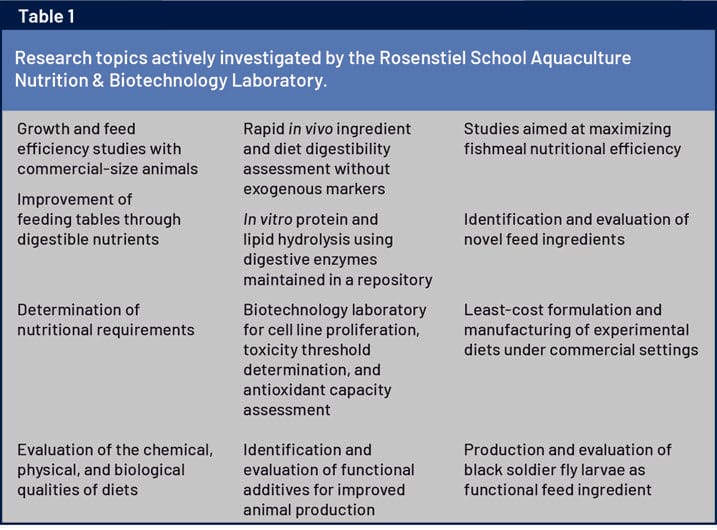
To that end, the University of Miami Rosenstiel School Aquaculture Nutrition & Biotechnology Laboratory has started the year with the right footing, focused on implementing and expanding research topics that are relevant to improving the ecological and economic efficiencies of aquafeeds to ensure that regenerative aquaculture will continue the growing trend of producing sustainable wholesome seafood to meet the demand of the human population in the years to come (Table 1).
*Jorge Suarez, Julio Camperio and Daniel Benetti University of Miami Rosenstiel School Aquaculture Nutrition & Biotechnology Laboratory