
* By Antonio Garza de Yta, Ph.D.
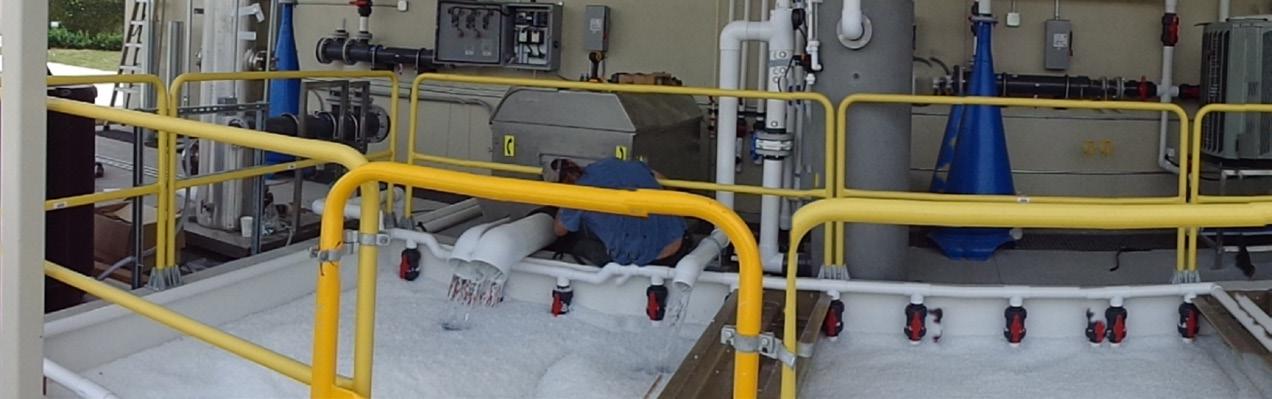
The idea of producing fish within cities using recirculating aquaculture systems (RAS) is appealing: total control minimal water use, biosecurity, traceability, and proximity to the consumer. But, as I have insisted on other occasions, not every proposal being promoted today is viable. The problem is not usually the technology itself, but rather the economics of the operation: projects with impeccable narratives that, when it comes to numbers, cannot sustain the cost per kilo that the market can consistently pay.
Anyone considering RAS must start from an uncomfortable truth: the cost per kilo is king. If the total cost of production exceeds the market price (after logistics, marketing, and losses), the model is not sustainable. Therefore, talking about RAS requires in-depth financial analysis, not a promotional flyer. Any serious exercise includes:
» Detailed CAPEX: Engineering, civil works, tanks, biofilters, pumps, oxygenation, electrical backups, automation, permits, and commissioning.
» Realistic OPEX: Energy (the big item), oxygen, feed (formulation and achievable feed conversion ratio [FCR]), 24/7 skilled labor, biosecurity, parts replacement, insurance, waste, and effluent treatment.
» Financing and depreciation: Rates, terms, initial ramp-up period, contingencies, and cash reserves.
» Production factors: Safe densities, expected mortality, growth rate, days to market, size uniformity, and plant performance.
» Marketfactors: Net price, contracts, quality penalties, certifications, and demand volatility.
When these elements are modeled prudently, many of the projects that are currently being “sold” as revolutionary do not exceed the red line of cost per kilo… And it is better to discover this in Excel than after cutting the ribbon at the inauguration.
There are, however, segments where urban (or peri-urban) RAS is not only viable but inevitable. Salmon is the clearest example: structurally higher demand than supply, historically attractive prices, and traditional farming areas increasingly limited by environmental, health, and social issues. In this context, land-based systems (including urban ones) are becoming the next stage in an industry that already understands that growing at sea is becoming increasingly difficult.
Urban aquaculture must be promoted with achievable goals: reducing energy per kilo, improving FCR, increasing survival rates, and maintaining consistent quality. On this front, it is worth recognizing companies that work with realistic goals and an obsession with costs, such as Blue Aqua, which has promoted intensive production models with a focus on efficiency in both Singapore and the Middle East. Its virtue is not selling dreams, but executing and adjusting: adapting biofiltration to available water, designing flows that save pumping, optimizing densities, using practical sensorization (not just “gadgets”), and linking production to markets that pay for quality and consistency. It is exactly the kind of “surgical operation” that turns a RAS into a food plant, not a futuristic model.
If we filter with financial rigor, there is indeed a food revolution underway: RAS for high-demand, high-value species, in cities or urban perimeters, directly connected to processing and distribution. It is not about filling rooftops with tanks, but rather professional aquaculture protein plants integrated into the city’s food network. The benefits are tangible: less transportation, uniform quality, traceability, resilience, and specialized employment.
Optimism without numbers is propaganda; numbers without vision are accounting. Urban aquaculture and RAS require both: vision to imagine cities that produce clean protein and seriousness so that the cost per kilo supports that vision. With salmon, the door has already opened. With other species, we have to keep refining until the economy says “yes.” Because the future is not sold: it is designed, modeled, and operated. And when the cost per kilo becomes competitive, the revolution ceases to be discourse and becomes food.
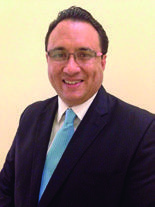
* Antonio Garza de Yta is COO of BlueAqua International-Gulf, Vice President of the International Center for Strategic Studies in Aquaculture (CIDEEA), President of Aquaculture Without Frontiers (AwF), Past President of the World Aquaculture Society (WAS), Former Secretary of Fisheries and Aquaculture of Tamaulipas, Mexico, and Creator of the Certification for Aquaculture Professionals (CAP) Program with Auburn University.