By: Lindsey White
Seaweed is having a moment. Whether it’s being hailed as a climate solution, a superfood,or a miracle input for regenerative agriculture, seaweed seems to promise a fix for everything. It’s easy to get swept up in the optimism — but as someone who works on seaweed aquaculture, I believe the most important story isn’t about hype or headlines. It’s about how researchers, industry partners, and coastal communities are working through the hard, complex questions of what seaweed farming really takes.
Recently, I joined more than 50 participants at a two-day offshore seaweed aquaculture workshop hosted by the Blue Economy Cooperative Research Centre (BE CRC) in Hobart. The aim wasn’t to celebrate seaweed’s potential — it was to build alignment around what’s actually working, where the biggest knowledge gaps are, and how we move from scattered pilot projects to a functioning, scalable sector. The outcome: cautious momentum, with shared recognition that offshore seaweed farming is promising — but far from plug-and-play.
Why Seaweed? And Why Offshore?
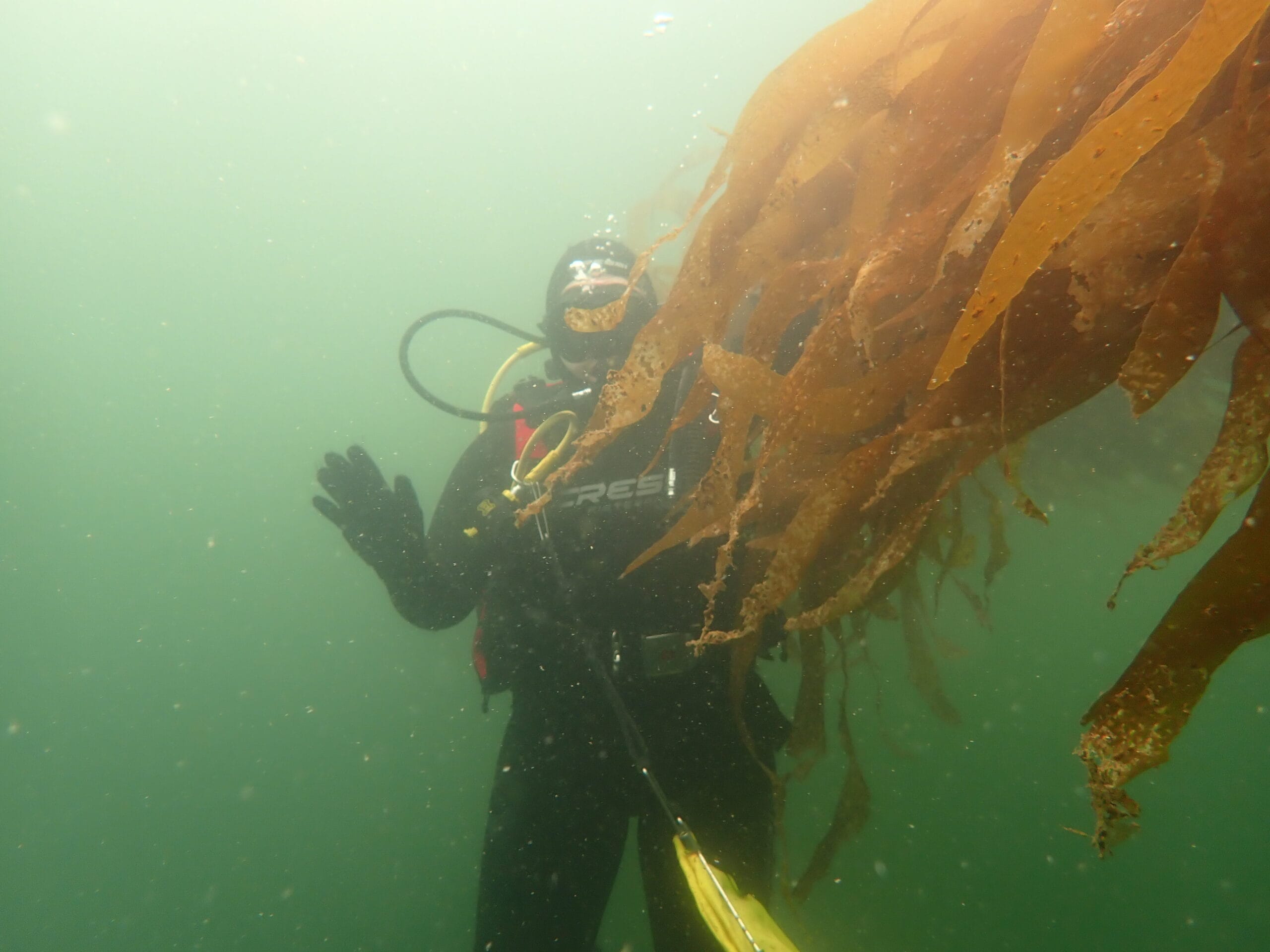
Seaweed farming offers a unique set of benefits. It doesn’t need freshwater, fertilizer, or arable land. Certain species, such as Asparagopsis, can reduce methane emissions when used in livestock feed. Others, like bull kelp, have value in biostimulants, and additives. Seaweed can also help regenerate degraded marine environments, support biodiversity, and — when well designed — contribute to circular economy goals.
That said, growing seaweed off shore, particularly in high-energy waters, is a technical and regulatory challenge. You need robust infrastructure that can survive swell and storms. You need hatcheries and processing facilities that don’t currently exist at scale. You need site access, consents, and insurance — all of which are difficult to secure in emerging sectors. And you need clarity around who benefits and how.
This is where hype doesn’t help. For every viral story about seaweed fixing the planet, there’s a community wondering why a seaweed farm is being proposed off their coastline. There’s a researcher flagging that we still don’t fully understand how large-scale cultivation affects nutrient dynamics or marine food webs. There’s an investor asking, “Where’s the roadmap?”
What We Heard at the Blue Economy CRC Workshop
The BE CRC workshop brought together people from every part of the sea weed “ecosystem” — researchers from AUT, IMAS, CSIRO, and the Cawthron Institute; industry voices from Seasol, Fremantle Seaweed, and others; government observers from both Australia and New Zealand; and representatives of First Nations communities. Some clear messages emerged:
- Offshore seaweed farming is moving beyond the lab. Pilot trials, particularly around kelp, are showing promising results. For instance, in trials led by Dr. Jeff Wright and colleagues at IMAS, juvenile bull kelp (Durvillaea) cultivated in hatcheries have successfully survived transplanting and early growth in offshore sites off Tasmania. These trials are helping establish protocols for spore collection, nursery cultivation, and deployment — crucial steps to ward commercial viability.
- Collaboration is a strength in this region. Australia and New Zealand are not global leaders in seaweed aquaculture, but the research community here is unusually integrated. Teams are openly sharing data and coordinating trials. Fremantle Seaweed, in partnership with Moonrise Seaweed Co., is trialing cultivation techniques that align with First Nations values and regenerative outcomes. Indigenous leadership, particularly from groups like Te Whānau a-Apanui in New Zealand is gaining visibility.
- We still lack basic infrastructure. A functioning offshore seaweed sector needs specialized vessels, affordable processing options, skilled workers, and ways to store or transport biomass. None of that is simple — especially in remote regions.
- Regulations are evolving but uneven. Approval pathways differ across states and countries. A national or trans-Tasman approach could unlock progress, but we’re not there yet.
A Roadmap to 2029
One of the intentions that emerged from the workshop was to co-develop a shared roadmap for offshore seaweed aquaculture — not a grand strategy, but a practical plan for supporting better decisions by all players: farmers, investors, policy-makers, and communities.
While a formal roadmap hasn’t materialized, there was strong support for the creation of a shared seaweed knowledge platform. The idea was to pool trial results, site and species information, economic models, and case studies into a resource that could help people navigate the complex and emerging space of offshore seaweed farming.
The concept included developing demonstration farms — one in a temperate region, one in the tropics — as real-world test beds for infrastructure, monitoring, and commercialization models. While these efforts are still at the early discussion stage, they reflect a shared desire across the sector: to move from promise to practicality.
Seaweed’s Future Is in the Details
There’s no doubt that seaweed aquaculture holds potential. But if we want to realize that potential, we have to avoid skipping steps. That means investing in field trials, listening to coastal communities, designing con sent pathways that are fair and consistent, and focusing on value chains that actually work.
If well supported, offshore seaweed farming could provide alternative livelihoods for coastal communities, diversify marine economies, and offer new materials for bio-packaging, food, and climate-positive products. But none of that happens without robust trials, knowledge sharing, and Indigenous partnership at the core.
Seaweed is not a silver bullet. But it can be a platform — for regenerative ocean industries, for food and materials innovation, for Indigenous enterprise, and for better marine stewardship. That’s what many of us are working toward. But to get there, we need fewer slogans — and more sea trials.
The Blue Economy CRC
The Blue Economy Cooperative Research Centre (CRC) is established and supported under the Australian Government’s CRC Program, grant number CRCXX000001 (previously 20180101). The CRC Program supports industry-led collaborations between industry, researchers and the community.
Lindsey White
Professor of Phycology and Fisheries School of Science
Auckland University of Technology
Email:lwhite@aut.ac.nz
Further information about the CRC Program is available at http://www.business.gov.au.