

By: Insect Institute
The Bavarian insect farming company confirms it is being wound down, months after filing for insolvency — the latest in a year of high-profile failures across the insect-protein sector.
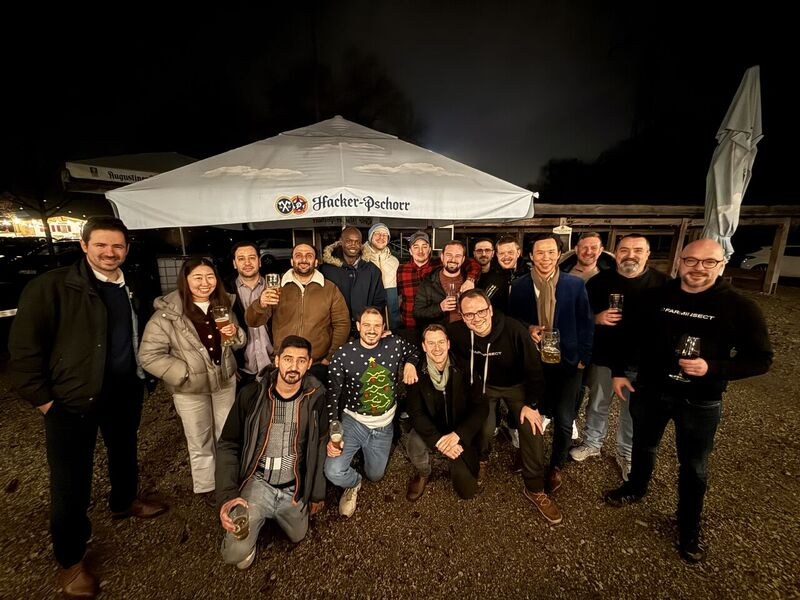
FarmInsect GmbH, a Bavarian company that built what it describes as the largest network of its kind in Europe, is being wound down. The company’s CEO confirmed the news in a public statement on LinkedIn, saying that months of efforts to save the business — working with shareholders and new partners brought to the table during insolvency proceedings — ultimately did not come together.
FarmInsect ran a decentralized, highly automated on-farm model, which provided consumers with on-farm units that reared black soldier fly larvae on regional organic residues to produce protein feed as an alternative to soy and fishmeal. The Munich district court placed the company under insolvency administration in late March 2026. By the company’s own account, roughly USD 18.52 million in equity and public funding had flowed into the platform since 2020, including backing from the European Investment Bank (EIB) and a USD 2.86 million award under the European Innovation Council’s EIC Accelerator.
FarmInsect‘s main distribution partner, the agribusiness group Agravis, had already suspended their joint venture in September 2025, citing weak demand, a lack of competitiveness, and regulatory hurdles, and now describes insect protein as a “niche.”
Commenting on FarmInsect’s collapse, Dr. Dustin Crummett, Executive Director of the Insect Institute and Affiliate Instructor in the School of Interdisciplinary Arts and Sciences at the University of Washington Tacoma said, “FarmInsect joins a long list of companies that failed despite substantial investment: Goterra, Ÿnsect, Enorm, Aspire, Divaks, AgroLoop, BetaHatch, Agriprotein. Investors and public funders have provided the sector with nearly USD 2.29 billion, but insect feed remains unable to compete with conventional feed on price. While decentralized production has been hailed as the way forward for a struggling sector, this is clear evidence that the sector’s core economics have not been solved.”
FarmInsect is one of at least seven high-profile insect-protein failures since 2025, alongside Goterra (Australia), Ÿnsect (France), Enorm (Denmark), Aspire (Canada), Divaks (Lithuania) and AgroLoop (Hungary). As of March, shuttered insect farming startups accounted for almost half of all investment into the industry, and more closures have occurred since then. In Australia, Goterra — which pursued a comparable decentralized, waste-to-larvae model — entered voluntary administration in June 2026 and has since been placed in liquidation after administrators could find no buyer. Since 2025, France’s Ÿnsect has gone into judicial liquidation despite raising more than USD 600 million; Denmark’s Enorm Biofactory was declared bankrupt after roughly USD 57.17 million in investment; Canada’s Aspire Food Group was placed in receivership; and Hungary’s AgroLoop has also failed.
The pattern has not gone unnoticed within the industry itself. In a submission to the European Commission earlier this year, the European insect farming trade group IPIFF (the International Platform of Insects for Food and Feed) admitted that “waiting for voluntary uptake has failed,” while asking for mandatory procurement of “bio-based and circular products,” which could require public institutions such as canteens and school cafeterias to buy insect-based protein.
“It is a concerning sign that the industry’s own trade group is now asking governments to mandate demand for its products,” Crummett added. “Investors and policymakerss might consider whether the resources spent on insect protein might be better directed to other solutions, given this admitted inability to compete.”
The concerns extend beyond economics. A May 2026 report from the Stockholm Environment Institute, rethinking insects as alternative protein, found that industrial insect farming in temperate, high-income countries frequently falls short of its environmental promise, with performance varying widely depending on energy use, feed inputs and what insect products actually replace in diets. The report concluded that, in high-income countries, insect farming now faces two critical tests — environmental performance and economic viability — both of which are increasingly in question.
The Insect Institute is calling on investors, policymakers and public funders to weigh the sector’s mounting record of commercial failures and contested environmental record before committing further capital or taxpayer support to insect farming ventures.
Sources
- Public statement from FarmInsect‘s CEO Wolfgang Westermeier confirming the company is being wound down after restructuring efforts with shareholders and new partners did not succeed, LinkedIn (September 2 2026).
- FarmInsect March 2026 insolvency: top agrar, Nach Insolvenz des Larvenmästers FarmInsect: Aussichten für Sanierung „äußerst positiv” (April 2026); Raiffeisen, FarmInsect im Insolvenzverfahren (April 2026), FarmInsect entered insolvency proceedings in late March 2026; a restructuring/investor process was underway at the time of the most recent reporting, and the outcome had not been made public.
- IPIFF request for mandatory procurement: An Urgent Call to Action: Aligning Public Procurement with the Bio & Circular economy to Preserve Jobs and Fulfill the Green Deal Promise (Jan 2026); Euractiv, Insect industry hopes public buyers will bite (Feb 2026).
- Goterra voluntary administration and liquidation: SmartCompany, Goterra enters liquidation after hopes of sale fall through (July 2026); Pioneering ag-tech startup Goterra enters voluntary administration (June 2026).
- Sector failures: TechCrunch, How reality crushed Ÿnsect, the French startup that had raised over $600M for insect farming (Dec 2025); AgFunder News, Breaking: Danish insect ag firm ENORM declared bankrupt (2025); Vox, Bugs were supposed to be the future of food. Now, the insect farming industry is collapsing (March 2026); Regional News (in Lithuanian: regionuzinios), Insect protein producer Divaks goes bankrupt, plans to build a 67 million euro factory in Marijampolė collapse (June 2026).
- Stockholm Environment Institute, Rethinking insects as alternative protein: emerging environmental and animal welfare considerations (27 May 2026).
About the Insect Institute
The Insect Institute is a non-profit organization committed to providing policymakers, the public, investors, NGOs, and other stakeholders with evidence-based recommendations concerning the farming of insects as food and feed, including its impact on the environment, animal welfare, public health, and the rest of the food chain.