
* By FishProf
FishProf has been studying the Association for Consumer Research (ACR) reports regarding seafood and the impacts of fraud on consumer trust.
ACR brings together researchers from universities, government, and industry to deepen understanding of everyday decision-making, including how culture, identity, and context shape what ends up on our plates. For seafood, that means behavioral studies on trust, labeling, risk perception, and “healthy but scary” proteins help explain why people say they like seafood but still under-buy it or avoid it at home.
Key seafood-relevant insights emerging for FishProf — three strands of consumer-research literature that align closely with ACR’s broader agen-da are especially relevant for seafood consumers:
Health is still number one, but “seafood” feels intimidating. Large-scale retail and consumer-trends reports (e.g., FMI’s Power of Seafood series) show that most consumers see seafood as healthy and nutritious, yet many still view it as expensive, complex, or hard to prepare. This “perception vs. practice” gap is exactly the kind of behavioral puzzle consumer researchers interrogate, and it points to a need for clearer in-store guidance, simple recipes, and better price-signaling at the seafood counter.
Transparency and trust drive, but don’t always follow. Evidence from sustainability-label research shows that consumers want to buy responsibly farmed or produced seafood, yet they often fail to act on that intention unless clear, trusted labels are visible on pack. Behavioral work on attention, nudges, and “smart defaults” suggests that well-designed certification labels and simple provenance cues can help seafood consumers align their values with what they actually purchase.
Plant-based and novel “sea-food-not-from-the-sea” is gaining attention. Recent behavioral studies on plant-based seafood alternatives examine how consumers respond to ingredient information, processing, and labels, and they find that more informed consumers are more likely to accept plant-based options. As these products enter mainstream seafood aisles, ACR-style research helps clarify whether consumers are switching because of taste, health, or environmental concerns — and how best to communicate that in a way that supports honest choice.
Substitution often involves products from poorly managed fisheries with higher environmental impacts and lower safety profiles. Non-specific labels like “white fish” correlate with higher mislabeling rates, undermining the viability of sustainable, responsibly farmed options.
FMI’s USA’s consumer insight work is especially relevant when layered with evidence on fraud in weights, substitution, and mislabeling. Mislabeling changes not just what consumers think they are eating, but what they actually support in terms of fisheries, habitats, and management practices.
Studies of seafood fraud find that substitutes often come from less managed fisheries, with higher environmental impacts and sometimes lower nutritional or safety profiles than the named species.
In Australia, researchers have shown that over one in ten seafood products mislabeled and that vague, nonspecific labels (e.g., “white fish” or broad umbrella terms) correlate with higher mislabeling rates and weaker consumer choice for sustainable options.
From a consumer behavior perspective, even occasional fraud can erode trust. If people suspect that what is on the label may not match what is on the plate, they are more likely to:
» Avoid seafood altogether,
» Default to familiar, generic products (e.g., “frozen fillets”), or
» Rely on brand or retailer reputation rather than the label or species name.
Seafood fraud extends beyond deception to serious safety risks, potentially exposing consumers to undeclared allergens, toxins, and pathogens. Fraudulent claims regarding origin or production methods disadvantage legitimate operators and distort fair market competition.
This undercuts the very “empowerment” FishProf believes the industry should be advocating for: consumers want to vote with their wallets for sustainable, safe, and fairly priced seafood, but fraud and opaque labelling turn that vote into a lottery.
Strengthened, mandatory labelling standards and clearer taxonomic information would not only cut fraud but also make the FMI style value and convenience strategies more effective by giving consumers a straighter line between what they see on the pack and what they get on the fork.
The United Nations Fisheries & Agriculture Organization (UNFAO) are following through on their recent Technical Paper 742 ‘Fraud in the Fisheries & Aquaculture Sectors’ by organizing a webinar on 17 June 2026. This is being organized by FAO’s primary market intelligence and analysis platform for fisheries and aquaculture, FAO GLOBEFISH. It will examine how market demand, price incentives, and supply-chain complexity interact to enable fraudulent practices, and what governments, industry, retailers, researchers, and standard-setting bodies are doing to address them.
SAVE THE DATE Wed 17 June 2026 – 1000 EU Central time 2 hours – UN FAO Webinar on SEAFOOD FRAUD – free event but you will need to register. This will be recorded and a follow-up report will be issued.
They say “The global fisheries and aquaculture sector operates at a scale that makes it structurally vulnerable to fraud. Aquatic product output exceeded 185 million tons in 2022, with trade spanning more than 230 countries and territories and a combined value of USD 195 billion. The breadth of species in commerce, the length and opacity of international value chains, and the multiplicity of inspection and control authorities create conditions in which fraud can persist relatively easily. The scope of the problem and the forms it takes illegal behaviors, counterfeiting, adulteration, dilution, mislabeling, false claims relating to origin or production method leading to unreported/ unregulated activities and species substitution.
Why do consumers value sustainability yet hesitate at the seafood counter?
The answer lies in the behavioral “perception vs. practice” gap fueled by fraud and confusing labeling. This document examines how species substitution and “label fatigue” impact purchasing decisions. By simplifying certifications and using explainable on-pack cues, retailers can bridge the trust gap and empower consumers to buy with confidence.
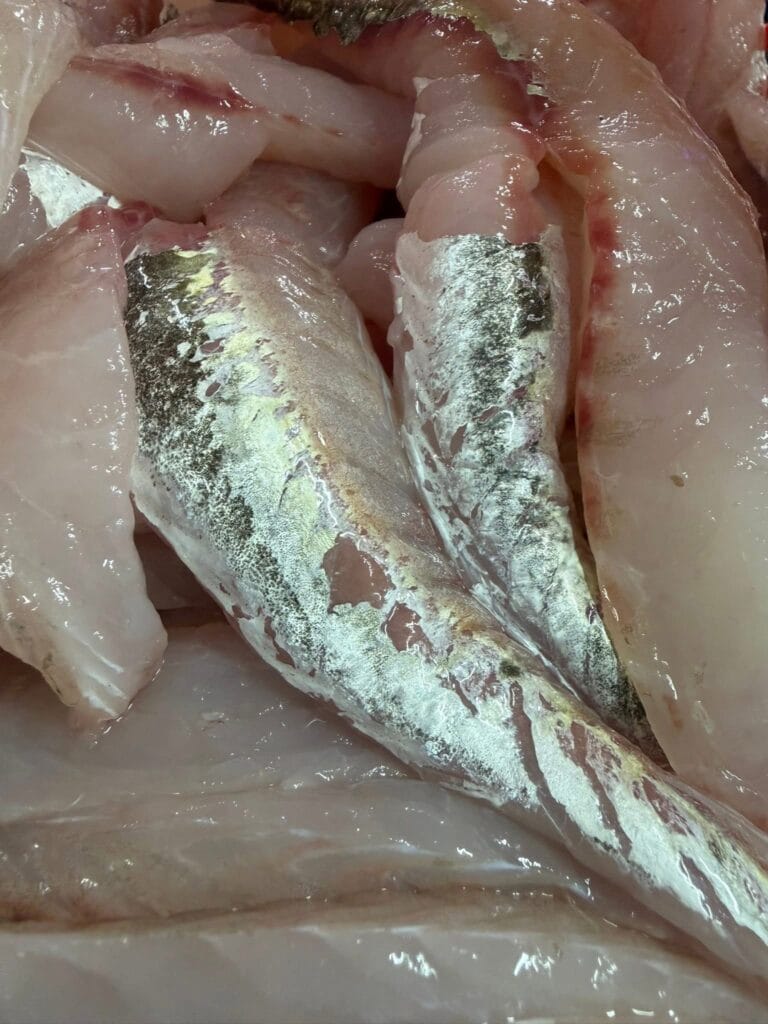
Up to 20 percent of fisheries and aquaculture products may be mislabeled globally, with fraud particularly prevalent in processed products, restaurants, and catering services, where visual identification is difficult, and species identity can be concealed.”
Are Seafood Certifications Helpful or a Confusing Maze?
FishProf thinks the proliferation of eco-labels and sustainability certifications raises a critical question for consumers: do these labels help or confuse?
Research on seafood eco‑labels suggests that while many consumers like the idea of sustainability schemes, they are often overwhelmed by inconsistent terminology, overlapping standards, and conflicting “green” claims. For example, different schemes may:
» Use different data sets,
» Hold divergent views on particular fishing methods, or
» Exclude certain species‑and‑gear combinations without making that logic transparent.
With aquatic output exceeding 185 million tons across 230 territories, the sector is structurally vulnerable to counterfeiting. Estimates suggest up to 20% of global products are mislabeled, especially in processed goods and catering services.
This can lead to situations where one product carries multiple labels, another has none despite being responsibly sourced, and a third carries a single, hard-to-interpret symbol. The result is not just confusion but a risk of “label fatigue”: consumers either ignore all labels or default to the most familiar brand, regardless of what the certification actually means. From a consumer-advocacy standpoint, there are three clear priorities:
» Simplify and harmonize. Where possible, certification schemes should align around core principles (e.g., stock status, management effectiveness, bycatch, and social safeguards) and avoid unnecessarily diverse scoring or “traffic-light” systems that are hard to read at the fish counter.
» Mandate minimum disclosure. Even where voluntary labels coexist, governments can require basic, non-confusing information on species, origin, and method — so that consumers can compare, even if they do not fully under-stand every logo.
» Make labels “explainable.” On-pack quick-scan cues (QR codes, short web links, or aisle-end signage) can turn busy-time decisions into moments of learning, helping consumers move from “I don’t know what this means” to “I can trust this”.
Seafood fraud erodes consumer empowerment and industry growth. When labels are inaccurate, consumers avoid seafood or default to generic products. Mandatory labeling standards are essential to restore market confidence and align values with behavior
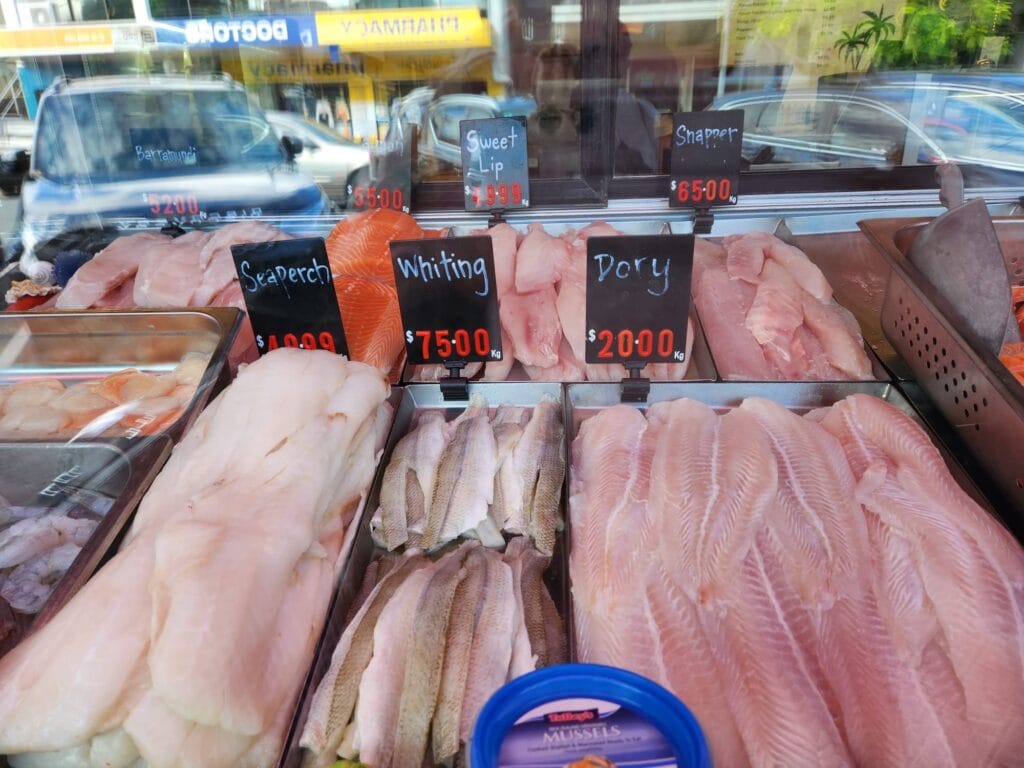
The proliferation of sustainability certifications creates “label fatigue” through inconsistent terminology. To benefit consumers, certification schemes must align around core principles and use digital tools like QR codes to ensure transparency and explainability.
This has not been done as clearly certifiers have created a business between the harvesters/producers and the consumer. Profits are being made and despite past promises there is no plan to create one standard that would make decisions easier for consumers.
FishProf will go as far as saying that confusion is what the certifiers and NGO’s desire as this creates opportunity. Governments are letting their industries and their consumers down by allowing for environmental sustainability to be driven by organizations outside their own countries.
For FishProf, the key insight is that consumer-research and retail-strategy work (like FMI’s Power of Seafood series) must be paired with stronger rules on fraud and standardization in certification. Otherwise, even the most behaviorally informed supermarket layout or digital campaign will be undermined by a market where consumers cannot reliably trust what they see on the label — and that is not a choice-friendly system at all.

References and sources consulted by the author on the elaboration of this article are available under previous request to our editorial staff.