By Francisco J. Oficialdegui and Antonín Kouba
In recent decades, global aquaculture production has grown substantially because of rising global food demand and technological advances allowing diversification and intensification. Its rapid global expansion has also resulted in the translocation of species beyond their native ranges. Although non-native farmed species are highly productive and contribute significantly to the global food supply, they also pose environmental and socioeconomic risks when they escape and establish in non-native ecosystems.
Background
Aquaculture is a cornerstone of global food production, contributing significantly to several UN Sustainable Development Goals by supporting food security, nutrition, employment, and livelihoods (Troell et al., 2023). In recent decades, global aquaculture production has grown substantially because of rising global food demand and technological advances allowing diversification and intensification. Its rapid global expansion has also resulted in the translocation of species beyond their native ranges.
Non-native species are species that are translocated accidentally or intentionally by human intervention out of their natural distribution ranges, and once they escape or are released into new environments, they can survive, establish self‐sustained populations, thrive, become abundant, and spread geographically. Then, they are considered invasive non-native species (Soto et al., 2024).
Thus, aquaculture is regarded as one of the most important pathways for the introduction of aquatic non-native species, particularly in freshwater ecosystems. Although non-native farmed species are highly productive and contribute significantly to the global food supply, they also pose environmental and socioeconomic risks when they escape and establish in non-native ecosystems.
The Fact: Farming Non-Native Species Is Increasingly Common
In a recently published research paper, Oficialdegui et al. (2025) showed that global aquaculture has increasingly relied on farming species outside their native ranges. Indeed, the study identified that the annual growth rate of non-native species produced in aquaculture now exceeds that of native species — and in 2022 alone, 32 million tonnes of non-native aquatic species were farmed, accounting for 37% of the world’s total aquaculture production.
Globally, one-third of the 560 species used in aquaculture (n = 160) have been farmed outside their native ranges since 1950, resulting in 571.6 million tonnes of production valued at USD 1.17 trillion. Over 80% of global production of non-native species has come from just 10 countries — mostly in Asia. The most striking example is China, where cumulative production between 1950 and 2022 reached 340.8 million tonnes, accounting for 59.6% of global non-native production.
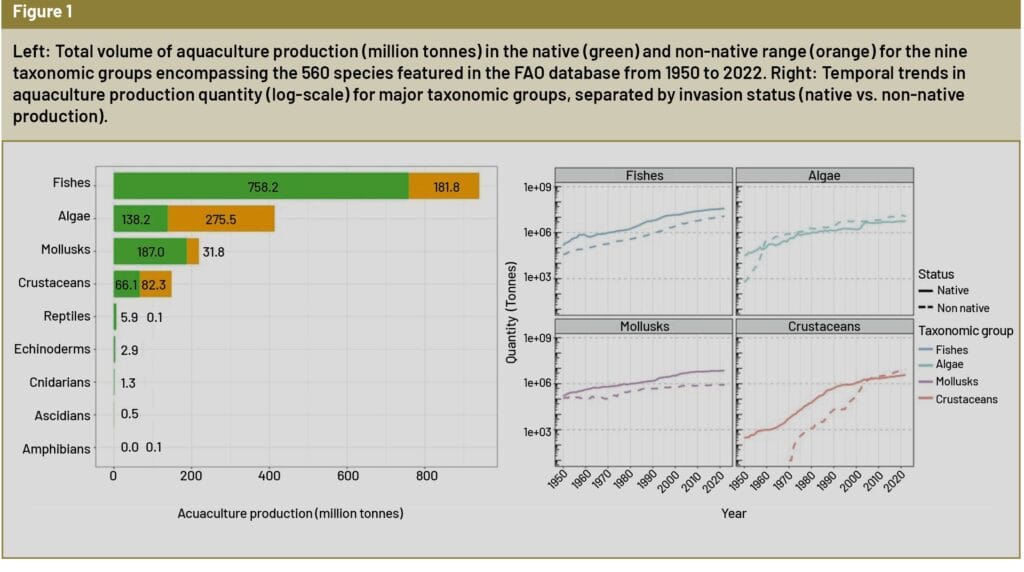
Fish dominate aquaculture output overall (940 million tonnes), with non-native fish alone accounting for 182 million tonnes — 19% of that total. Non-native algae and crustaceans represent even higher shares within their groups: 67% and 55%, respectively (Figure 1).
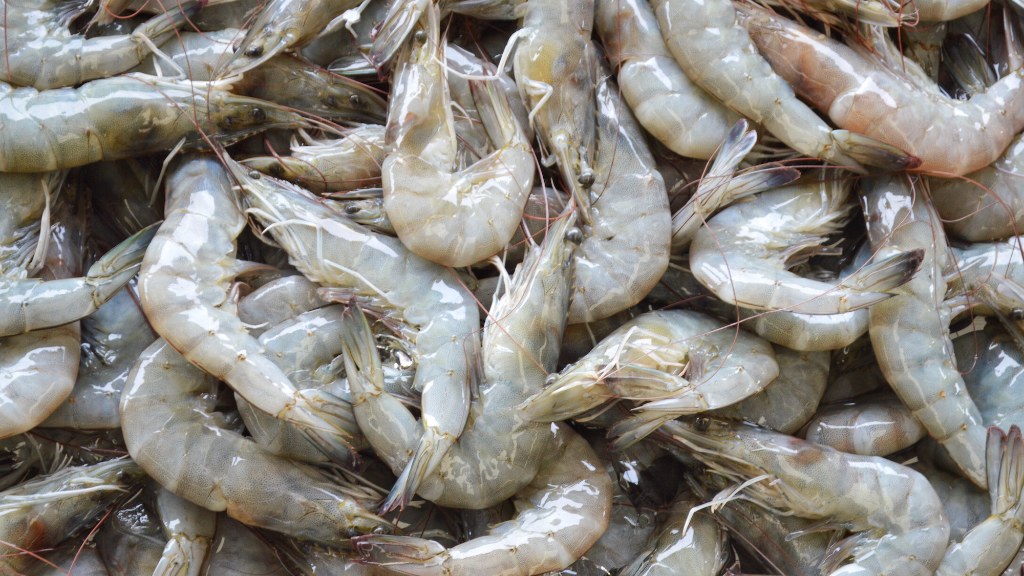
Particularly striking is the more than 11,000% rise in non-native crustacean production since 2000, compared with the previous twenty years, driven largely by the production of whiteleg shrimp (Penaeus vannamei) and the red swamp crayfish (Procambarus clarkii) in non-native areas. For example, the whiteleg shrimp, native to the tropical eastern Pacific from the United States to Peru, was introduced into China in 1988 and has since become the dominant shrimp species farmed along the country’s eastern coast (see Figure 2 in Chang et al., 2020).
Production reached over 930,000 tonnes in 2016, according to the Ministry of Agriculture of the People’s Republic of China, and exceeded 2 million tonnes by 2022 (Oficialdegui et al., 2025). This finding aligns with the generally higher per-unit market value of crustaceans compared with that of fish, supporting the notion that the motivation to farm crustaceans in aquaculture is driven more by economic security, while fish farming is typically associated with food security.
World Production of Major Aquaculture Species: Ecological and Socio-Economic Impacts
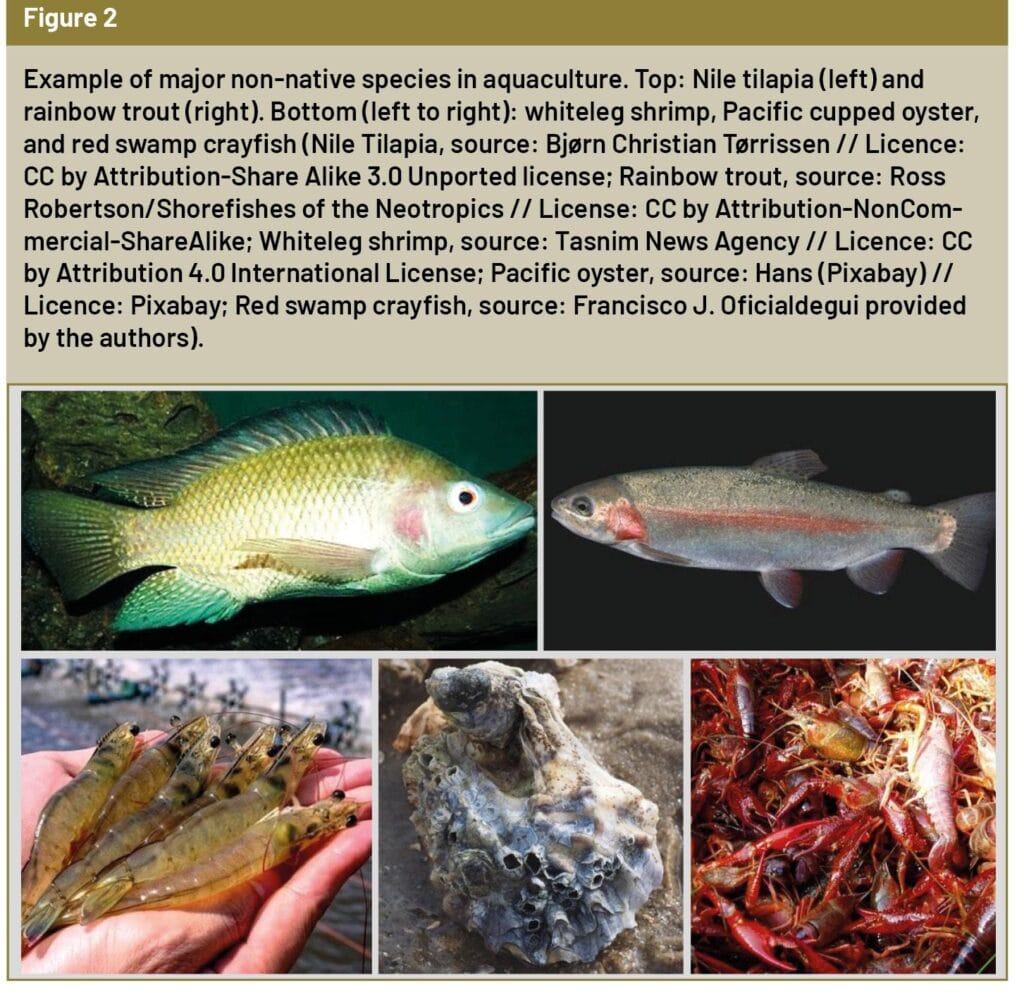
The major farmed species in terms of global production, as reported by the FAO, have accounted for approximately 92.8% of total global aquaculture output (1,606.89 million tonnes) since 1950, of which approximately 560 million tonnes represent non-native production. These highyielding species (e.g., Nile tilapia, Oreochromis niloticus; rainbow trout, Oncorhynchus mykiss; Pacific cupped oyster, Magallana gigas; whiteleg shrimp or red swamp crayfish; Figure 2) farmed outside their native ranges are linked to considerable ecological and socioeconomic impacts (see Table 2 in Oficialdegui et al., 2025).
These include, among others, documented declines in native species populations, disruptions to food web dynamics, alterations in nutrient cycling, and the loss of traditional fisheries – many of which cannot easily be quantified in economic terms.
Beyond Profitability: Benefits and Costs Cannot Be Directly Compared
Despite their profitability over the past 75 years (valued USD 1.17 trillion), non-native farmed species have generated substantial monetary costs. Data from the InvaCost database (Diagne et al., 2020) show that 27 of the 160 non-native species farmed globally (according to FAO) have caused documented damages of up to USD 10 billion to ecosystems and economies.
Similar approaches focusing on aquaculture and aquaculture-related species (i.e., species both intentionally introduced for consumption and introduced through aquaculture activities, such as the topmouth gudgeon, Pseudorasbora parva) have estimated costs of up to USD 15 billion (Jiang et al., 2025). However, major reporting gaps across regions and time suggest that these values are likely underestimated.
For example, Brazil and China rarely reported economic costs, despite being major players in global aquaculture production. Although cost–benefit analyses are commonly used to assess business profitability, direct comparisons here are difficult. Economic gains from non-native species production may be short-lived or cumulative (e.g., development, employment, protein supply), whereas environmental costs can be irreversible and difficult to quantify (e.g., biodiversity loss, ecosystem degradation).
Even if benefits accrue over time, they may not outweigh longterm costs (environmental or biodiversity damage and management actions), given the challenges of valuing environmental change.
Notably, 40% of all non-native farmed species have been officially listed as invasive on regional or global invasive species lists — suggesting that the true extent of monetary costs may be far greater. These findings highlight the urgent need for improved biosecurity measures, the prioritisation of native species in aquaculture, and stronger international policies to mitigate the longterm ecological and economic risks associated with invasive species.
Aquaculture Sustainability
The need to provide food for the world’s growing population is so great that, in 2022, aquaculture production surpassed capture fisheries. Considering this increase, aquaculture must expand its availability while minimising environmental harm and protecting aquatic biodiversity. While the environmental impacts of biohazardous discharges, water use, and disease spread are commonly considered in sustainable practices, the challenges linked to the use of non-native species in aquaculture remain a long-standing, complex, and pressing issue.
Aquaculture of non-native species can stimulate local economies, particularly in low-and middle-income countries. However, most facilities in these regions rely on intensive or semi-intensive farming (monoculture or polyculture systems) in earthen ponds or open systems, which present advantages but also drawbacks. On the one hand, these ponds provide a more natural environment for the farmed species, are less costly to maintain, and can improve water quality, and support plant growth.
On the other hand, they are associated with water loss through seepage, challenges in disease control due to the presence of other non-target species, increased predation risk, and, importantly, the escape of non-native aquaculture species. Such escapes can occur accidentally through extreme climatic events, farm infrastructure failures, or water discharge carrying live organisms. The use of non-native species in such aquaculture systems entails potential risks that may impose substantial ecological impacts on surrounding environments.
These risks must be minimized through coherent national and international policies, underpinned by stringent biosecurity measures. Decisionmakers are therefore urged to consider the environmental risks associated with non-native (invasive) species alongside productivity goals in aquaculture planning, as short-term economic benefits may lead to long-term ecological costs.
References and sources consulted by the author on the elaboration of this article are available under previous request to our editorial staff.
This is a summarized version based on the review article titled “NON-NATIVE SPECIES IN AQUACULTURE: BURGEONING PRODUCTION AND ENVIRONMENTAL SUSTAINABILITY RISKS” developed by: OFICIALDEGUI, F.; SOTO, I.; BALZANI, P.; CUTHBERT, R.; HAUBROCK, P.; KOURANTIDOU, M.; MANFRINI, E.; SERHAN TARKAN, A.; KURTUL, I.; MACÊDO, R.; MUSSEAU, C.; ROY, K. AND KOUBA, A. The original article was published, including tables and figures, on JUNE, 2025, through in REVIEWS IN AQUACULTURE. The full version can be accessed through this link: https://doi.org/10.1111/raq.70037 * Francisco J. Oficialdegui University of South Bohemia in České Budějovice, Faculty of Fisheries and Protection of Waters, South Bohemian Research Center of Aquaculture and Biodiversity of Hydrocenoses, Czech Republic Department of Conservation Biology and Global Change, Doñana Biological Station (CSIC), Seville, Spain E-mail address: oficialdeguifj@gmail.com Antonín Kouba University of South Bohemia in České Budějovice, Faculty of Fisheries and Protection of Waters, South Bohemian Research Center of Aquaculture and Biodiversity of Hydrocenoses, Czech Republic