
By Aquaculture Magazine Editorial Team
The global salmon aquaculture industry increasingly seeks sustainable feed solutions. Krill meal (KM) provides essential nutrients like omega-3 fatty acids, astaxanthin, and choline, improving salmon growth, feed efficiency, and health. In a 116-day field trial, 10% KM diets showed 4.8% higher growth and 22% lower mortality, highlighting KM´s potential to enhance fish welfare and farm productivity.
The global salmon aquaculture industry has expanded rapidly, increasing the need for sustainable and functional feed ingredients. Over the past decade, there has been a notable transition from marine-based to plant-based feeds to address resource sustainability. However, plant ingredients often lead to nutritional imbalances, reduced palatability, and the presence of anti-nutritional factors, resulting in lower nutrient utilization and higher waste output of nitrogen and phosphorus. Furthermore, their availability is affected by climate change and global market competition with human and livestock consumption.
In response, researchers and feed manufactures are exploring alternative raw materials such as insect meals, single-cell proteins, and fish by-products. Yet, these novel sources face challenges including regulatory costs. Among marine-derived options Antarctic krill (Euphausia superba) stands out as a sustainable and nutritionally rich ingredient.
Kill meal (KM) provides balanced amin acids, phospholipids, omega-3 fatty acids (FA) (EPA and DHA), astaxanthin, vitamins, minerals, and choline. Studies have consistently shown that KM enhances salmon growth, feed efficiency, pigmentation, filled firmness, and immune function, while improving intestinal, liver, and gill health.
Despite these promising findings, research on KM under commercial farming conditions remains limited. The early seawater phase is particularly critical, as salmon experience stress and elevated mortality ─ up to 15-16% annually in Norway, with onethird of deaths occurring within the first three months post-transfer. Nutritional support during this period is key to developing resilient fist capable of adapting to seawater challenges.
The present field trial aimed to evaluate the effect of incorporating KM into post-smolt salmon diets, assessing feed intake, performance, and health over 116 days following seawater transfer. Based on previous studies, an inclusion level of 8-10% KM was selected as optimal for enhancing salmon health and performance during this transitional stage.
Materials and Methods
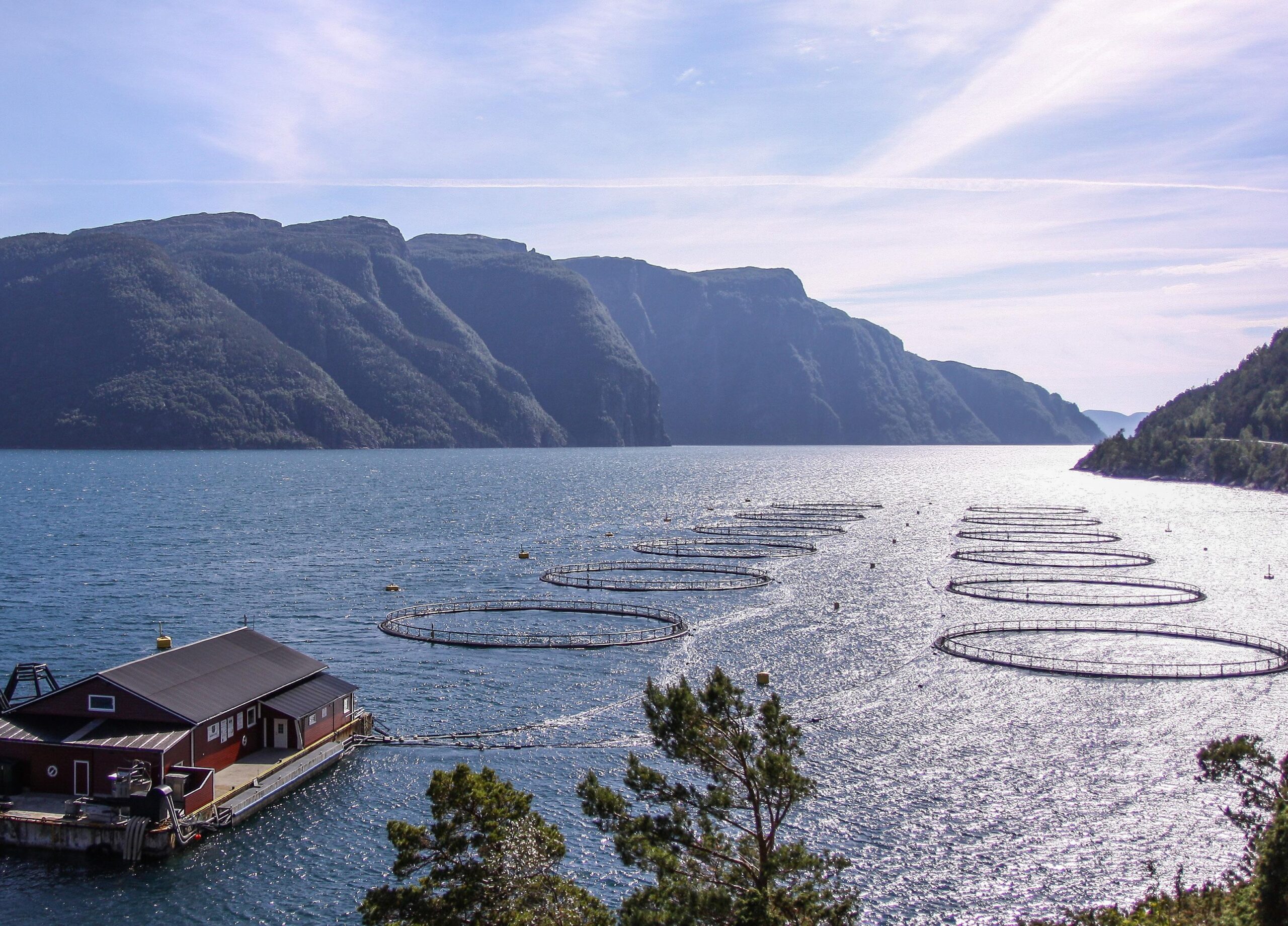
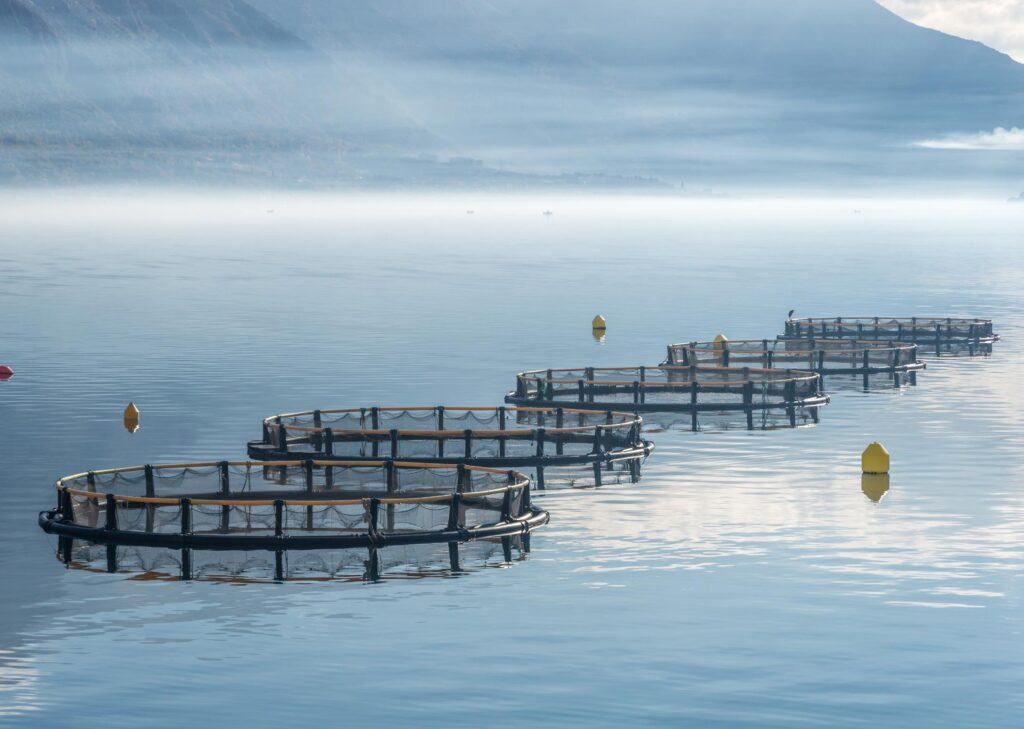
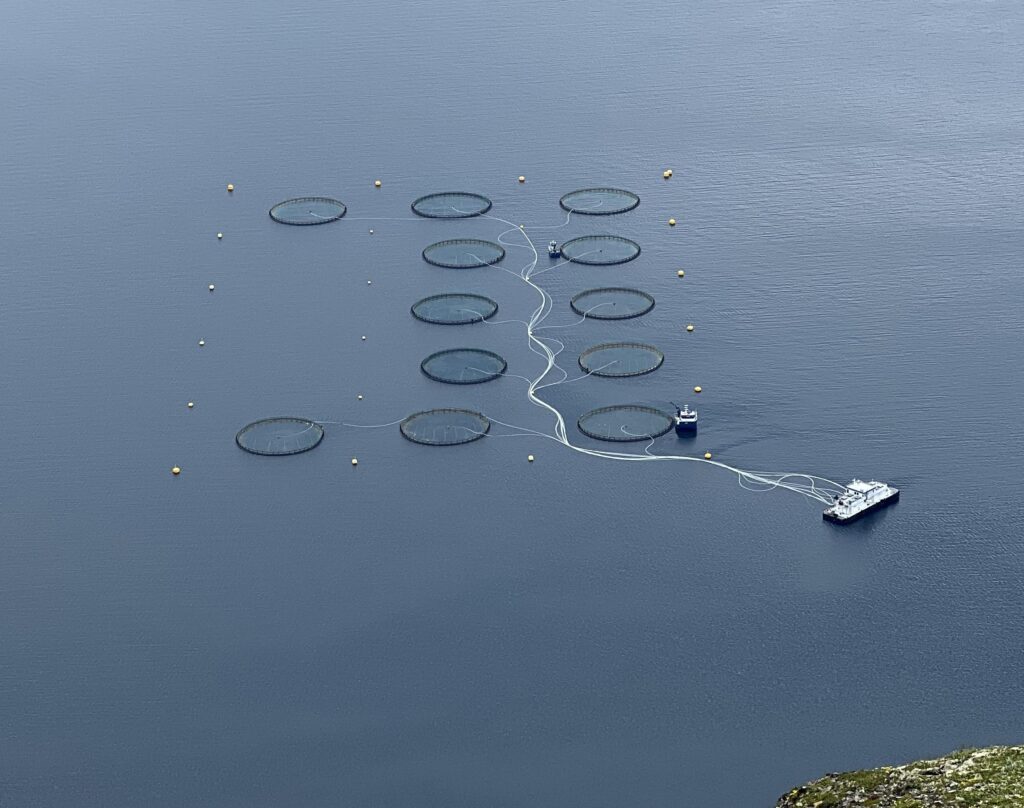
The field trial was carried out at Oterneset, Harstad, Norway, by SalMar Farming AS, using around 200,000 Atlantic salmon (Salmo salar) smolts divided into ten sea cages (160 m diameter, 28 m deep). Two groups of five cages each were assigned to a control or a 10% krill meal (KM) diet group, balanced for initial weight (p=0.79). Average seawater temperature during the 116-day trial was 10.2 ± 2.6°C.
Fish were previously vaccinated and daily mortalities were recorded. Both groups were initially fed the same commercial diet before switching to experimental feeds: a control diet (Spirit Supreme Plus and Prime, Skretting AS) and a test diet including 10% KM from Aker BioMarine, replacing fishmeal. Feeding was automated with Huber spreaders and monitored by camera, while feed intake data were recorded in Fishtalk. A lice-reducing medicated diet was used for nine days in July.
Six fish per cage were randomly sampled for blood, liver, heart, and fillet analysis. Plasma biochemistry was measured using the Indiko Plus system for enzymes, lipids, and antioxidants. Fatty acid and astaxanthin content in tissues were analyzed via gas chromatography and near-infrared spectroscopy. Statistical differences between groups were assesses using Student´s t-test (p < 0.05).
Results
Feed intake
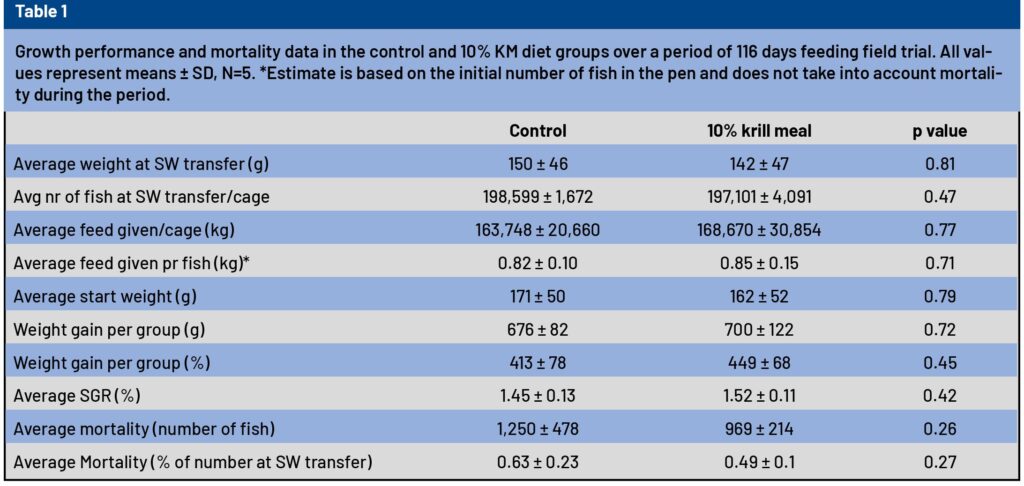
A 3% higher feed consumption was observed in the cages that were fed with 10% KM (average 168,670 kg per cage for the whole period) in comparison to control group (average 163,748 kg per cage for the whole period) as shown in Table 1. Interestingly, this was despite the initial average lower number of fish in each cage in the test group (197,101 fish) than in the control group (198,599 fish).
Growth and mortality
Fish that were fed a diet containing 10% KM tended to have enhanced growth over a period of 116 days, as illustrated in Figure 1 and Table 2. Specifically, the 10% KM group exhibited a 449% weight gain, reaching an average of 700 g, while the control group experienced a 413% weight gain, reaching an average of 676 g. Additionally, the SGR for the 10% KM group was 4.8% higher at 1.52, compared to the control group where the specific growth rate (SGR) was 1.45. However, the difference was statistically non-significant (p > 0.05).
The average mortality in the control cages was 0.63% of the initial number of fish transferred to seawater, whereas in the 10% KM group the corresponding percentage was 0.49 (Table 1, Figure 1).
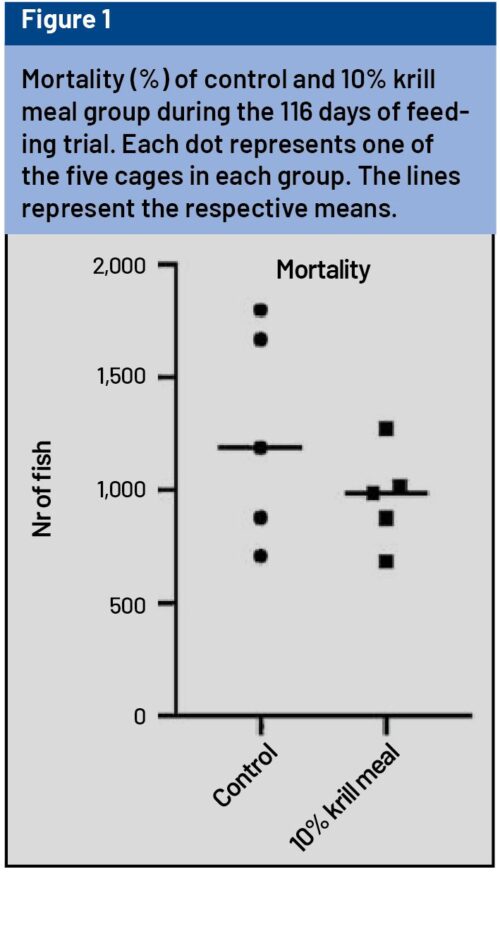
This represents a 22% lower mortality in 10% KM group, compared to the control group, even though it was not statistically significant.
Plasma Parameters and Fatty Acid Profile of Heart, Liver and Fillet
No statistically significant differences in plasma parameters between the two groups were found at any of the samplings. Plasma parameters indicated a decent health status of the fish. No significant differences in EPA and DHA content in heart and liver tissue were observed between groups. However, the test group showed significantly higher 16:0, 18:0, 18:1n- 7 and sum of saturated FA in heart tissue. In the liver small differences between groups were found, mainly higher 18:1n-7 in the test group compared to the control group. Fillet quality parameters were similar between both groups at final sampling.
Discussion
This article reports a field trial using a diet with 10% KM for Atlantic salmon smolts, highlighting a potential trend towards improved growth and survival after their transfer to the seawater phase over a 116-day testing period. While in controlled experiments variations in start weight is very limited, variation in commercial scaled trials, as in case of the current study, could be higher.
To account for this, cages were divided into two groups to have as similar starting weight distribution and average weight as much as possible. A 4.8% higher SGR and 22% lower mortality rate was observed in fish fed with 10% KM compared to the control group, but without statical significance.
The transition to the seawater phase poses challenges for Atlantic salmon smolts. This phase is linked to appetite suppression, potentially reducing the intake of essential compounds necessary for optimal growth, immune system development, and adaptation to physiological changes.
These factors collectively impact fish health, welfare, and contribute to increased economic losses in the aquaculture industry (Bleie & Skrudland, 2014; Pincinato et al., 2021). KM, owing to its nutritional profile and palatability, has the potential to enhance feed intake and robustness during challenging periods for Atlantic salmon smolts (Hatlen et al., 2017; Kaur et al., 2022).
The 3% higher feed consumption and better growth (4.8% higher SGR) with 10% KM in the current trial was in line with the results from a study by Hatlen et al. in 2017, where significantly improved growth was observed in Atlantic salmon smolts with 7.5% and 15% KM inclusion during a 13-week period in seawater (Hatlen et al., 2017). The higher palatability resulting in enhanced growth may be attributed to the presence of nutrients such as short peptides, free amino acids, nucleotides, and trimethylamine N-oxide (TMAO) in KM.
A 22% reduction in mortality was observed with 10% KM. This is especially noteworthy considering the concerning mortality rates at Atlantic salmon farms, with a remarkable 56.7 million Atlantic salmon reported to have died during the seawater phase in 2022 (Grefsrud et al., 2023), marking a record high in salmon losses.
These alarming figures demonstrate an urgent need to reduce these mortalities at salmon farms both for better fish welfare and for economic reasons. High quality nutrients from sustainable sources such as KM to enhance Atlantic salmon’s growth and robustness and reducing mortality could be a part of the attempts needed to achieve a more thriving salmon industry.
The differences in growth parameters and mortality observed in the present study were not statistically significant. This may be attributed to confounding factors, such as fluctuating environmental conditions in the cages, which likely introduced high variability, making it more difficult to detect significant differences compared to the controlled condicions typically seen in laboratory trials.
Nevertheless, it is important to emphasize that while the differences were not statistically significant, the observed trends with 10% KM inclusion — 4.8% improved growth and 22% reduced mortality — could significantly impact salmon farmers and the aquaculture industry. These improvements not only promote better fish welfare but also offer economic advantages to farmers. Reduced fish losses lead to higher yields, enhancing overall efficiency as more fish reach market size, ultimately boosting potential revenue. Thus, even marginal improvements in growth and survival can translate into substantial economic benefits for farmers.
Finally, the author acknowledges that the higher cost of krill meal may limit its adoption, despite its potential for better growth and reduced mortality. To address this, future studies should focus on evaluating its cost-efficiency through comprehensive economic analyses, detailed cost-benefit assessments, and comparisons of the cost-effectiveness of krill meal in conventional feeds.
Conclusions
The findings of this study suggest that feeds with 10% KM inclusion showed trends toward better growth and lower mortality in Atlantic salmon smolts during the initial period after seawater transfer. These improvements could enhance fish welfare and provide economic benefits to farmers.
This is a summarized version developed by the editorial team of Aquaculture Magazine based on the review article titled “KRILL MEAL BOOSTS GROWTH AND SURVIVAL IN ATLANTIC SALMON SMOLTS AFTER SEAWATER TRANSFER”developed by: Kaur, K. and Burri, L – Aker Biomarine Antartic AS, Lysaker; Knudsen, D., Gröner, F., Lagos, L., and Berge, K. – Skretting AS. The original article, including tables and figures, was published on JULY, 2025, through TURKISH JOURNAL OF FISHERIES & AQUATIC SCIENCES. The full version can be accessed online through this link: https:// doi.org/10.4194/TRJFAS27771