

By Favet-UCHILE
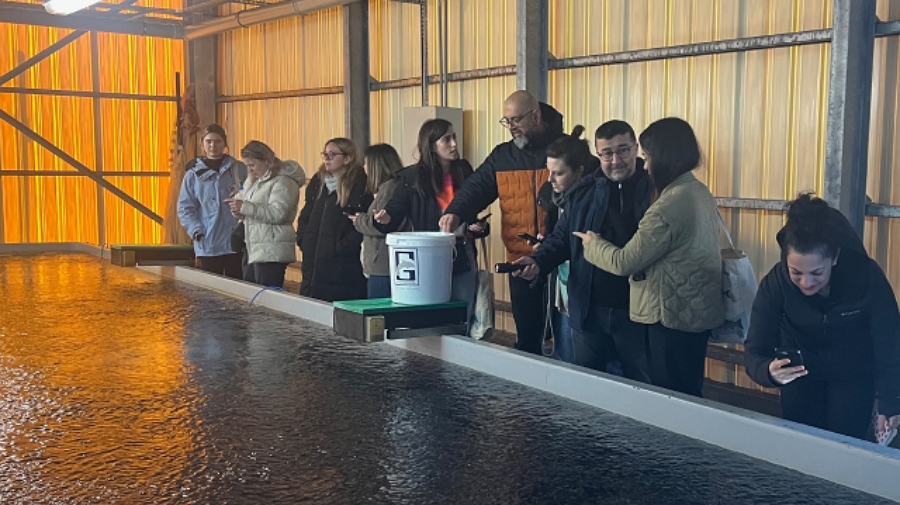
Genetic specialists and scientists from various countries, aquaculture producers and academic representatives gathered in the city of Puerto Varas for the First International Meeting on Genome Editing in Aquaculture. The event, organized by the University of Chile, facilitated the exchange of international experiences and research on the subject.
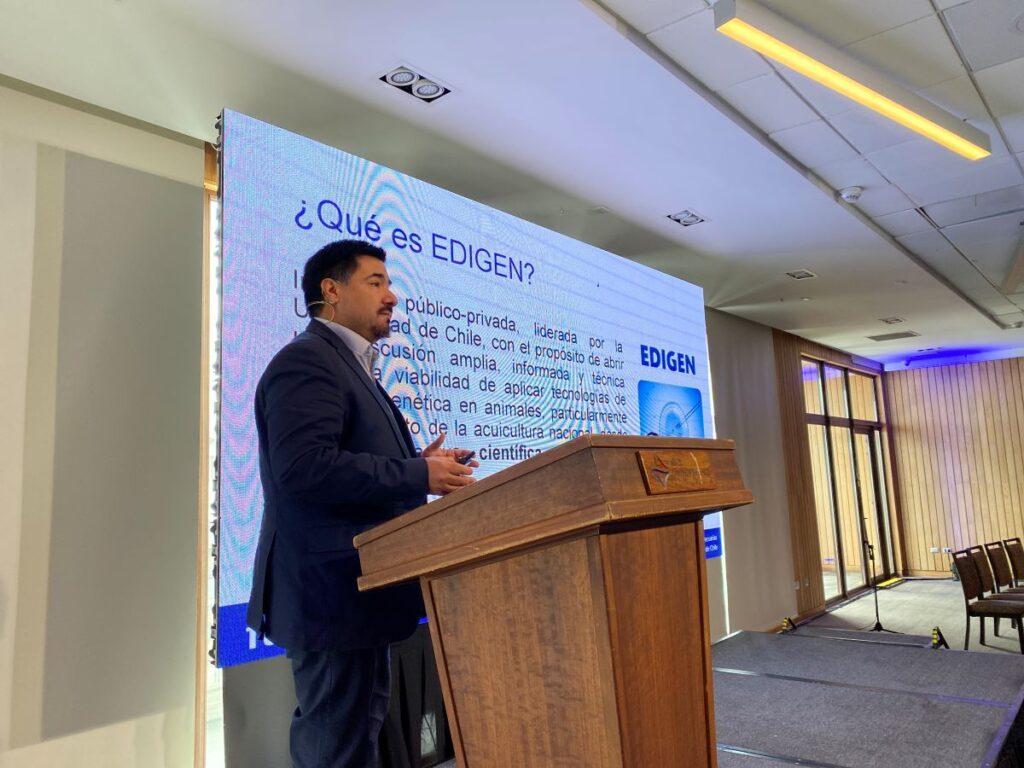
The EDIGEN initiative was created in the Aquaculture Genomics and Genetics Laboratory of the Faculty of Veterinary and Animal Sciences (Favet) of the University of Chile. Its aim was to create a space for dialogue and collaborative work that would bring together information and approaches towards regulation on genetic editing in the country. This technology is considered as a valuable tool for developing a more sustainable production system, especially in aquaculture, which represents the country’s second largest economic sector.
After months of consolidating information and promoting spaces for dialogue and learning opportunities, including virtual meetings with representatives from various national and international public and private institutions, the EDIGEN team organized the First International Meeting on Genome Editing in Aquaculture.
“We have known a series of presentations from highly relevant researchers at the international level and gained some valuable insights, mainly the challenges our country faces in the regulatory and scientific-technological fields of genetic editing. We confirmed that our main competitors or countries involved in aquaculture have made very advanced developments and, at the same time, have established regulatory frameworks already in place, having begun these discussions some time ago,” detailed Dr. José Manuel Yáñez, Dean of Favet and director of the EDIGEN initiative.
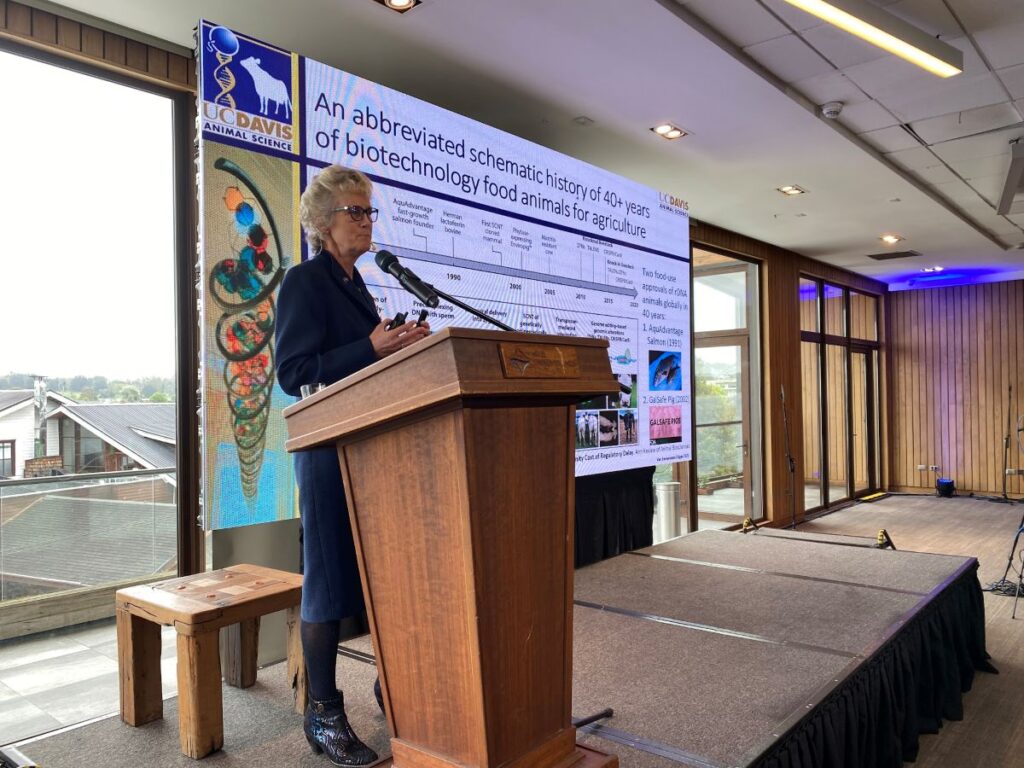
The seminar brought together specialists from different countries with extensive experience in the study, development, innovation and technology of gene editing. One of the keynote speakers was Alison Van Eenennaam, a distinguished professor at the University of California–Davis, United States, whose research and outreach focus on the use and regulation of genomics and animal biotechnology in livestock production systems, as well as the development of gene-editing methods for cattle and sheep.
“It exactly mimics the genetic variation that occurs naturally, which is the basis of all our breeding programs. I think that globaly the regulatory approach has been that if there is no new DNA—in the sense of a transgene, if you want—they will not be treated differently from conventional breeding. I think that really is a sensible approach, one that will allow us to introduce these useful characteristics, like disease resistance, into aquaculture breeding programs,” said Van Eenennaam, emphasizing the value of this meeting for exchanging innovative, safe information to improve the sustainability of aquaculture production systems.
Genetic innovation seeks to produce in more resilient systems, with lower environmental impact and enhanced animal welfare, making animal genetic improvement a key tool for advancing toward more sustainable production processes, accelerating the incorporation of essential traits such as disease resistance or the optimization of production inputs.
Nicholas Robinson, another keynote speaker at the event, is a scientist at the Norwegian Institute of Food, Fisheries and Aquaculture Research (NOFIMA) and an academic in Aquaculture Genetics at Deakin University, Australia. He currently leads an international initiative using gene editing to understand the mechanisms that affect salmon resistance to sea lice, an example of the use of this innovative technology.
“In our project we have been using gene editing, among other tools, to try to develop knowledge about the genes that make coho and pink salmon more resistant to sea lice. We have been looking at how we can use this knowledge—which involves genes and cellular mechanisms—to try to make Atlantic salmon more like coho salmon in their resistance to sea lice,” explained the Australian researcher.
Through various initiatives and research efforts, the University of Chile proposes that gene editing can be a key tool for making aquaculture, and animal production in general, more sustainable, efficient and competitive.
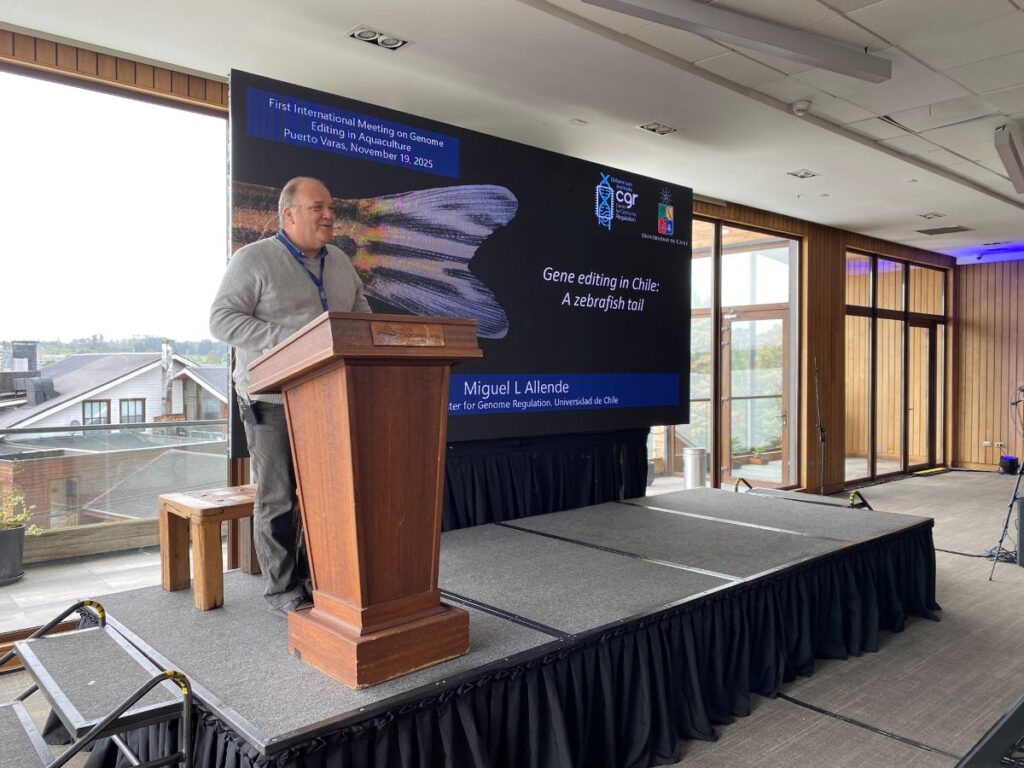
Professor Miguel Allende, academic at the Faculty of Sciences and director of the Millennium Institute Center for Genome Regulation at the University of Chile, shared his insights at the First International Meeting on Genome Editing in Aquaculture, discussing the scope of gene editing in Chile using zebrafish as a model, as well as the role of academia in generating cutting-edge knowledge.
“Conducting this research in Chile is very important because it gives us a kind of sovereignty in terms of the most recent molecular biology technologies, and it also provides us with some autonomy to develop our own advancements, independent of what is happening in other countries with different interests around the world. Therefore, the University of Chile is contributing, from the public education and research system, to the development of the aquaculture industry through this cutting-edge research,” Professor Allende emphasized.
One of EDIGEN’s main objectives has been to open a broad, well-informed dialogue involving public, private, academia and civil society actors. The international seminar strengthens this scientific-technical exchange, which now presents new challenges.
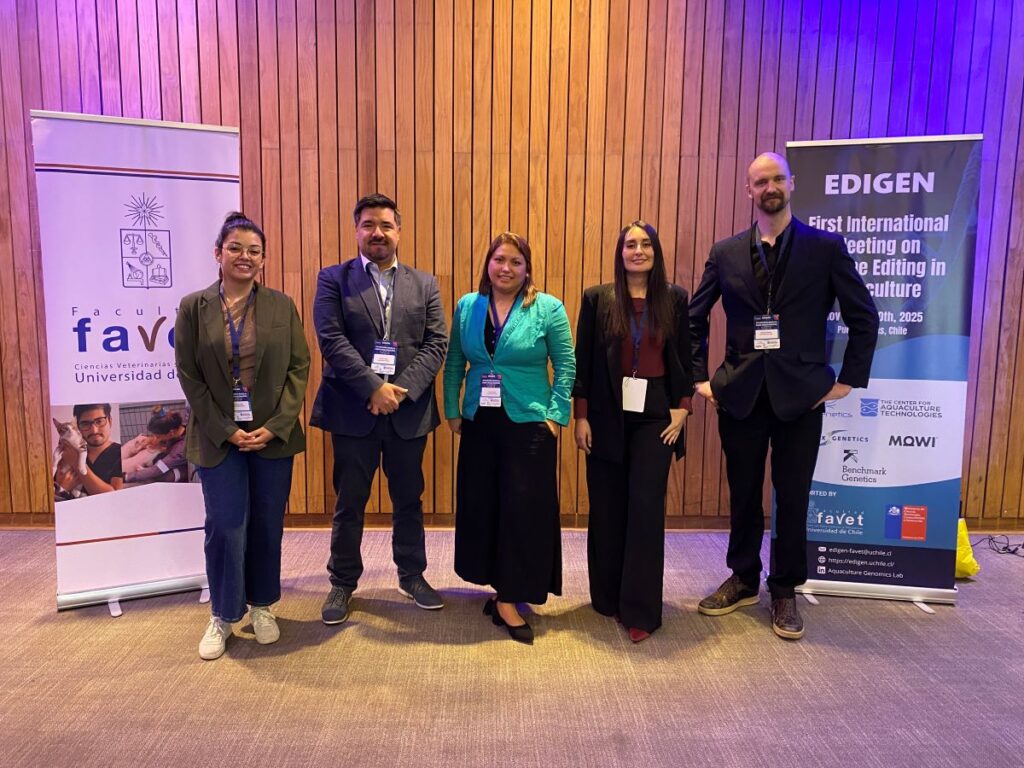
In this regard, and by way of conclusion, Dean Yáñez noted: “We therefore project—together with public entities, the private sector, and with very important support from academia—to address these challenges over the coming year, in order to establish, first, a document with public policy recommendations created jointly with public institutions and, at the same time, a guideline analyzing and assessing the main challenges, risks and benefits of these technologies for their practical implementation in the country.”