

* By Stephen Newman, Ph.D.
The term “probiotic” is applied to bacteria for a wide range of purposes, typically without adequate consideration of what rigorous scientific studies actually demonstrate about the specific effects and benefits of those microbes. I am of the opinion that purported mechanisms of action for this commonly used term, as applicable to shrimp farming, are inaccurate for most commercial products.
Most people when they hear or use the term probiotic think of yogurt with many different microbial species added to it. These “probiotics” are consumed orally and those bacteria that survive the barrier of an acidic stomach (which is not the norm with shrimp as they have a near neutral pH gut) move through the digestive tract where they colonize some portion of the gut. This is claimed to alter the existing microbiome, with the added bacteria becoming a stable component of the microbiome. This is purported to positively impact the health of the host.
This focused definition omits the plethora of other impacts that bacteria can have ranging from impacting the environment via bioremediation to stimulating non-specific immunity in the host, etc. It is also contentious. The microbiome is a complex assemblage of multiple species of bacteria, fungi, and protozoa that colonize external and internal surfaces. Much of the evidence to date suggests that the addition of “probiotics” may (or may not) cause short term alterations in the microbiome at best. The apparent need to continually dose with probiotics strongly suggests that any alterations to the microbiome are temporary.
Many bacteria degrade organic matter. Many also convert ammonia into metabolites such as nitrite, nitrates and atmospheric nitrogen. They may have narrow ranges of activity or other traits that make them ill-suited for use in commercial products for aquaculture. Some are very good at it, while others may be extremely fastidious and others are poorly suited. Some companies offer Nitrobacter and Nitrosomonas strains for nitrification.
Many other bacteria do this as well, including several Bacillus species, that can be dried, have a shelf stable spore form, do not require refrigeration and are not very expensive. Many companies are selling blends of bacteria that compete against each other, potentially reducing the overall efficiency of the process. The inherent variability of production environments demands that any standardized approach take these variables into account.
The cell walls of many different microbes are capable of stimulating the immune system. This is well documented for both fish and shrimp (and mammals). For shrimp, the impact is largely non-specific as they do not form antibodies, a component of a classic humoral response. The nature and intensity of the impact depends on a number of variables. These include how much of the material they are being exposed to, what form it is in, how often they are being exposed to it, the levels of stress the animals are under and how functional their immune systems are among others. These factors determine how strong of an immune reaction there is.
Many lab studies are based on exposing animals under controlled conditions that are not consistent with the real world. They may be in aquaria or microcosms with limited water exchange ensuring that the animals ingest the compounds repeatedly and through multiple pathways. Furthermore, for spore forming Bacillus species that germinate and grow in these systems to high enough levels, the vegetative cells are responsible for the observed impact, not the spores. The spores germinate at rates that are environmentally and strain dependent.
Pathogens fall into two general categories. They are either obligate or opportunistic. Many bacteria isolated from sick animals aren’t the cause of illness but take advantage of the organisms’ compromised immune systems. These are opportunistic. Obligate pathogens can cause disease in strong, healthy animals. The mere presence of the pathogen at certain levels is enough to infect healthy animals, proliferate and cause disease. Highly virulent pathogens possess virulence determinants, properties that ensure that they can damage healthy animals.
Some examples would be toxins (such as PirA and PirB toxins in Vibrio parahaemolyticus strains), potent enzymes that are present at high enough levels to damage tissue and an ability to sequester critical nutrients such as iron (vibrios may contain genes that encode for outer membrane proteins to bind these making them unavailable to the host), etc.
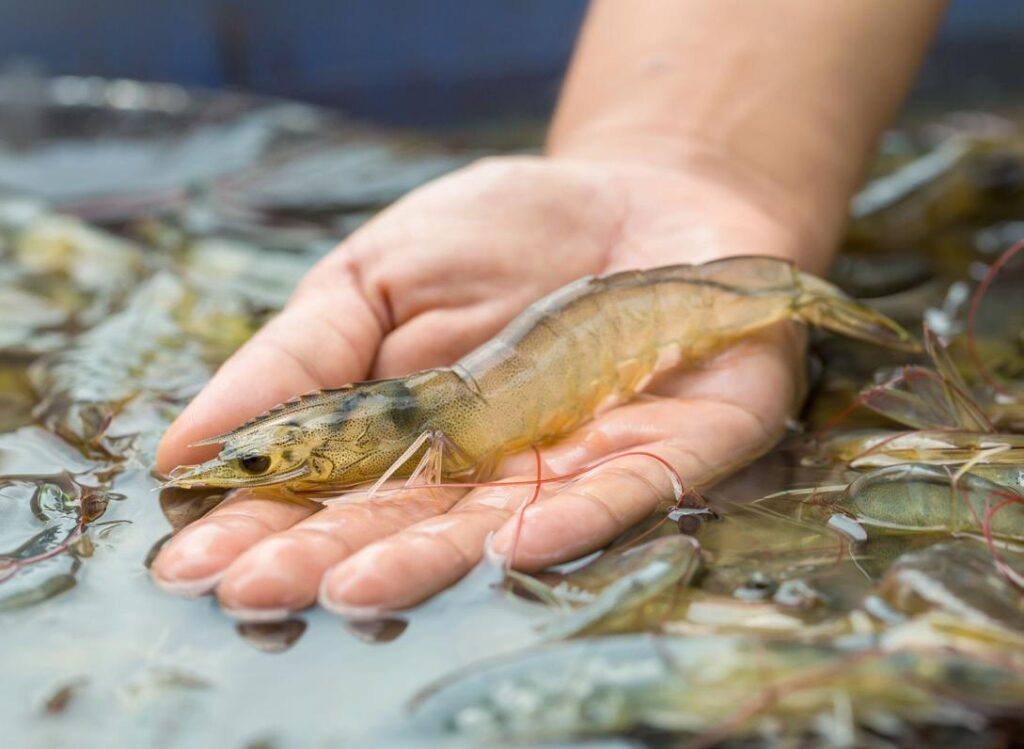
Most of the time, acute disease in farmed shrimp is a result of multiple pathogens. It could be a mix of opportunistic pathogens or both obligate and opportunistic. In farmed shrimp, infection with pathogens such as the virus that causes White spot (WSSV) or the fungal etiologic agent responsible for Enterocytozoon hepatopenaei (EHP) are often accompanied by bacteremias, of which vibrios are typically a major component. There are many other species of bacteria that can be problematic. Most are opportunistic, but a few are obligate.
There can be a synergy between multiple potential pathogens. White feces syndrome in shrimp (a common problem in SE Asia) is due to the fungus, EHP and a vibrio together. EHP by itself does not cause mortality, but when there is coinfection with a vibrio, the result is white feces and acute mortality. As pathogen levels increase in an animal, it may retain its appetite, but it won’t grow which creates a significant disparity in the population sizes at harvest and high FCRs. Its impact on the hepatopancreas, an organ that is critical for digestion and immunity weakens the animal, making it highly susceptible to invasion by both opportunistic and obligate pathogens.
For probiotics to be active via altering the microbiome and thus the metabolome (this is the sum of the metabolites that the microbiome produces) in the prevention or curing of diseases, several things must be considered. If they prevented disease, they would have to keep potential pathogen loads below the threshold levels that cause acute disease. This, more than likely, would require them to be constantly present. Most bacteria produce anti-microbial peptides and other compounds that allow them to compete for nutrients while inhibiting their competitors.
There are mechanisms by which probiotics could in theory cure or prevent diseases. These include out competing for essential nutrients, such as enzyme cofactors (metals like Fe or vitamins) or the production of antibiotics or antimicrobial peptides (AMPs) that will inhibit specific strains. However, they require sufficient numbers of the probiotic to be in close enough proximity to the pathogens to be effective. Given that no commercial probiotics persist in animals or the immediate environment at high levels, it is unlikely that any probiotic will cure or prevent disease from obligate pathogens via altering the microbiome.
These microbial products such as AMPs do not act in the same manner as antibiotics. Antibiotics are fed to animals at dosage levels that ensure that there are high enough tissue levels to inhibit the organisms to which they are directed. They do not act on viruses, only bacteria and fungi. They are localized and overall tissue levels are not going to function as antibiotics do. The observation that given strains of bacteria inhibit the growth of other bacteria by close proximity does not mean that this is what is going on in the host. Pathogens are often in biofilms which protect and isolate them, and the overall tissue loads are far too low to act in the same manner that antibiotics do.
The role of stress in disease susceptibility is well documented. Stressors weaken animals making them less able to fight off infection. These include but are not limited to inadequate nutrition (too much or too little of essential nutrients), excessively high densities, water quality issues (sudden changes in salinity, too low or too high of a pH, etc.), low DO levels, high metabolite levels (H2S, CH4, nitrate, nitrite, NH3/4, etc.), presence of toxic strains of algae and bacteria, chronic low levels of pathogens, frequent handling of shrimp as a result of partial harvests or transfers, etc.
Healthy stress-free animals are in a homeostasis with their environments. They are able to adapt to moderate environmental perturbations without negative impacts. Stressors impact their ability to adapt and result in increased susceptibility to both obligate and opportunistic pathogens.
There are no magic bullets. Fundamentals impact outcomes. Failure to keep obligate pathogens out of production systems increases the chances of animals falling ill. Control starts with the broodstock.
Screening animals for pathogens on a population basis does not work unless one is working with animals that have been held indoors under controlled conditions for at least a few generations and repeat testing has failed to find anything of concern. Each individual animal should be tested. While low levels of obligate pathogens may make it through this gauntlet, these are not likely to cause problems in a relatively stress-free environment with optimal conditions. For the sake of accuracy, there are potential pathogens where every effort should be made to exclude them as they can infect and kill animals when present at very low levels. Fortunately, these are relatively rare.
Population screening needs to be conducted on nauplii, zoea, mysis and post larval shrimp. Samples must be representative of the population. Selecting obviously ill animals for testing can be helpful. Live feeds must be from totally biosecure sources and thoroughly tested as well. Far too often a hatchery will use local sources of wild polychaetes or artemia that are mass produced under non-axenic conditions resulting in contaminating broodstock, and subsequently nauplii, zoea, mysis and post larval shrimp. If testing reveals a biosecurity failure, then the producer should either communicate the risks to clientele or destroy the batch and start over with clean animals.
The production environment influences risk. If your neighbors are in close proximity and there are no safeguards to ensure influents and effluents are not being mixed, then the risk of introducing a disease into a naive population increases. Many have addressed this risk by the widespread use of disinfectants, typically chlorine, to treat the incoming water before fertilization and stocking. As discussed in an earlier article, this can actually make matters worse.
Pushing production paradigms to maximize productivity very often results in the animals being stressed. All too often farmers focus on what they see as the bottom line. How many MTs of final saleable product can one produce from a given pond? Ideally farmers should find the balance between striving for the most production possible and limiting the stress that invariably is a component of this approach. Proper biosecurity and stress reduction are both essential elements of consistent success.
Widespread misinformation does not help the industry. It encourages people to think that they do not have to pay attention to the basics. In the end, it may ensure that the cycles of severe profit limiting diseases will persist and that new pathogens will be generated. Throwing the kitchen sink into the ponds does not offer the best approach. Anyone with widespread experience with shrimp and fish farming can attest to this.
Testing healthy animals and noting differences between them and sick animals does not mean that the microbiomes in healthy animals are responsible for their health. Even when one challenges the animals under controlled conditions, a non-specific immune response is more than likely the reason for the observed differences. Ultimately, the focus should be on biosecurity fundamentals and stress reduction. Once these are adequately addressed, benefits should become apparent with higher survivals, better growth, better FCRs and the bottom line, increased profits.

* Stephen G. Newman has a bachelor’s degree from the University of Maryland in Conservation and Resource Management (ecology) and a Ph.D. from the University of Miami, in Marine Microbiology. He has over 40 years of experience working within a range of topics and approaches on aquaculture such as water quality, animal health, biosecurity with special focus on shrimp and salmonids. He founded Aquaintech in 1996 and continues to be CEO of this company to the present day. It is heavily focused on providing consulting services around the world on microbial technologies and biosecurity issues.
sgnewm@aqua-in-tech.com www.aqua-in-tech.com
www.bioremediationaquaculture.com
www.sustainablegreenaquaculture.com.