

* By Antonio Garza de Yta, Ph.D.
When a company or technology suddenly pops up everywhere and is hailed as the best, most innovative way to produce something that breaks all paradigms, it’s always good to proceed with caution. The combination of “influencers” and “excelsheeters” has raised hundreds of millions of dollars for unrealistic projects, and they continue to solicit investments from around the world, damaging the reputation of our industry.
My grandfather had a saying that was very true: “The more noise a cart makes, the less load it carries.” Since I never saw many carts in my life, perhaps I did not give that wise saying the importance it deserved. Now, when I see what happens daily with social media and aquaculture, I appreciate the saying more.
I see people who do nothing but spend their time on social media writing blogs and commenting on everything. That would be fine if they weren’t doing it with a hidden agenda. Unfortunately, they usually aim to sell us something that is often unsound, both scientifically and financially.
I agree that all companies must have a promotional phase. However, when a company or technology suddenly appears everywhere and is presented as the best, most innovative way to produce something that breaks all paradigms, it’s wise to exercise caution before investing in that technology or changing our approach.
Recently, the reputation of aquaculture has been severely damaged by these incredible projects that include all the right buzzwords to satisfy international organizations and financiers: sustainable ecosystems, resilience, adaptation to climate change, blue jobs, inclusivity, and improved quality of life.
All of that is necessary. I say this from the bottom of my heart. However, hearing all of that together only means that the project lacks substance or that the promoter is not from the aquaculture sector. This is where the “excelsheeters” come in. A friend taught me this term, but for the sake of keeping this column suitable for all audiences, I will spell it this way.
These financial experts have the magical ability to reduce production times, lower feed conversions, find niche markets that will buy our product at a price well above the market average and/or produce at a cost per kilo that would be nearly impossible for even the most experienced farmers.
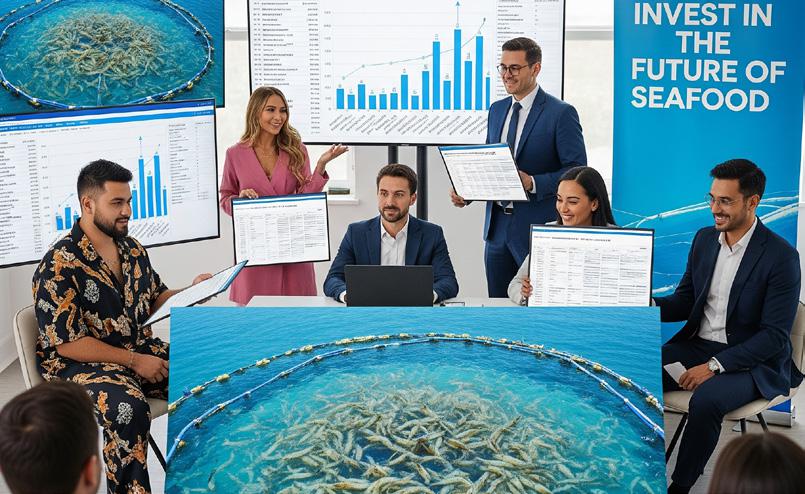
They know how to present these projections in a way that makes aquaculture appear more profitable than aerospace technology. Anyone can be a millionaire for a day by running financial spreadsheets in Excel, which is why “excelsheeters” are so dangerous. These “influencers” and “excelsheeters” have raised hundreds of millions of dollars for projects that are impossible and unrealistic. They continue to solicit investments from around the world, damaging the reputation of our industry.
Real farmers rarely try to communicate what they do. Perhaps it would be good for the industry if these great entrepreneurs had better communication skills and conveyed what is truly important. The first thing they would tell us, I think, is that we must remain humble and stick to basic principles in order to navigate these times. The ability to raise substantial funds for an operation does not guarantee profitability.
The important thing is not how much money we can raise, but how much money we can consistently generate to pay back what we have raised. Before thinking about grandiose projects, we must consider how we will pay for them. This may be unglamorous and result in “influencers” not selling advertising, but I prefer to continue looking people in the face without deceiving them with false expectations. Let’s be realistic, pragmatic, and modest. Above all, remember that this is a marathon, not a 100-meter dash, and we have many miles to go before reaching the finish line.

* Antonio Garza de Yta is COO of Blue Aqua International-Gulf, Vice President of the International Center for Strategic Studies in Aquaculture (CIDEEA), President of Aquaculture Without Frontiers (AwF), Past President of the World Aquaculture Society (WAS), Former Secretary of Fisheries and Aquaculture of Tam- aulipas, Mexico, and Creator of the Certification for Aquaculture Professionals (CAP) Program with Auburn University.